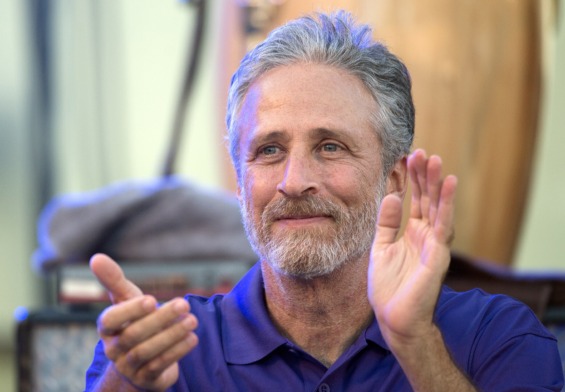
Anthropic CEO Dario Amodei built an AI empire while warning it could gut half the entry-level office jobs in America.
Silicon Valley insists the bosses have a plan for everybody left behind.
And Amodei’s old office chats reveal one remedy that sounds lifted straight out of a sci-fi movie.
Dario Amodei’s Answer for the Jobless Came With a Joystick
The Wall Street Journal recently profiled Dario Amodei and his sister Daniela, the siblings who walked out of OpenAI in 2021 and launched Anthropic, the company behind the Claude chatbot.
Tucked inside that profile sat a detail that tells Americans more about the AI crowd’s thinking than any glossy keynote ever could.
According to the Journal, Amodei took part in internal OpenAI debates about the social fallout if artificial intelligence threw huge numbers of people out of work. His idea for the anger that would follow? Immersive video games.
Journal reporter Max Zeff boiled it down on X. “While at OpenAI, Dario suggested that immersive videogames might be a solution for the political strife caused by AI-induced joblessness,” Zeff wrote.
Look closely at which problem Amodei set out to solve. The worry on the table was political strife, the risk that Americans who lost their livelihoods might get angry enough to do something about it at the ballot box or in the streets.
The prediction market Polymarket put it even more bluntly. “Anthropic CEO Dario Amodei reportedly suggested immersive video games could pacify the masses left jobless by AI, preventing widespread political unrest,” the company posted, then pointed its followers to its own market giving Anthropic a 21% chance of going bankrupt before 2030.
The remark came from an old Slack chat, according to the reporting, and nobody has shown it ever turned into a formal plan at OpenAI or at Anthropic. Anthropic had not publicly commented in the coverage that followed.
Maybe Amodei typed it half in jest on a slow afternoon. The Journal account doesn’t say whether he meant it as a serious proposal or a provocation. But a man doesn’t reach for “keep them busy with games” unless that’s somewhere on his menu of options.
Hollywood Already Made This Movie, and Nobody Mistook It for a Happy Ending
Anybody who caught Steven Spielberg’s 2018 film Ready Player One, based on Ernest Cline’s 2011 novel, knows exactly where this road leads.
The story takes place in 2045. The real world has fallen apart, families live in trailers stacked on top of each other like shipping crates, and nearly everybody straps on a headset to escape into a giant virtual playground called the OASIS.
Audiences understood the picture as a warning. A broken country, a ruined economy, and a population too busy chasing points in a fake world to notice.
Silicon Valley has a bad habit of reading those warnings as product roadmaps.
The Couch Experiment Already Ran in American Living Rooms
Here’s the part that makes Amodei’s idea something worse than a dorm-room daydream. America already ran a version of this experiment, and the results sit in a stack of economics papers.
Economists Mark Aguiar, Mark Bils, Kerwin Kofi Charles, and Erik Hurst studied young men between 21 and 30 for a paper the National Bureau of Economic Research published in 2017. From 2004 to 2015, roughly 60 percent of the extra leisure time those young men picked up each week went to video games.
The researchers estimated that better games could account for about half the increase in young men’s leisure, and could explain a drop in their working hours of 1.5 to 3 percent.
And the share of nonworking young men living with a parent or close relative climbed from about 46 percent in 2000 to 67 percent by 2015, according to a Chicago Booth Review write-up of the research.
But here’s the kicker. The same researchers found those young men reported feeling happier over that stretch.
That’s what pacification looks like in practice. A man can feel perfectly content while his career stalls, his savings stay at zero, and his mother does his laundry well past his 30th birthday.
Generations of Americans grew up on a simpler rule. The King James Bible puts it in 2 Thessalonians 3:10: “if any would not work, neither should he eat.” Work built this country’s character, its families, and its churches, and no headset can stand in for that.
Rome Tried Bread and Circuses First
The Roman satirist Juvenal saw this bargain coming nearly 2,000 years ago. Writing around the turn of the second century, he mocked a Roman people who once handed out military commands and high offices but now wanted only two things: bread and circuses.
The emperors understood the deal perfectly. Augustus kept a grain dole flowing to roughly 200,000 citizens in the city of Rome, and the arenas kept the crowds entertained. The Senate still met. The real power sat somewhere else.
Swap the grain for a government check and the gladiators for a virtual reality headset, and the old Roman formula fits right onto a Silicon Valley whiteboard.
Democrats already handed the left its half of that bargain. Andrew Yang ran for President in 2020 promising a $1,000 monthly check to every American adult, and the government-check crowd has only grown louder since. Free money from Washington and free entertainment from Big Tech make a tidy package for anybody who wants a quiet, dependent population.
Free people need work, property, and a stake in their own communities. Subjects need distractions.
Whoever Builds the Game Writes the Rules
None of this lands in a vacuum. In a May 2025 Axios interview, Amodei put the damage at up to half of all entry-level white-collar jobs, with unemployment climbing to somewhere between 10 and 20 percent within one to five years.
He sounded the alarm, then kept building. Anthropic went on to stage a record-setting IPO, and the company announced $200 million in June 2026 to study how AI affects jobs. Studying the wreckage is a funny hobby for the folks driving the bulldozer.
The same Big Tech crowd is carpeting rural counties with power-hungry data centers that strain local grids and push electric bills higher for families who never asked for them.
These are also the companies that throttled Americans who questioned COVID mandates, buried the Hunter Biden laptop story weeks before the 2020 election, and booted a sitting President after January 6.
Now picture the escape hatch Amodei floated. A virtual world where millions of out-of-work Americans spend their days, built and run by Silicon Valley, with Democrats taking control of both chambers of Congress in January and itching to write the rulebook for AI.
Whoever owns that world owns the speech rules inside it. A player who posts the wrong opinion about the 2020 election could find his account frozen. A score tied to his behavior could dip after he buys a deer rifle, donates to a crisis pregnancy center, or eats a steak instead of the approved plant-based option.
And the next time a virus scare rolls around, a population already living inside a headset makes a lockdown easy to enforce. Nobody needs to ticket a church parking lot if the congregation never leaves the couch.
Maybe that runs ahead of the evidence. One old Slack message doesn’t prove anybody in San Francisco has a plan to herd Americans into a digital pen.
But the mindset on display matters. The people building these machines looked at the prospect of millions of ruined careers and reached first for crowd control.
Amodei never explained, at least not in anything the Journal reported, who would run the game, who would write its rules, or who would decide when the players get to log off.
Sources: The Wall Street Journal profile of Dario and Daniela Amodei (via reporter Max Zeff’s post on X); Polymarket post on X; The Verge; Free Press Journal; Yeni Safak; Crypto Briefing; Türkiye Today; National Bureau of Economic Research, “Leisure Luxuries and the Labor Supply of Young Men” (Working Paper 23552) and NBER Digest summary; Chicago Booth Review, “Video Killed the Radio Star”; Axios (May 2025 Amodei interview); Juvenal, Satire X; King James Bible, 2 Thessalonians 3:10.