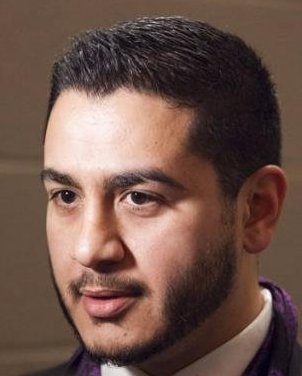
The Democrat Party just got a new face in Michigan.
And he’s already saying things that most politicians won’t touch with a ten-foot pole.
What Abdul El-Sayed said about reparations is going to have a lot of voters asking exactly what kind of party the Democrats are becoming.
El-Sayed Takes the Michigan Primary and Starts Talking
Abdul El-Sayed defeated Representative Haley Stevens in the Michigan Democrat Senate primary, and the establishment didn’t exactly throw a party.
But Chuck Schumer and other top Democrats moved to accommodate the progressive winner rather than withhold support — a telling contrast to how Senate Majority Leader John Thune and the National Republican Senatorial Committee have handled Ken Paxton in Texas after he defeated John Cornyn in the Republican primary there.
Cornyn, who championed Joe Biden’s gun control legislation and pushed amnesty measures, has declined to raise money for Paxton.
Thune’s operation has withheld the kind of television spending that typically defends a Senate seat — widely read as payback for President Trump’s decision to endorse Paxton and as part of a broader effort to put distance between the party apparatus and MAGA influence heading into 2028.
The contrast is hard to miss.
Democrats rally around their left-wing primary winners. The Republican establishment sometimes seems more comfortable with the prospect of a Democrat holding a seat than with a strong MAGA senator filling it.
But back to Michigan, because El-Sayed didn’t waste any time making clear where he stands.
What El-Sayed Actually Said About Reparations
In a recent clip, El-Sayed said that a “conversation about reparations shouldn’t be a crazy thing.”
That’s the quote. That’s what he said.
And for a lot of voters — particularly the working-class Americans who swung toward Trump in 2024 and who are watching their wages, their savings, and their neighborhoods — that kind of statement lands like a lead balloon.
Reparations, as a policy concept, means the government taking money from taxpayers, mainly white and Latino Americans, and redistributing it to black Americans based on race.
That is not a fringe characterization. That is what the policy entails.
El-Sayed is framing it as a legitimate topic of debate, something that should be normalized rather than treated as outside the mainstream.
But here’s what’s worth noting: the voters who sent Donald Trump back to Washington in 2024 didn’t vote for wealth redistribution based on racial categories. They voted for border enforcement, lower costs, and a government that stops treating ordinary Americans like an ATM for whatever the Left decides is morally necessary this week.
Reparations is not a moderate position. Calling for its normalization in a general election cycle, in a state Trump nearly won, is a political calculation that deserves scrutiny.
What This Tells You About Where the Democrat Party Is Headed
El-Sayed’s emergence in Michigan is part of a broader pattern.
The Democrat Party’s left wing keeps winning primaries. And the party establishment keeps accommodating those winners rather than confronting them — because the base has moved, and the donors and operatives who run the party know it.
What that means in practice is a party that is drifting toward positions — reparations, expansive government programs, identity-based redistribution — that a significant majority of the country has never asked for and doesn’t want.
El-Sayed’s support for reparations is another example of Democrats pushing the lie that America is a racist country that needs to face punishment for being built on white supremacy.
And the reparations push, if it gains traction, isn’t just a policy debate. It’s a mechanism. A government program built around racial categories, funded by taxpayers, administered by federal bureaucrats. That’s a massive expansion of government power dressed up in the language of historical justice.
Americans who oppose it aren’t opposing justice. They’re opposing the idea that Washington should be in the business of sorting people by ancestry and cutting checks accordingly.
El-Sayed is presenting this race-based theft of taxpayer money as reasonable conversation-starter territory. But the voters who decide Michigan Senate races — the autoworkers, the small business owners, the retirees on fixed incomes — are going to have a different reaction when they realize what’s actually being proposed.
There is also a deeper question sitting underneath all of this about what the Democrat Party thinks it’s doing strategically.
Reparations polling has never broken through to majority support nationally. Pushing it in a purple state in a midterm environment, when the party is already struggling with working-class voters, is why Democrats tried to stop El-Sayed in the primary.
So when El-Sayed says reparations should be a normal part of the national debate, that’s not one guy talking. That’s a window into where a significant wing of the Democrat Party actually wants to take the country.
The question for Michigan voters is whether they want to go there with him.
And the question for the rest of the country is whether the Republican establishment in Washington will fight as hard to hold competitive seats as the Democrat establishment fights to win them — or whether Thune’s operation will keep sitting on its hands while MAGA-aligned nominees get outspent and outmaneuvered in races that should be winnable.
That’s a fight worth watching. Because the stakes in Michigan aren’t just about one Senate seat.
They’re about which party actually believes in its own voters.
Source: Breitbart, “El-Sayed: Conversation About Reparations Shouldn’t Be a Crazy Thing”