All year, Democrat senators fired off letters insinuating the Trump team was rigging government economic data.
Then President Trump raised one question of his own, and the liberal press howled about a holiday meltdown.
And Elizabeth Warren left behind one letter that makes his Thanksgiving demand look downright reasonable.
Donald Trump Skipped the Turkey Talk and Went Straight for the Commerce Department
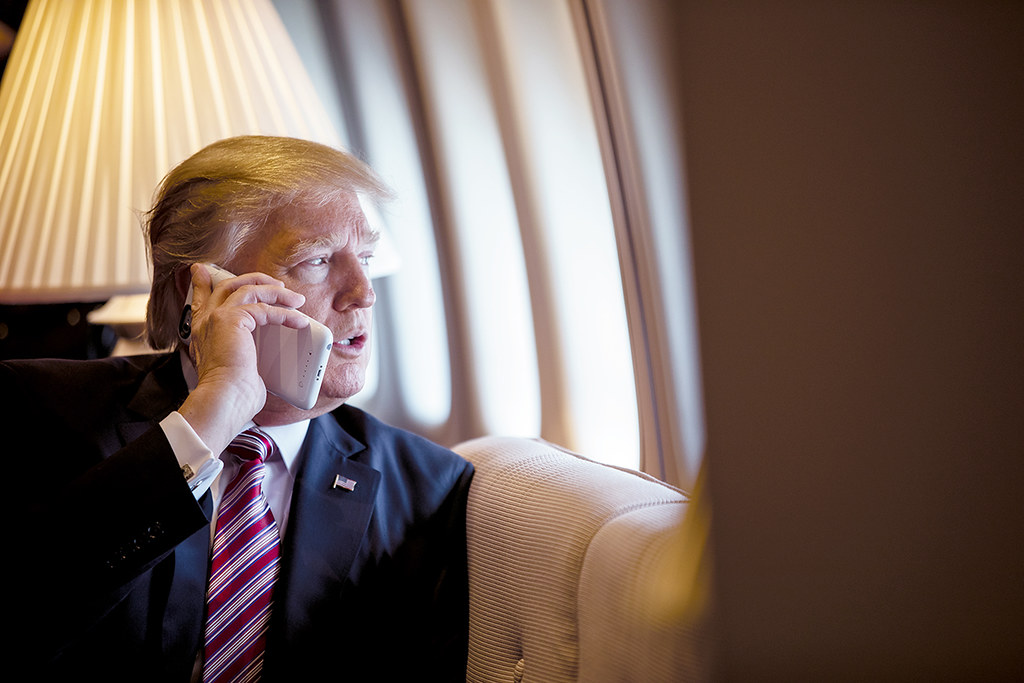
President Trump opened Thanksgiving with a Truth Social post aimed squarely at his own Commerce Department, the home of the Bureau of Economic Analysis.
“It was just revealed that the REAL Numbers on the Economy, published before the Election, were FAKE, and a correction was issued yesterday by the people in the Government Agency that does these numbers,” Trump wrote.
The correction landed the day before the holiday. The bureau’s first estimate of summer growth, which it put out on October 29, clocked the economy at a 3.4% annual pace. Its second estimate pushed that figure up to 4.3%.
Nine-tenths of a percentage point. Voters never saw the bigger number before they cast their ballots on November 3.
“Why wasn’t the correct number issued before the Election?” Trump asked. “I am asking for an immediate investigation of this situation. This is not a small error, this is a massive, and purposeful, error.”
He didn’t leave the grudge out of his holiday greeting either. “I would like to wish a Happy Thanksgiving to even those who issued fake Economic Numbers, just prior to the Election, and corrected them yesterday, three weeks late,” the President added.
And the liberal press reacted like somebody had knocked the gravy boat off the table. Mediaite slapped the word “Bonkers” into its headline, and one wire dispatch brushed off his midterm interference claims as “groundless.”
The Bureau’s Own Scorecard Says This Miss Ran Big
The bureau maintains that revisions like this one happen all the time, and its report doesn’t hint at anything sinister. Trump hasn’t named anyone he blames.
But “routine” covers a lot of ground. BEA’s own reliability study, which runs from 1999 through 2025, puts the typical move between the first and second estimates at half a percentage point in either direction, according to Newsweek. This time, the number jumped nearly twice that far.
And the bureau’s explanation leans heavily on software. Its technical notes credit a revised Bureau of Labor Statistics price index for software publishing with much of the upgrade in business investment. Fresh Census Bureau retail figures also pushed consumer spending on goods higher, with pharmaceuticals leading the way.
Hang on to that software detail. It comes back in a minute.
Director Vipin Arora runs the bureau, and financial press coverage of the agency describes him as a career official who took the job during the Biden administration. So nobody can claim Trump stacked the place with friendly faces.
Elizabeth Warren Treated This Same Bureau Like a Suspect All Summer
Democrats now want America to believe that questioning government statisticians amounts to an assault on the republic. Their favorite economic scold already did it, over and over.
On August 6, 2026, US Senator Elizabeth Warren (D-MA), the top Democrat on the Senate Banking Committee, sent a letter to Arora and Under Secretary of Commerce Joyce Meyer demanding they explain changes to how the bureau calculates pieces of the Federal Reserve’s preferred inflation gauge. Economists expected the changes to shave recent core inflation readings, and Warren gave the officials two weeks to answer.
Computer software sat right there on her list of categories. That same corner of the data drove a big share of the upgrade that arrived too late to reach a single voter.
But Warren didn’t stop there. In September 2026, she sent another batch of letters to Commerce Secretary Howard Lutnick and Office of Management and Budget Director Russell Vought, questioning the Trump administration about political interference with the department’s economic and census data.
A year earlier, Warren and US Senator Bernie Sanders (I-VT) led 10 of their colleagues in a letter questioning what they called the administration’s attacks on transparent economic data.
But the suspicion only ever seems to run in one direction. When Warren hints that bureaucrats might be massaging inflation to flatter Trump, the press calls it oversight. When Trump asks why voters got the weaker growth number, the same press calls it a tantrum.
A Biden-Era Jobs Mirage Already Ran Straight Through One Campaign
Trump has seen this movie before. On August 21, 2024, the Bureau of Labor Statistics announced its preliminary estimate that the economy added 818,000 fewer jobs between April 2023 and March 2024 than it had originally reported, the biggest downgrade of its kind since 2009.
The Boston Fed figured that meant the monthly job gains Biden and Harris kept bragging about ran roughly 28% too high for an entire year.
And the timing carried its own odor. The New York Times reported that Wall Street firms got a look at that revision while the public waited, and a House Education and Workforce Committee letter flagged a leaked email showing a BLS economist had set up a “super users” list of only about 50 people.
The Federal Reserve chipped in that fall too, with a half-point rate cut in September 2024, about seven weeks before Election Day. Plenty of conservatives read that move as a helping hand for the party in power.
Any farmer who ever hauled a load of corn to the co-op elevator knows how this is supposed to work. The scale reads the weight, the check goes out on that weight, and nobody takes a call three weeks later explaining the truck actually carried a lot more grain than anybody wrote down. Somebody would want to know who calibrated the scale, and when.
Democrats Will Hold the Gavels Before Anybody Answers Trump’s Question
Voters walked into the booth in a sour mood. In the AP Voter Poll, 76% of voters described economic conditions as “not so good” or “poor.”
Nobody can prove a stronger growth number would have flipped a single race. Maybe it wouldn’t have moved anybody at all.
But a party that just lost both chambers of Congress on a gloomy economic mood has every right to ask why the official scorecard showed up light right when it mattered most.
Democrats won’t ask that question. They take control of Congress in January, and Warren, as the Banking Committee’s top Democrat, stands in line for a much bigger megaphone. Expect hearings about Trump “politicizing” the statistical agencies, with no curiosity about the number that came up short just before Republicans needed it.
And don’t expect a single Democrat chairman to lift a finger on the investigation Trump requested.
Government statistics steer interest rates, Social Security adjustments, and the spending fights Democrats already plan to pick next year. One soft number in the wrong month can move markets, paychecks, and elections, which is exactly why Warren spent the year writing letters about them.
She demanded detailed answers from this bureau when she suspected its math might help Trump. Once Democrats run the Senate in January, will she ask even one question about the smaller number voters carried into the booth?
Sources: Mediaite, “Trump Fumes Over ‘FAKE’ Economy Numbers, Demands Investigation in Bonkers Thanksgiving Message”; Newsweek, “Trump calls GDP ‘fake.’ His White House called it a surge in October”; Axios, “Trump demands investigation into GDP data revisions”; Vanguard (AFP), “Trump demands probe into ‘fake’ US GDP figures”; The National News Desk, “Trump calls for probe into Commerce GDP revision he says hurt Republicans in midterms”; US Senate Banking Committee Minority, “Warren Presses Commerce, Bureau of Economic Analysis on Changes to Key Economic Data Metrics” (August 6, 2026) and “Warren Questions Trump Administration on Political Interference with Commerce Department’s Economic and Census Data Collection, Reporting” (September 24, 2026); US Senate Banking Committee Minority, “Warren, Sanders, Colleagues Question Trump Administration’s Attacks on Transparent Economic Data” (September 23, 2025); Cnyes (citing The Wall Street Journal) on BEA methodology changes; Bureau of Labor Statistics, “2024 Preliminary Benchmark Revision”; Federal Reserve Bank of Boston, “New England Economic Conditions,” September 2024; House Committee on Education and the Workforce, letter to the Department of Labor on BLS data release, September 25, 2024