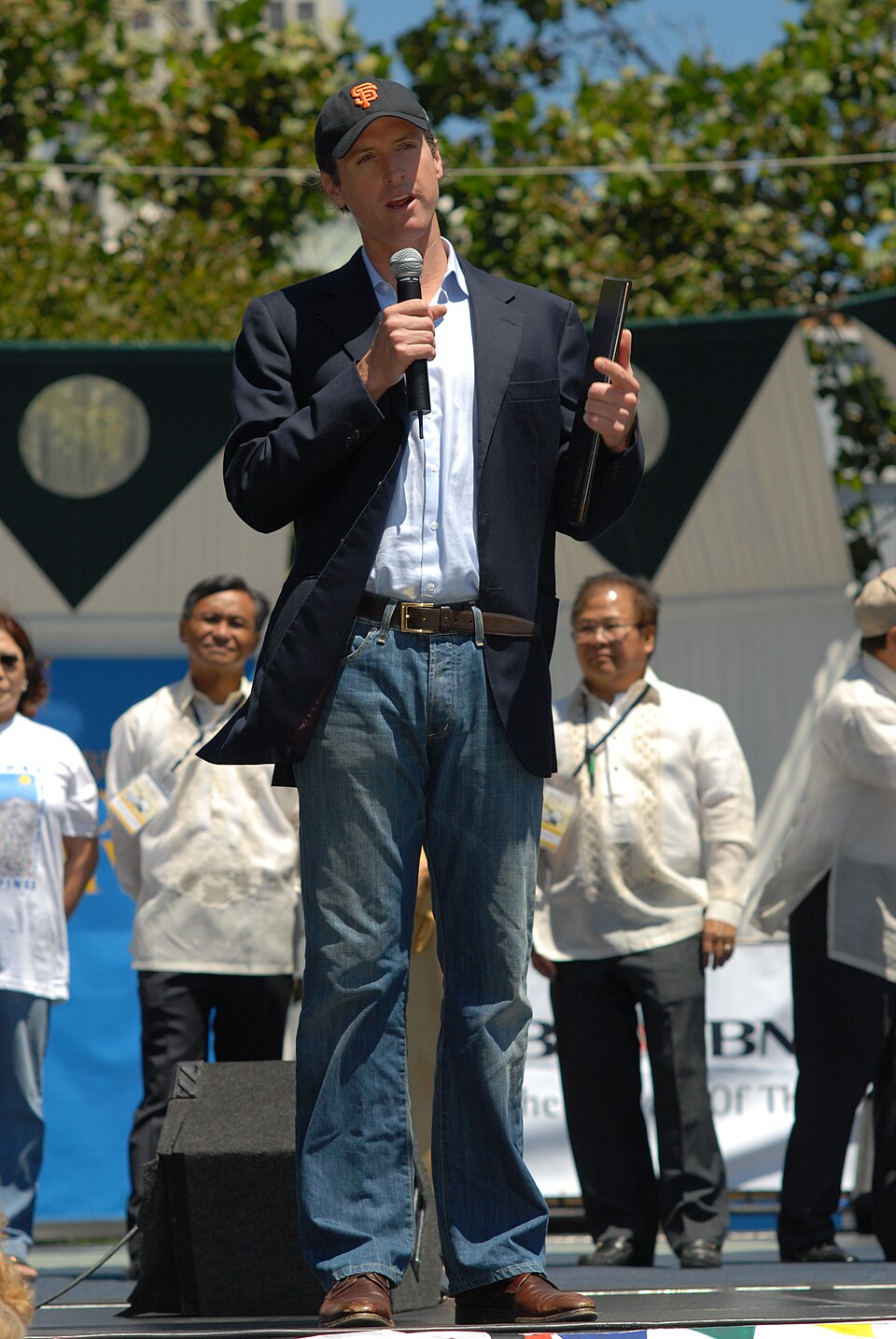
Gavin Newsom is torching hundreds of jury verdicts on his way out the door.
Prosecutors are fuming, and murder victims’ families are reliving their worst days all over again.
And Newsom just admitted one problem that drops a notorious child killer’s fate into somebody else’s lap.
Two Days After the Polls Closed, Newsom Made His Move
The term-limited Governor announced he will commute the death sentences of all 548 inmates on California’s death row to life without parole. The Death Penalty Information Center, which cheered the decision, calls it the largest mass clemency in American history.
He waited until two days after the midterm polls closed to drop it.
Funny how that works. Not one Democrat on a California ballot had to answer a single question about it before voters had their say.
Newsom laid out his reasoning in an open letter, claiming “state-sanctioned killing is incompatible with California’s values.” But California voters keep telling him otherwise, and he keeps acting like the mail never arrived.
In 2012, voters rejected Proposition 34, a measure to scrap the death penalty. In 2016, they turned down Proposition 62, another repeal effort Newsom supported, and approved Proposition 66 to speed executions up instead. Newsom answered in 2019 with a moratorium on executions and an order to dismantle the execution chamber at San Quentin State Prison.
San Luis Obispo County District Attorney Dan Dow put the whole saga in one sentence. “Juries chose justice case by case, voters chose it five times, and one outgoing governor tried to erase it all with a pen,” Dow said.
And Dow made sure Californians remembered who sits on that list. A jury convicted Rex Allan Krebs, a paroled serial rapist, in the late-1990s rape and murder of college students Rachel Newhouse and Aundria Crawford. Another jury convicted Michael Whisenhunt of torturing 20-month-old Kesha Gurke and beating her so hard it severed her intestines, according to the California Post.
Those are the men Newsom’s conscience can’t bear to see punished.
Newsom’s Pen Hits a Wall at the State Supreme Court
But Newsom can’t finish this job alone, and he knows it.
An 1879 provision in the California Constitution bars a governor from commuting the sentence of anyone twice convicted of a felony unless at least four of the state Supreme Court’s seven justices recommend it. The San Luis Obispo District Attorney’s Office counts 382 condemned inmates who fall into that category.
That leaves Newsom with the power to finish only about a third of the job on his own signature.
So the Governor shipped the rest to the justices with a note attached. His letter concedes the move “requires the Justices to participate in a weighty decision they did not choose to take up and with which they may personally disagree.”
That’s a lame duck leaving his political baggage on the courthouse steps and hustling off before anybody can hand it back.
His office also asked the justices to review every case on its own merits and hear from the victims’ families. Picture 382 files, each with a trial record thicker than a phone book, landing on the desks of a court staff that already handles every capital appeal in the state. Nobody should expect a quick ruling.
One of those files belongs to Richard Allen Davis. A jury convicted Davis of kidnapping and murdering 12-year-old Polly Klaas in 1993, and a judge sentenced him to death. Davis was a paroled kidnapper when he took her.
Her father, Marc Klaas, has spent more than three decades defending that sentence. “He has definitely secured the serial killer vote now,” Klaas told Fox News Digital.
And the court hasn’t always rubber-stamped a governor’s mercy. In 2018, the justices blocked 10 clemency requests from Governor Jerry Brown. But Newsom has since put his own picks on that bench, including Chief Justice Patricia Guerrero and Justice Kelli Evans.
Anne Marie Schubert, a former district attorney who now leads the Criminal Justice Legal Foundation, plans to take Newsom to court. She told the California Post her group is “doing this on behalf of crime victims and the rule of law.”
One Man’s Conscience Just Outvoted Millions of Californians
Greg Totten, the CEO of the California District Attorneys Association, went straight to the heart of it. “The Governor has turned an extraordinary constitutional safeguard into a sweeping instrument of personal policy,” Totten said.
He’s right. Clemency exists as a safety valve for the rare case that cries out for it, like a man with new evidence of innocence or a sentence wildly out of line with the crime. Newsom took the valve and used it as a wrecking ball on 548 verdicts at once.
And Newsom isn’t the first Democrat to discover this kind of courage on the way out. Joe Biden commuted 37 of the 40 federal death sentences in December 2024, weeks before he left the White House. Both men waited until the ballot box could no longer touch them in the job they held.
Even Los Angeles County District Attorney Nathan Hochman, hardly a bomb thrower, pointed out that only the Legislature or the voters can actually abolish the death penalty in California. Voters had two chances to do it in the last 15 years. They said no both times.
The Left already treats that choice like a dead letter. Natasha Minsker, a former ACLU of California official, told CalMatters that lawmakers tell her “we don’t have the death penalty in California.” She meant it as a sign of progress. It sounds a lot more like a confession that one governor’s moratorium quietly overrode a law the public chose to keep.
Newsom loves to call the whole system a failure, and he’s got the delay part right. California hasn’t executed anybody since 2006, and condemned killers die of old age while their appeals crawl along for decades. But voters already passed the fix in 2016 when they approved Proposition 66 to shorten those appeals. Newsom spent his entire tenure riding the brakes and then complaining the car won’t move.
That’s the Newsom method in a nutshell. Voters vote, and then Newsom decides whether their vote counts.
The activist Left will toast this as moral leadership while Newsom eyes a run for the White House in 2028. Families in Bakersfield and Fresno and San Luis Obispo will see something else: a Governor who spent more energy on the comfort of convicted killers than on the people those killers left behind.
Newsom also promised these inmates will never qualify for new parole and resentencing breaks. But one governor’s promise doesn’t bind the next one. A Sacramento run by Democrats has spent years softening sentences, and victims’ families have every reason to wonder how long “life without parole” survives the next activist campaign.
In November 1994, about a year after Richard Allen Davis snatched Polly Klaas from her mother’s home, nearly three out of four California voters approved the Three Strikes law to keep repeat felons behind bars. Thirty-two years later, Gavin Newsom sent Davis’ death sentence to the state Supreme Court with a request to wipe it away.
Sources: Breitbart News, “Gavin Newsom’s Mass Commutation of Death Row Inmates Faces Legal Battle, Pushback from Prosecutors”; Fox News, “Gavin Newsom wipes out California’s death row in historic mass commutation”; CalMatters, “Gavin Newsom clears death row, commutes sentences for hundreds of prisoners”; The Washington Post, “Newsom moves to commute 548 death sentences, emptying California’s death row”; Death Penalty Information Center, “Governor Gavin Newsom Grants Largest Mass Commutation in U.S. History to Death-Sentenced Prisoners in California”; Al Jazeera, “California governor commutes sentences of more than 500 people on death row”; Horvitz & Levy, At the Lectern, “Governor Newsom’s death penalty actions shouldn’t affect the Supreme Court . . . yet”; Ballotpedia, “Judges appointed by Gavin Newsom”; Global News, California death penalty moratorium coverage (2019)