President Trump has spent years warning that mail ballots invite fraud and chaos.
He built an entire executive order around fixing it.
And now the Supreme Court just handed him a setback that spells trouble for everything that comes next.
Postal Service Plan Grounded Before The Midterms
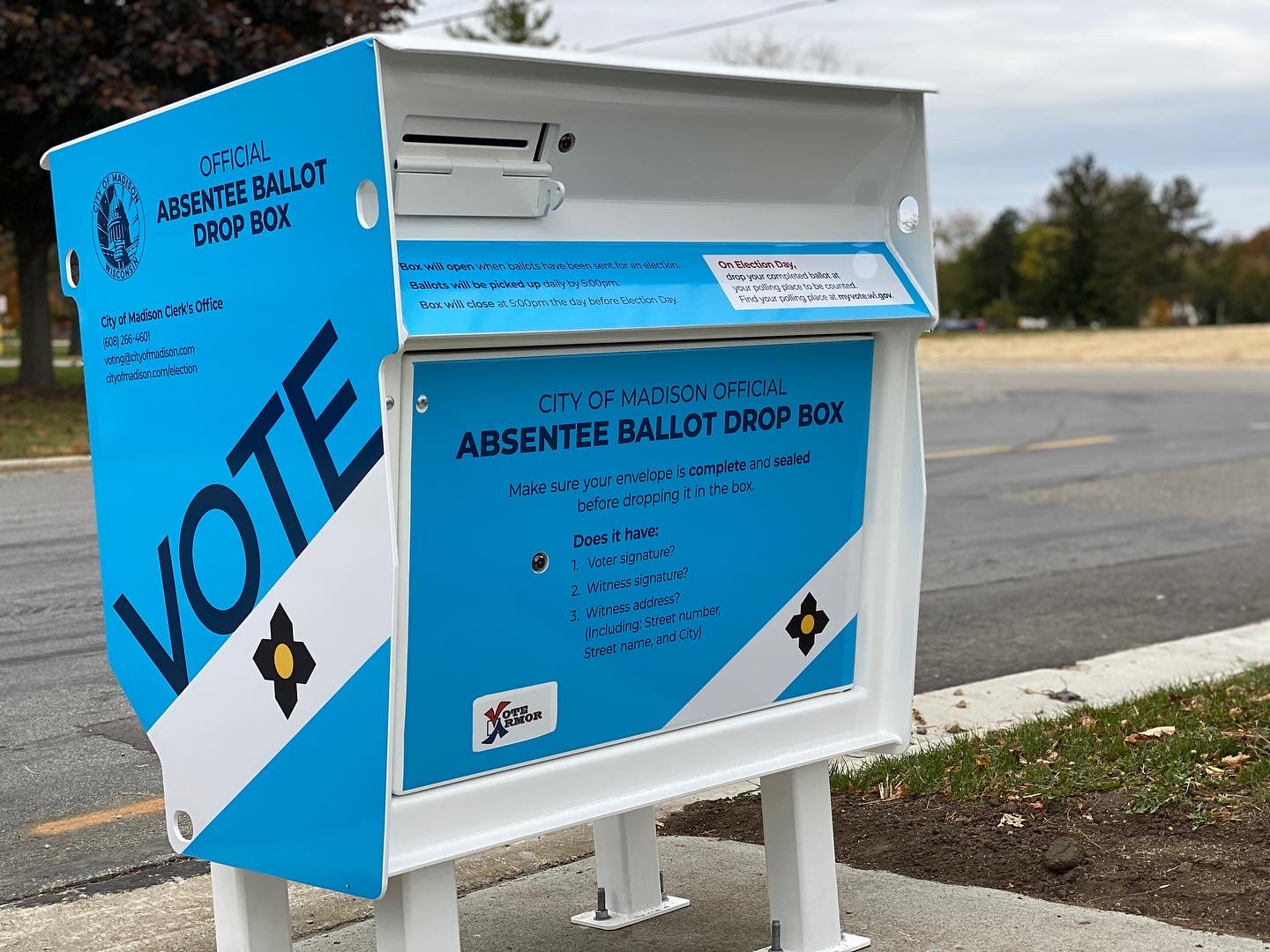
The dispute centers on an executive order President Trump signed in March requiring states to submit lists of eligible voters to the US Postal Service before that agency would agree to deliver mail ballots at all.
The order also called for special tracking barcodes on ballot envelopes and for the Department of Homeland Security to compile its own state-by-state lists of citizens it considers eligible to vote.
The administration has framed the plan as basic election security, the kind of commonsense verification most Americans already assume happens with their ballots.
A coalition of Democrat-led states and voting groups sued to block it, and a federal judge in Boston, Indira Talwani, ruled that the Postal Service rule was likely unlawful.
The Trump administration went to the Supreme Court on an emergency basis asking the justices to let the rule take effect anyway for this year’s midterms.
A majority of the justices blocked the procedure that would have given the US Postal Service the unprecedented power to withhold potentially millions of mail ballots, with the court saying that the administration “is unlikely to succeed on the merits of its challenge” but offering little explanation in its three-sentence, unsigned order.
The plan would have required states to upload lists of voters to send them a mail ballot, and the Postal Service would also only deliver ballots that meet new design requirements, like an official logo and barcode.
This marked the third time in a matter of months that the administration raced to the high court on this same policy fight.
Alito And Thomas Push Back Hard In Dissent
Conservative Justices Samuel Alito and Clarence Thomas dissented from the order.
Alito was not shy about saying the administration had the better legal argument.
Alito wrote in his dissent that the Postal Service “has broad authority to regulate the mail” and likely does have the power to enforce Trump’s restrictions.
He acknowledged the practical concerns raised by election officials but said that alone wasn’t reason enough to side against the administration.
Alito wrote, “The government has a strong interest in enforcing the rule, and implementing it will also ‘enhance the visibility of Federal Ballot Mail’ in order to better detect election fraud,” adding, “On the other side of the balance, the plaintiff States invoke the practical effects of implementing the rule close to the midterm elections. I take that problem very seriously, but it is not enough to convince me to deny the application.”
Alito wasn’t kind to the challengers’ underlying legal theory either.
“Some of the plaintiffs lack standing, while the remainder are pursuing a claim that this Court has recently called a ‘Hail Mary pass’ that ‘rarely succeeds,'” Alito wrote, joined by Thomas.
Justice Brett Kavanaugh agreed that the restrictions should not go into effect for the midterms but indicated he might rule in favor of the Trump administration if the issue comes back before the court at a later time.
That’s worth sitting with for a second. Even among the justices siding against the administration this time around, there’s an acknowledgment that this fight isn’t over, and that the underlying question of whether the Postal Service can enforce this kind of rule remains wide open.
Democrat-led states and voting rights groups celebrated the outcome like it was the final word.
Challengers of the proposal called it a victory, with one saying, “Today, the Supreme Court refused to allow the federal government to throw our elections into chaos just weeks before Election Day.”
It wasn’t.
What Does This Mean For Trump’s Election Integrity Fight?
CNN legal analyst Elie Honig weighed in on the ruling, and according to Mediaite’s reporting on his comments, he described it as a “really bad indicator” for how the rest of this litigation is likely to play out for the president.
Honig has made a career out of parsing these emergency docket rulings for CNN, and it’s worth remembering the outlet he works for has treated nearly every one of Trump’s election integrity efforts as inherently suspect since 2020.
That’s the backdrop here. A network that spent years insisting Trump’s concerns about mail ballot security were baseless is now using one of its own legal analysts to declare the fight essentially finished before it actually is.
Two sitting justices didn’t see it that way. Alito, joined by Thomas, made clear he believes the Postal Service has the legal authority to do exactly what Trump’s order asked it to do, and that the states challenging it were throwing a legal Hail Mary that shouldn’t have worked.
Millions of Americans continue to raise legitimate questions about how mail ballots are verified, tracked, and secured, and those questions didn’t disappear because of a three-sentence unsigned order on an emergency docket. The court didn’t rule on the merits. It ruled on timing and equitable factors, which is a very different thing than declaring the underlying policy illegal.
President Trump has pushed for years for the SAVE Act and similar measures that would require proof of citizenship to register and basic voter ID nationwide, arguing that only American citizens should decide American elections. Those efforts have stalled in Congress. The mail ballot executive order was one of the few tools available to the administration that didn’t require congressional sign-off, which may be exactly why it drew such an aggressive legal response from Democrat-led states the moment it was signed.
Whatever CNN’s legal analysts want to call it, this fight is headed back through the lower courts, and the Supreme Court itself left the door open for a different outcome once the merits are fully litigated. Kavanaugh said as much himself.
Republicans have watched this pattern before. A policy gets challenged, a single district judge blocks it, and the media declares the matter settled while the actual legal question remains unresolved for months or years. The mail ballot fight looks like it’s going to follow that same script, and if Alito’s dissent is any indication, the administration still has real arguments left to make.
Sources: CNN, NPR, PBS NewsHour, The Hill, Mediaite