Floridians pushed back hard against mass license plate surveillance.
And a county sheriff actually listened to the people he serves.
Now Putnam County Sheriff H.D. ‘Gator’ DeLoach just shut down every single one of his county’s plate-reader cameras — and what he said about individual liberty is something Washington, DC needs to hear.
Sheriff DeLoach Pulls the Plug
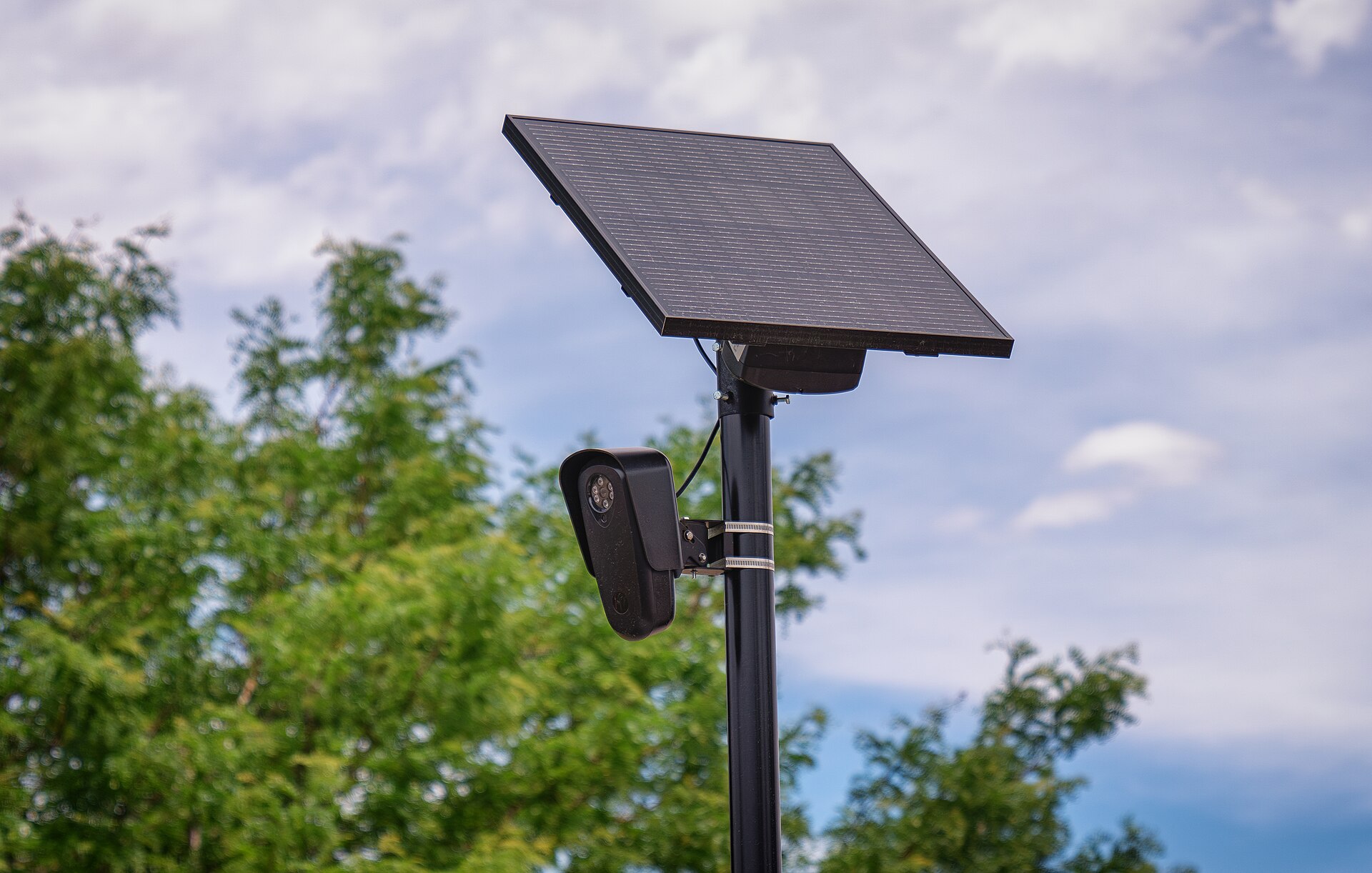
DeLoach ordered all 18 automated license plate reader (ALPR) cameras on major roadways in Putnam County, Florida, disconnected immediately, with full physical removal of the equipment scheduled within 30 days.
That’s not a small thing. Those cameras don’t come cheap, and pulling them means canceling the county’s contract with Flock Safety, the company whose surveillance technology has blanketed Florida and hundreds of other jurisdictions across the country.
DeLoach posted his reasoning on the sheriff’s office Facebook page. “Over the past several weeks, legitimate questions have continued to emerge regarding privacy, data sharing, governmental oversight, and the future regulation of this technology,” he said. “I believe the responsible course is to discontinue our program and cancel our contract at this time.”
He wasn’t throwing his deputies under the bus. DeLoach made clear the decision wasn’t a criticism of how his own officers used the system. The problem is bigger than one department.
“ALPR technology has proven to be a valuable law-enforcement tool, but I have become increasingly concerned that the technology is advancing faster than the laws and regulations governing its use,” DeLoach said. “Until that framework catches up and provides clearer, more consistent safeguards for both public safety and individual privacy, I believe discontinuing the program is the most responsible course for our agency and the community we serve.”
And then he said the thing that matters most: “Public safety matters. So does individual liberty. Neither should be treated casually.”
That sentence alone is worth more than a thousand pages of legislative testimony.
What These Cameras Actually Do to Ordinary Americans
Flock Safety cameras and similar ALPR systems don’t just scan license plates of suspected criminals. They log time-stamped location data on every single vehicle that passes — regardless of whether the driver has done anything wrong, is suspected of anything, or has any connection to any investigation whatsoever.
That data gets retained for weeks or months. It gets shared across jurisdictions. It gets shared with federal agencies through data-sharing agreements that most residents have never heard of and never consented to.
Think about what that means in practice. Every trip to the pharmacy, the church, the doctor’s office, or the gun store gets logged. Not because anyone suspected anything. Because the camera was there.
That’s not targeted law enforcement. That’s a government dragnet operating without a warrant, without individualized suspicion, and without the judicial oversight the Fourth Amendment was written to require.
Florida Gov. Ron DeSantis called it “out of control” and said he doesn’t “want to have this become a surveillance state,” specifically acknowledging documented abuse cases — including a police officer who used the technology to track an ex-girlfriend.
That’s not a hypothetical. That’s what happens when surveillance infrastructure gets built without guardrails. The technology sits there, and eventually someone with access to it decides the rules don’t apply to them.
DeSantis pushed the Florida Department of Transportation to revoke active permits for automated license plate readers on state roads, and FDOT followed through with a memo to law enforcement agencies across the state.
The Putnam County announcement wasn’t an isolated decision. Bradford County Sheriff Gordon Smith directed his department to do the same thing. Liberty County Sheriff Dusty Arnold announced the end of his county’s Flock contract, citing “continuing constitutional and privacy concerns.” Clay County Sheriff Michelle Cook and Duval County Sheriff T.K. Waters each made similar announcements. Pasco County Sheriff Chris Nocco had already said his department would terminate Flock cameras following back-to-back county commission meetings where commissioners voiced strong objections.
That’s a lot of sheriffs reaching the same conclusion in a very short stretch of time.
What This Moment Actually Means
There’s a pattern worth paying attention to here. Flock cameras spread across Florida and the rest of the country at remarkable speed, with minimal public debate, minimal transparency about how long the data gets kept, and minimal disclosure about which outside agencies can pull that data on request. Local governments approved contracts with Flock Safety in many cases without residents ever knowing it happened.
Then the public found out. And the public pushed back.
DeLoach responded to his community rather than circling the wagons around a technology contract. That’s rarer than it should be. Most government agencies, once they’ve acquired a surveillance tool, treat any criticism of it as an attack on public safety rather than a legitimate constitutional question.
But the Fourth Amendment doesn’t have a public safety exception. The founders wrote it precisely because they understood that governments with the power to watch everyone will eventually watch everyone — and that the power to collect information on ordinary citizens is also the power to use that information against them.
What DeLoach did wasn’t anti-law enforcement. He said himself that the cameras helped locate missing Alzheimer’s patients, assisted in tracking murder suspects, and helped the sheriff’s office and the FBI locate a teenage human trafficking victim from out of state. He wasn’t pretending the technology has no value.
But he also recognized that “valuable tool” and “constitutional” are two different questions, and that a law enforcement agency’s job isn’t just to solve crimes — it’s to do so within the limits the Constitution sets.
The broader picture is this: more than 200 cities and counties across the country have terminated contracts with Flock Safety, according to reporting on data compiled by a California civil liberties advocacy group. That’s not a fringe reaction. That’s a growing national reckoning with what it means to let surveillance infrastructure expand faster than the legal guardrails meant to constrain it.
DeSantis put the concern plainly: “I don’t want things that are sweeping up just everyday citizens and we’re told, ‘Oh yeah, don’t worry about it, no one’s going to use it.’ And then to find out some company, you know, is harvesting that and they can make a fortune.”
That’s the part that tends to get buried. Flock Safety isn’t a government agency. It’s a private company. The data it collects on millions of law-abiding Americans has commercial value, and the terms under which that data can be retained, sold, or shared with third parties deserve far more scrutiny than most local governments applied before signing the contracts.
The right approach here is exactly what DeLoach described: law enforcement should have access to specific, warranted camera data in connection with an actual investigation. What it shouldn’t have is a permanent, passive record of every American’s movements, available on demand, with no warrant and no judicial check.
Sheriff DeLoach drew that line. More elected officials at every level of government should be willing to do the same.
Sources: Breitbart, “Putnam County Sheriff Discontinues Use of License Plate Cameras due to Outcry: ‘Individual Liberty’ Matters”; WCJB, “Florida sheriff orders all Flock-style license plate reader cameras removed”; FlaglerLive, “Putnam County Sheriff Ends Use of Flock Cameras”; WUFT, “All Putnam County Flock cameras discontinued as FDOT calls for removal on state roads”; Palatka Daily News, “Sheriff’s office discontinuing license plate readers”