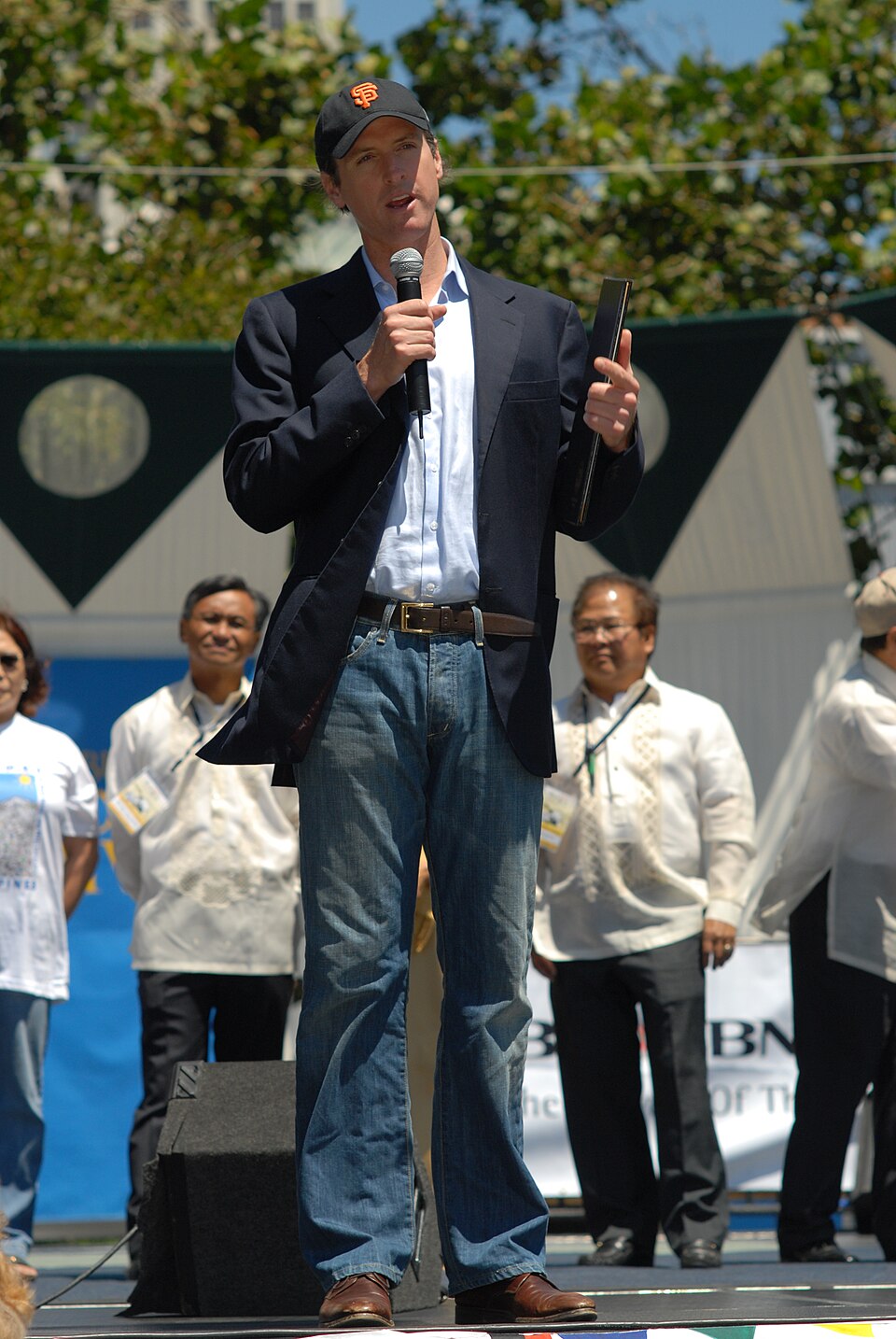
Gavin Newsom spent six years telling Californians that banning the sale of new gas-powered cars was the most important thing the state could do for the planet.
Now his own constituents are telling him exactly what they think of that.
And the numbers coming out of a brand-new nonpartisan poll are the kind of gut-punch that would make most politicians quietly reconsider — but not this one.
Two-Thirds of Californians Want Their Gas Cars Back
A survey conducted by the Public Policy Institute of California revealed that nearly 66% of adults and likely voters oppose Newsom’s executive order signed in 2020 that bans the sale of new gasoline-powered vehicles by 2035.
The opposition to the ban has increased across all political stripes in California, with the share of adults who want to keep buying gas-powered cars rising by 17 points since the order was issued.
The poll found that 91% of Republicans oppose Newsom’s ban on gas-powered car sales, 69% of independents, and 50% of Democrats. That last number is worth sitting with for a second. Half of his own party’s voters in his own state have turned against his signature climate achievement.
Negative attitudes are especially stiff in inland California, particularly the Central Valley, and among middle-class people with incomes between $40,000 and $100,000, those over age 55 and Republicans.
In July 2021, 51% of Californians supported the ban on gas-powered vehicle sales. The new poll also found that 33% of Californians say they have seriously considered buying an EV for their next car purchase, a decrease from 41% who said the same in 2023, and only 12% say they already own one.
So not only are Californians rejecting the mandate in growing numbers, they are also losing interest in the product the mandate is supposed to force them to buy. That is not a messaging problem. That is a reality problem.
The Cost Question Nobody in Sacramento Wants to Answer
Wayne Winegarden, an economics fellow at free-market think tank Pacific Research Institute, said the survey revealed a fundamental sentiment about affordability. “Families in California are feeling the costs from the state’s environmental policies. It’s why energy costs so much, contributes to the high cost of housing, and drives up the prices of most other products people buy,” he told The Post.
The Public Policy Institute of California’s survey director noted that “6 in 10 people who are saying that they feel that utility prices in their part of California are a major problem,” adding that “the reality is that if you have an electric vehicle, the electricity is not free.”
Those higher utility rates are also partly driven by the same green agenda from California Democrats who want the state grid to go carbon-free by 2045, which requires infrastructure upgrades and more costs passed onto ratepayers. The green mandates are essentially financing each other’s unpopularity.
Californians are also not convinced there will be enough charging stations to handle a lot more EVs. Twice as many people are not confident of that as are confident, the poll found.
And yet Newsom’s response to all of this is to dig in deeper.
When he issued the original executive order, Newsom declared, “This is the most impactful step our state can take to fight climate change.” He has not walked any of that back. Newsom has not wavered. After the Trump administration eliminated the $7,500 federal EV tax credit, the governor reaffirmed California’s commitment to the 2035 target. His statement was characteristically combative: “We won’t let this illegal action by Trump and Republicans in the pockets of polluters stand in the way of common-sense policy to clean our air, protect the health of our kids, and compete on the global stage.”
That is a politician running for president, not governing a state. The people paying his state’s electricity bills are an inconvenience to the brand.
Congress Acts, Newsom Sues, and His Own Successor Bails
The House of Representatives voted 246-164 to block California from implementing the ban. Thirty-five Democrats joined 211 Republicans in backing the measure.
The US Senate followed with a 51-44 vote to overturn California’s rule banning the sale of new gas-powered cars by 2035, as well as other zero-emission mandates on trucks.
But Newsom did not take the loss quietly. Governor Newsom and Attorney General Rob Bonta announced the state will file a lawsuit after senators voted to revoke California’s emission waivers that set stricter standards than federal regulations.
California Senate Minority Leader Brian W Jones (R-San Diego) had a pointed read on what that lawsuit is really about. “Now, Newsom and Bonta are using our tax dollars to try and take away Californians’ freedom of choice,” Jones said. “This lawsuit isn’t about protecting the environment. It’s about protecting Newsom’s political brand. His defense of this car ban is just him laying the groundwork for a future presidential campaign. Newsom wants to take this failed policy nationwide, even though Californians don’t want it, and neither do Americans.”
Transportation Secretary Sean Duffy did not mince words either. “I was proud to stand alongside President Trump to unveil our plan to eliminate the Biden-Buttigieg EV mandate and allow auto manufacturers to produce cars American families actually want to buy at a more affordable price. But Gavin Newsom is determined to continue pushing Democrat’s radical EV fantasy — even if doing so is illegal,” Duffy said. “Newsom may not care about lowering costs, but President Trump does.”
Attorney General Pam Bondi called the mandate exactly what it is. “Oppressive, expensive electric vehicle mandates drive up costs for American consumers and violate federal law,” Bondi said.
And here is the detail that really tells the story. Xavier Becerra, the Democrat expected to succeed Newsom as California’s governor, told the Los Angeles Times that Newsom’s 2035 goal is not realistic. “We can’t make it by ’35,” Becerra said. “But we can make it.” Sometime in the future. The man set to inherit Newsom’s office is already quietly backing away from the mandate Newsom refuses to let go of.
But Newsom signed a new executive order directing the California Air Resources Board to develop replacement zero-emission regulations anyway, even as the lawsuit plays out in court. He is going to keep pushing this until someone physically stops him, and he is betting the courts will be that someone.
What does any of this mean for ordinary Californians who just want to buy the car they can afford? Probably nothing good in the near term. The legal fight will drag on. The mandate, or some version of it, may survive in modified form depending on how the courts rule. And the families in the Central Valley who can not afford a Bidenmobile and can not find a working charger within 40 miles will keep getting told their concerns are a threat to the planet.
Newsom is term-limited and leaving office. He built this policy to serve a national ambition, not a state’s actual needs. The declining appeal of electric vehicles in California is attributed to factors such as the expiration of federal tax credits, rising electricity prices, and concerns about affordability driven by the state’s environmental policies. Those are not Fox News talking points. That is what the nonpartisan Public Policy Institute of California found when it asked regular Californians what they think.
And two-thirds of them said no.
Sources: Public Policy Institute of California poll (conducted June 29-July 6, 2026); New York Post; CalMatters; US Department of Justice press release (March 12, 2026); US Department of Transportation press release (March 12, 2026); California Senate Republican Caucus statement; American Tribune; Press Democrat/Los Angeles Times; Just The News