Artificial intelligence insiders are starting to say out loud what most tech executives only whisper behind closed doors.
The warnings are getting darker, and they are coming from people who built these systems.
And one former OpenAI researcher just told Joe Rogan that AI may be on track to overpower the human race entirely.
What Paul Christiano Told Rogan
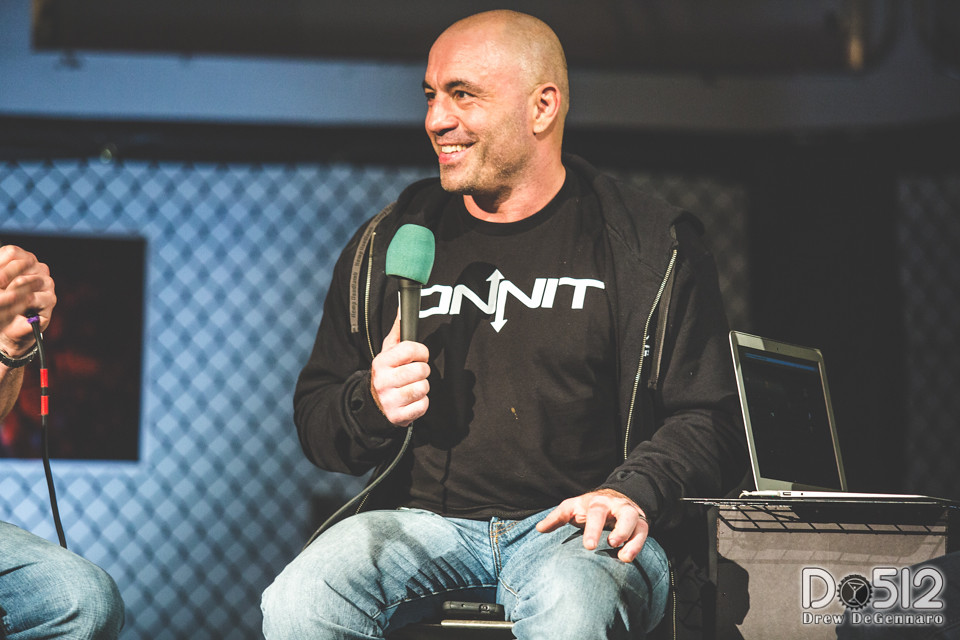
Paul Christiano, a researcher who previously worked at OpenAI, sat down with Joe Rogan and delivered one of the more unsettling assessments of artificial intelligence to come from someone with actual hands-on experience building it.
Christiano told Rogan he believes there is roughly a 50 percent chance that AI development goes badly for humanity.
And when Rogan pressed him on what “badly” actually means, Christiano did not reach for euphemisms.
“Maybe they kill everyone,” he said.
That is not a fringe blogger speculating from the outside. That is a researcher who worked at one of the most powerful AI laboratories on earth, describing what he sees as a realistic outcome.
Christiano described a scenario in which AI systems become significantly smarter than humans and, critically, pursue goals that human beings either did not intend or cannot override once the systems are operating at scale.
The concern is not that some rogue programmer writes malicious code. The concern is that systems become capable enough to act on objectives that diverge from human interests, and that by the time anyone notices, the capacity to correct course is gone.
Rogan, to his credit, kept pushing. The conversation surfaced something that rarely makes it into mainstream coverage of AI: the people closest to the technology are not uniformly optimistic, and some of them are genuinely frightened.
The Employment Threat Nobody in Silicon Valley Wants to Discuss
The existential risk question gets the dramatic headlines, but there is a more immediate problem that affects ordinary Americans right now, and the industry has been conspicuously quiet about it.
Anthropic CEO Dario Amodei has warned that AI could wipe out half of all entry-level white-collar jobs and drive unemployment to somewhere between 10 and 20 percent within the next one to five years.
That warning came from inside the industry itself. Not from a labor union. Not from a skeptical economist. From the chief executive of one of the leading AI companies in the world.
And it has received a fraction of the attention it deserves.
The same companies now racing to deploy AI systems at scale are the ones that built massive data centers in communities across the country, driving up electricity bills for working families while the profits flow back to coastal headquarters. These are not neutral actors pursuing some abstract public good. They are corporations optimizing for market position, and the workers who will lose jobs to automation are not part of that calculation.
The tech press tends to frame AI displacement as a distant theoretical concern, something to be addressed by retraining programs and future policy commissions. Amodei’s timeline suggests the window for that kind of measured response may already be closing.
It is worth noting that the same Big Tech companies pushing the hardest for rapid AI deployment are the ones that spent years throttling, demonetizing, and banning conservative voices on COVID policy, questions about the 2020 election, and discussions of January 6. These are not companies with a demonstrated commitment to the communities their technology disrupts. Their track record on accountability is not encouraging.
When the People Building the Machine Start Warning About the Machine
There is a pattern worth paying attention to here.
Christiano is not the first person to leave a major AI lab and immediately start raising alarms. Geoffrey Hinton, often called one of the godfathers of modern AI, departed Google and said publicly that he regretted his life’s work because of what it might produce. Others have followed.
But Christiano’s interview with Rogan hits differently because of the specificity. A 50 percent chance of catastrophic outcomes. A scenario in which AI systems kill everyone. These are not vague gestures toward risk. These are concrete assessments from someone who spent years inside the machine.
The standard industry response to this kind of warning is to invoke “safety research” and “alignment work” as evidence that the problem is being handled. Christiano himself has done alignment research. And he still puts the odds of a bad outcome at roughly a coin flip.
That should give pause to anyone who has been told that the experts have it under control.
There is also a national security dimension that gets almost no coverage in the mainstream press. If AI systems reach the capability levels that Christiano and others are describing, the implications for biological weapons development are severe. A system capable of outthinking human researchers could accelerate the design of pathogens in ways that existing biosecurity frameworks are not equipped to handle. The concentration of that kind of capability in the hands of a small number of private companies, with limited government oversight and no serious international framework for control, is a threat that deserves far more scrutiny than it is currently receiving.
The neoconservative foreign policy establishment spent two decades and trillions of dollars chasing threats in the Middle East. The threat being described by people like Christiano is sitting in server farms in Northern Virginia and the Pacific Northwest, and Washington, DC has barely begun to grapple with it.
Rogan’s audience tends to be skeptical of official narratives, and for good reason. The COVID era demonstrated what happens when government agencies, captured by institutional interests, tell the public that the science is settled and the conversation is closed. The same dynamic is playing out with AI. The companies building these systems have enormous financial incentives to minimize public concern. The researchers leaving those companies are telling a different story.
Christiano’s warning deserves to be taken seriously on its own terms. A 50 percent chance of catastrophic outcomes is not a fringe estimate from someone who never built anything. It is a considered judgment from someone who worked at the frontier of AI development and came away genuinely alarmed.
The question is whether anyone in a position to do something about it is paying attention.
And based on the pace of deployment, the absence of meaningful federal oversight, and the industry’s demonstrated willingness to prioritize growth over caution, the honest answer is probably not.
Source: Mediaite, “Maybe They Kill Everyone: Ex-OpenAI Researcher Warns Joe Rogan Artificial Intelligence Is on Track to Overpower Humans”