President Trump has spent years calling out biased coverage from the corporate press.
This time the fight followed him all the way to the United Nations.
And when Trump spotted a familiar face waiting outside, he did not hold back for a second.
Trump Spots CNN Waiting Outside The UN Doors
President Trump was not thrilled to see CNN reporter Kaitlan Collins amid the horde of journalists who were waiting to speak to him as he entered the United Nations. Trump roasted Collins as he arrived in New York to speak before the United Nations General Assembly, stating that CNN “shouldn’t be covering” him at the event.
Trump started off by saying he was honored to be at the UN before immediately noticing CNN was among the outlets in front of him. “It’s an honor to be here,” Trump said. “I’m surprised that CNN is here covering me. You shouldn’t be here, you should not be here covering me. You said you weren’t going to cover me, you shouldn’t be covering me.”
Collins did not back down. Collins barked back “the United Nations allowed us in, sir.” That answer did not do much to smooth things over.
Collins then responded by asking her question again. Her question centered on new CNN polling: “Two-thirds of Americans don’t think the U.S. is winning the war with Iran. When will it end?”
Trump then seemed to adjust his face and body in the direction of CNN’s camera to vaguely reply, saying, “We’re making a lot of progress. Our country is doing really, really well.” He then thanked all the reporters and walked off.
Why CNN Was Even A Question In The First Place
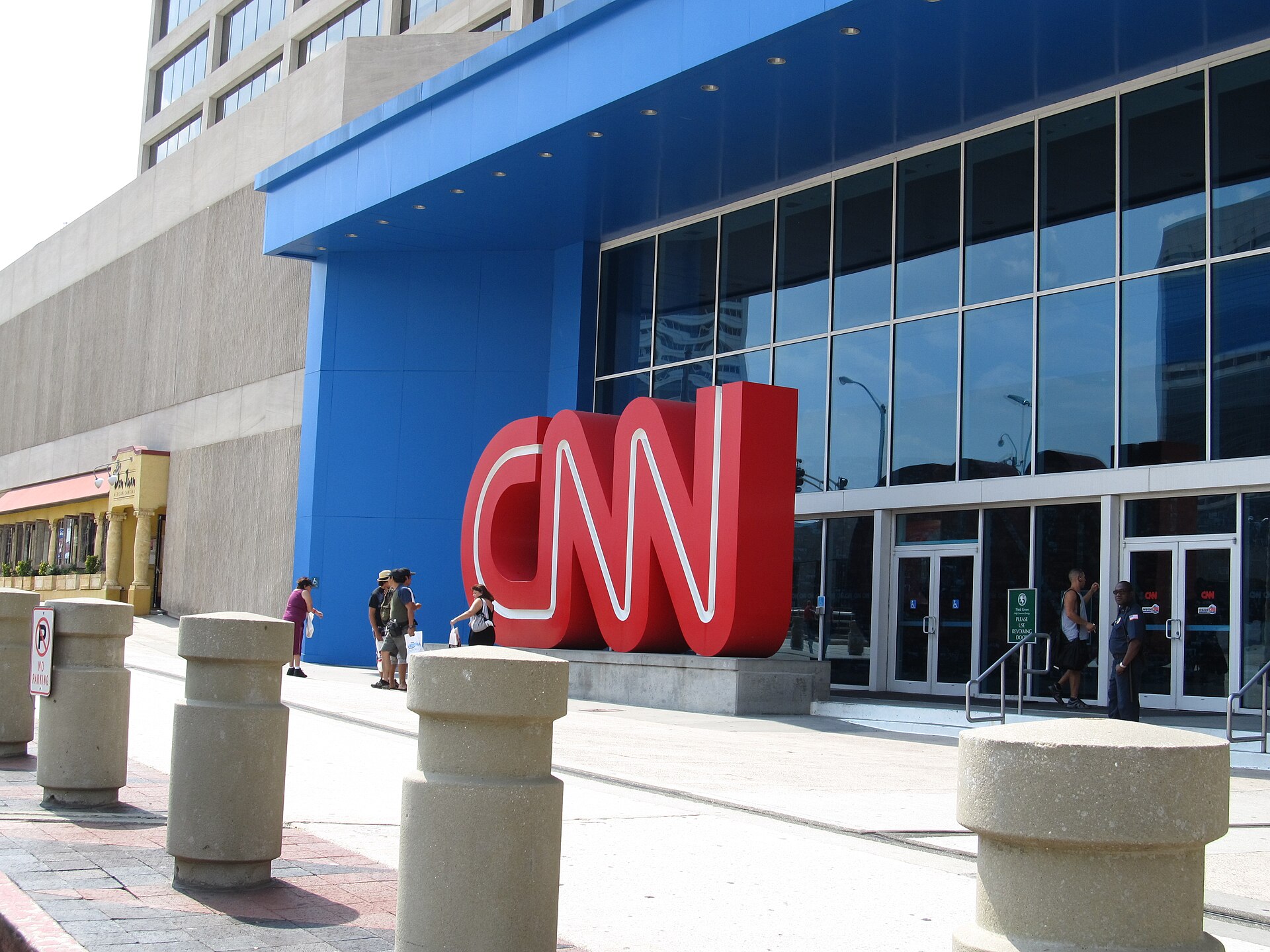
The exchange did not happen in a vacuum. Trump had announced days earlier that he had banned CNN, MS NOW and Politico from the White House over what he called their “constant ‘reporting’ FAKE NEWS,” writing that media outlets “shouldn’t be able to constantly write or report FICTION and LIES when they’re covering the President of the United States.”
The White House barred entry to staffers from the three outlets, revoking their press passes. News organizations responded by filing a lawsuit in federal court and banding together to halt video coverage of the president until further notice.
CNN, MS NOW and Politico argued in a joint statement that “without notice or process, the White House revoked our journalists’ credentials because it objected to our reporting,” adding that “left unchallenged, this threatens press freedom and the public’s right to independent journalism free from government interference.”
Their attorney did not soften the language either. Ted Boutrous, the same lawyer who represented CNN during the Jim Acosta fight in 2018, said the ban “is a direct assault on the First Amendment and a blatant violation of due process,” claiming Trump “has been explicit that this ban is intended to punish reporting he doesn’t like and to intimidate journalists and news organizations covering him and his administration.”
Vice President JD Vance saw it very differently. Vance argued that Trump is not “banning” media outlets at all, saying, “What he’s doing is saying we’re not gonna give you special access to the White House if you engage in what is effectively propaganda.”
The White House leaned into that framing directly. The administration issued a press release titled “White House access is a privilege, not a right,” arguing “the First Amendment protects their right to publish; it does not entitle them to a hard pass, briefing room seat, or place in the press pool.”
Trump kept his focus on the bigger picture once he got past Collins, telling reporters, “It is an honor to be at the United Nations, and we’re making a lot of progress. Our country is doing really, really well.”
Collins was only able to reach Trump in the first place because of a technicality. Trump’s White House press ban does not apply to events at UN headquarters, where reporters are credentialed by the UN rather than the White House. That loophole is exactly how CNN ended up standing in front of him at all.
A Pattern That Goes Back Years With CNN
This was not the first time Trump made his feelings about Collins clear. In July, Trump had insulted Collins at the White House Correspondents’ Association Dinner over her award for coverage of Trump’s Oval Office confrontation with Ukraine President Volodymyr Zelensky in February 2025.
Trump called the award “a fake,” saying “she shouldn’t get the award.”
Legacy outlets like CNN have spent nearly a decade treating skepticism toward their coverage as some kind of constitutional emergency, all while running polling and narratives that consistently lean against Trump and the America First movement. The Iran polling question Collins tried to ask him about is a good example. Rather than covering the substance of Trump’s diplomatic efforts to end the conflict, CNN chose to lead with a poll about public perception, the kind of framing that treats a diplomatic win as a public relations problem.
None of this is new territory for CNN specifically. During his first administration, Trump banned CNN’s then-chief White House correspondent Jim Acosta from the executive mansion, and CNN sued, with the White House subsequently restoring Acosta’s credentials.
What Does This Fight Actually Mean?
The current standoff is bigger than one testy exchange outside a UN building. It is part of a broader argument the Trump White House has been making for months: access to cover the president up close is a privilege granted by the government, not a constitutional entitlement that outlets can demand regardless of how they report the news.
Whether the courts ultimately side with Trump or with CNN’s legal team remains to be seen. But the argument Vance made, that this is about “special access” rather than censorship of what CNN is allowed to publish, tracks with a broader America First skepticism of a press corps that has spent a decade treating adversarial coverage of Republicans as a public service and friendly coverage of Democrats as simple objectivity.
CNN, MS NOW and Politico are free to publish whatever they want about Trump, Iran, tariffs or anything else. Nobody is stopping the presses. What Trump is disputing is whether those same outlets are entitled to a front row seat inside the people’s house while doing it.
Collins getting into the UN through a side door the White House ban does not cover is a small illustration of how these disputes will keep playing out. Credentialing bodies outside the West Wing, courts, and eventually voters will all have their say. For now, Trump made his message to Collins about as clear as it gets, delivered in person, on camera, with no ambiguity left for anyone watching.
Sources: Variety, Axios, The Hill, Mediaite, HuffPost, CNN, NBC News, CNBC, NBC News, Washington Post, MS NOW, Breitbart