Bill O’Reilly rarely picks a public fight with Donald Trump.
But the AI industry just handed him a reason to take the opposite side of a major fight.
And what O’Reilly said on live television is going to make a lot of Trump supporters nod along uncomfortably.
O’Reilly Breaks Ranks At The White House’s AI Moment
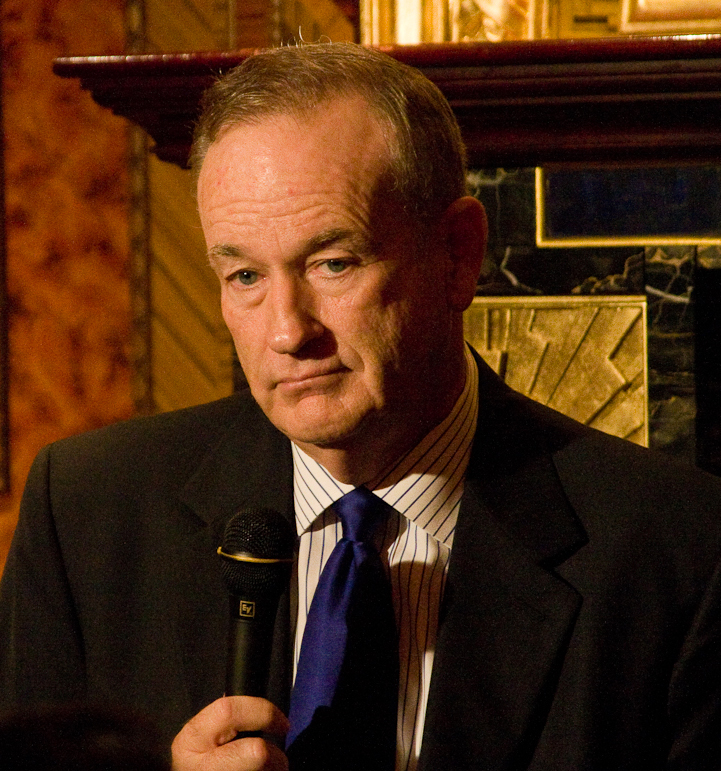
O’Reilly joined NewsNation’s Katie Pavlich on a recent evening after Trump’s get-together with AI tech leaders, where he had them sign a “morally binding” safety accord to self-police AI, which Trump is now referring to as “super intelligence.”
The gathering was supposed to be a show of unity between the administration and Silicon Valley’s biggest names.
Speaking to the press, Trump dismissed doomsday concerns about AI as a Democratic-led hoax and insisted that federal agencies already in place and self-policing by companies will keep AI from going out of control. That is the official White House position heading into the next phase of the AI buildout.
O’Reilly wasn’t buying it. He pushed back on Trump’s AI take and called for further action.
“I kind of disagree. I mean, I think you’re gonna have to have a new police agency, federal, that all they do is look at AI, because there are a lot of miscreants and gangs out there, even now,” O’Reilly said.
He didn’t speak in the abstract either. “Some men arrested this weekend in Holland, part of a criminal group that hacks into everybody, including the FBI. They hacked into the FBI personnel files,” he said.
And O’Reilly kept going. He added that “this is just going to get worse” when it comes to crimes like extortion, theft, or even crimes involving nuclear codes or “messing around with weaponry.”
But he wasn’t dismissing Trump’s underlying worry about Communist China either. “To me, I want to be as preventive as possible. Now, I understand the president knows China doesn’t see it our way,” O’Reilly said. He continued, “And they’re gonna try to pass us in technology. But as we saw with Covid, China didn’t have a very good security service at all.”
That last line lands harder than it sounds. O’Reilly is pointing straight at the CCP’s track record of hiding what it doesn’t want the world to see, a pattern this outlet has tracked for years regarding the Wuhan lab and the regime’s refusal of transparent investigation into COVID-19’s origin.
The Same Night Trump Called This Plan Almost Like A Constitution
O’Reilly’s comments came the same day Trump and Speaker Mike Johnson (R-LA) announced that some of the country’s largest AI companies had signed a voluntary agreement laying out safeguards for the development of advanced systems.
Trump described the agreement as “almost like a constitution” and “morally binding,” saying there would be a “tremendous self-policing aspect” to the industry’s approach, and the president also floated forming a committee to oversee the effort.
Several tech executives stood alongside Trump for the occasion, including Nvidia CEO Jensen Huang, Anthropic CEO Dario Amodei, SpaceX and xAI CEO Elon Musk, OpenAI President Greg Brockman, Google CEO Sundar Pichai and Meta CEO Mark Zuckerberg.
That’s quite a lineup of men who now hold enormous say over the information Americans see online.
And here’s the irony nobody in that room mentioned out loud: one of the men pledging to self-police has been sounding his own alarm for over a year, just not about hackers.
O’Reilly wasn’t finished either. “They’ve got to be punished. Congress has got to pass new laws,” O’Reilly said. He put it plainly elsewhere in the interview: “My thing is, there are so many criminals involved with this stuff that, inevitably, they’re going to get some power over AI.”
What O’Reilly’s Warning Reveals About Washington’s Bigger AI Blind Spot
Here’s the part that didn’t come up at the signing ceremony. Anthropic CEO Dario Amodei, who stood next to Trump that day, has a blunt, scary warning for the US government and everyone else: AI could wipe out half of all entry-level white-collar jobs and spike unemployment to 10-20% in the next one to five years.
That’s not a hacking problem. That’s an economic earthquake, and it’s coming from inside the house Trump just invited to the White House. Nobody at that summit signed a pledge about that.
Big Tech has a record worth remembering before anyone takes its self-policing promises at face value. These are the same companies that throttled, demonetized, and shut down conservative voices over COVID policy, the 2020 election, and January 6. A voluntary morality pledge from Zuckerberg and Pichai is not the same thing as accountability.
And there’s a darker use for all of this computing power than job losses or hacking rings. The same infrastructure being built out right now, paired with a left-wing cultural appetite for policing speech and behavior, creates the bones of a social-credit-style system.
Give the wrong people control of AI and you get censorship of conservatives, penalties for eating meat or supporting patriotic causes, and a template for technological authoritarianism in the next manufactured emergency. O’Reilly’s instinct toward a dedicated federal cop on the AI beat is at least aimed at actual criminals hacking into the FBI, not at ordinary Americans posting their opinions online. That’s a meaningful distinction, and it’s one Trump’s “self-policing” answer doesn’t really grapple with.
But there’s a tension here too. Conservatives have spent years, rightly, warning against handing Washington new permanent bureaucracies. A “new police agency, federal,” as O’Reilly put it, is still a new federal agency, and those things rarely shrink once Congress creates them. The honest answer probably sits somewhere between Trump’s confidence in existing tools and O’Reilly’s push for something built from scratch.
What’s clear is that the AI companies signing “morally binding” pledges are the same companies that built the massive data centers now driving up electricity bills for ordinary families in red counties, the same companies racing ahead of any real oversight, and the same companies whose own CEO is warning that half of entry-level white-collar America could be out of a job within five years. Self-policing sounds reasonable until you ask who’s actually doing the policing, and who benefits if they decide not to.
O’Reilly’s break with Trump on this one won’t make headlines for long. But the questions he raised, about criminals exploiting AI, about a Beijing regime with a documented habit of hiding what it doesn’t want seen, and about whether a handshake deal with six tech billionaires is enough, aren’t going away anytime soon. Congress will eventually have to decide whether “morally binding” is a policy or just a nice phrase for a photo op.
Source: Mediaite, “Bill O’Reilly Breaks With Trump on AI, Calls for ‘New Police Agency'”; The Hill, “O’Reilly: ‘I think you’re going to have to have a new police agency’ for AI”; NewsNation, “AI: Bill O’Reilly says US will need new federal agency to police the technology”; Axios, “Behind the Curtain: A white-collar bloodbath”