Virginia Democrat Senator Mark Warner is itching to hand the left a leash for artificial intelligence the minute Democrats take the Senate in January.
Federal officials still can’t explain why one router grounded every plane in the country.
And Warner just pinned the whole meltdown on one culprit before anybody finished the investigation.
Mark Warner Diagnosed the Patient Before the Lab Work Came Back
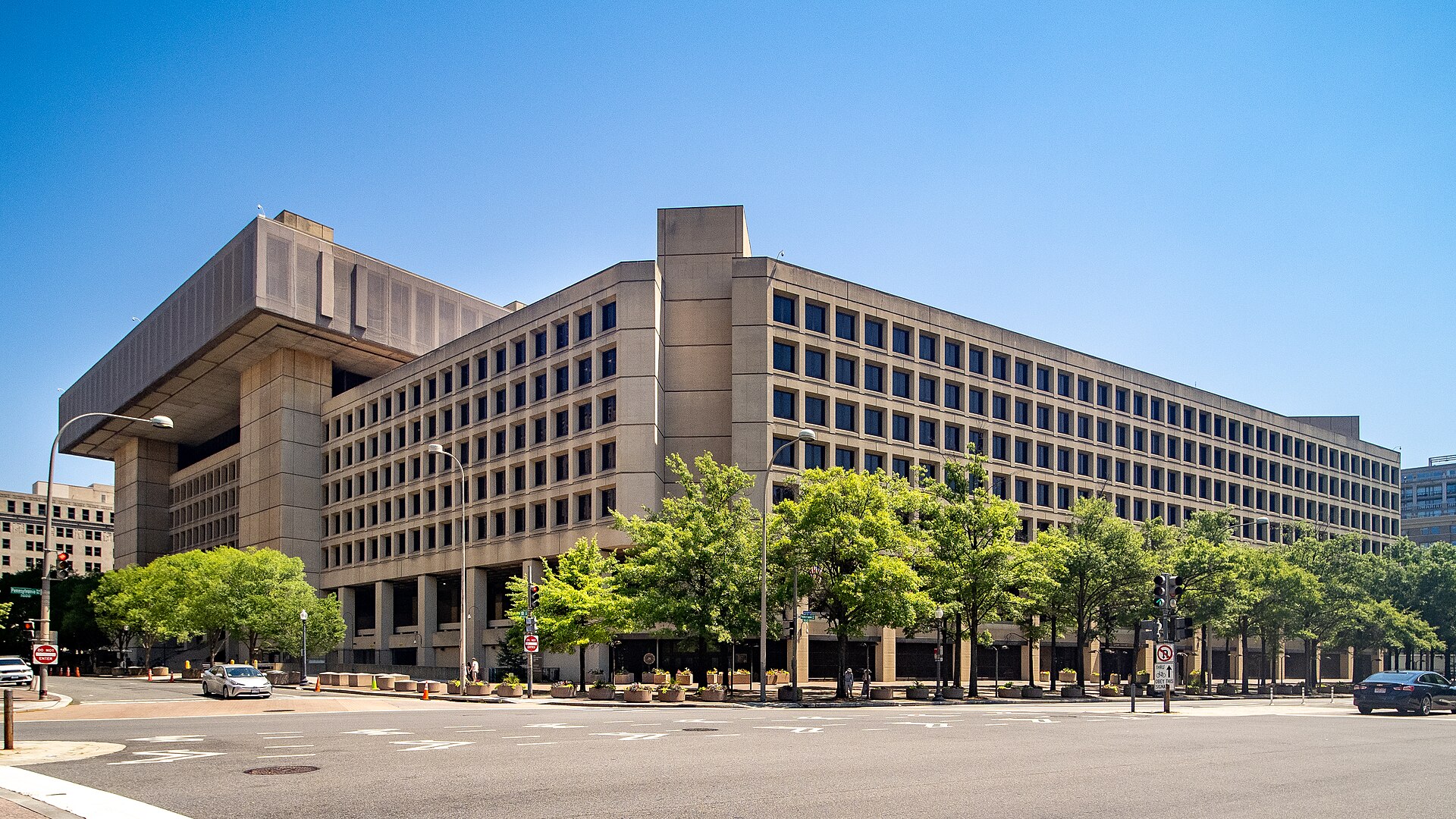
Fire crews raced to CIA headquarters in Langley, Virginia, after reports of smoke inside the building. Fairfax County Fire and Rescue traced it to the heating and air conditioning system and found no fire and no emergency.
But a jumpy country had already watched Microsoft Outlook crash, a nationwide ground stop strand thousands of travelers, and banking apps lock customers out of their own money. Folks didn’t need much convincing to assume the worst.
US Senator Mark Warner (D-VA) had an answer ready. In a lengthy post on X, the top Democrat on the Senate Intelligence Committee declared that “there is no indication that these incidents are the result of a cyberattack, foreign interference or some coordinated effort.”
Then he named a villain anyway.
Warner called the outages a “consequence of how quickly artificial intelligence is changing the cybersecurity landscape.” His theory goes like this: AI tools dig up software holes so fast that every company and agency scrambles to patch at the same moment, and the patching itself knocks systems over.
“It feels like every day brings another reminder that AI is moving faster than our ability to manage its consequences,” Warner wrote.
And his prescription came straight off the Democrat shelf. Warner wants “commonsense guardrails on AI and stronger cybersecurity protections.”
The Router Mystery Nobody in Washington Can Solve
US Senator Rand Paul (R-KY) sat through a closed-door briefing with Transportation Secretary Sean Duffy and walked out with a lot less certainty than Warner.
Paul, who chairs the Senate Homeland Security and Governmental Affairs Committee, told The Story with Martha MacCallum that officials have ruled out a cyberattack or AI meddling in the ground stop because the affected FAA network runs on its own. But that’s about where the explanation ran dry.
“They sound uncertain about exactly what happened to the router, why it was getting into areas it wasn’t programmed to do,” Paul said.
He said he’d seen “no evidence that there was a foreign actor or a cyberattack.” But he didn’t slam the door, either. Paul added that “we certainly should look.”
Director of National Intelligence Jay Clayton offered a similar reading on foreign governments, telling reporters that “we do not see the indicia of state-sponsored activity here.”
So the people closest to the broken equipment admit they can’t fully explain it. The senator who wasn’t fixing anything already knows exactly what to regulate.
Maybe that’s a little rough on Warner. Plenty of tech people have floated the same patching theory, and it may well hold up. Fair enough. But a plausible hunch still isn’t a finding, and Warner is already converting his hunch into a legislative wish list.
Americans Already Voted With Their Shopping Carts
Costco Chief Financial Officer Gary Millerchip told Bloomberg News that 21 of the 26 high-ticket generators the company sells online have sold out. He said customers started stocking up on rice, canned goods, water, and batteries back in October.
Those families aren’t waiting on a Senate committee to keep the lights on. They wrote their own plan.
And nobody standing in that checkout line asked Warner to referee what counts as trustworthy news. He volunteered for the job anyway. “Americans deserve clear, reliable information and a government that is prepared to respond,” Warner wrote.
Warner’s Last Big Tech Rulebook Went After ‘Disinformation’
Clear, reliable information. Hang on to that phrase, because Warner left a paper trail on exactly that subject.
In the summer of 2018, Warner circulated a white paper called “Potential Policy Proposals for Regulation of Social Media and Technology Firms.” It laid out 20 proposals, and a big chunk of them targeted online “disinformation.” One idea would have forced platforms to verify and disclose the geographic origin of user accounts and posts.
Now picture that machinery in the hands of officials who get to decide which opinions qualify as disinformation. The country doesn’t have to imagine it. Big Tech throttled, demonetized, and booted Americans who questioned COVID lockdowns, the 2020 election, and the official story about January 6.
Those same companies now build the AI systems Warner wants to fence in. They’re also dropping power-hungry data centers into red counties, where local families get stuck with the higher electric bills.
Guardrails sound like highway safety. In Washington, they usually decide which lane conservatives get to drive in.
The Incoming Spy Chief Has a History With Back Channels
None of this would matter much if Warner were some backbencher. He isn’t. Virginia voters handed him a fourth term in November, and with Democrats grabbing the Senate majority in January, he’s in line to chair the Senate Intelligence Committee.
That gavel oversees the CIA, the NSA, and the rest of the spy apparatus. It comes with subpoena power, too.
Warner’s last turn near the top of that committee produced a memorable chapter. In February 2018, Fox News published text messages showing Warner spent weeks in 2017 working through Adam Waldman, a lobbyist for Russian oligarch Oleg Deripaska, to reach Christopher Steele. Steele wrote the unverified dossier that Hillary Clinton’s campaign and the DNC helped bankroll, the same document that fueled years of Russia collusion investigations into President Trump.
And now the same man wants to write the rules for machines that will soon sort what Americans see, read, and search.
The Off Switch Shouldn’t Belong to the Censorship Crowd
AI skepticism doesn’t belong to the Left. Anthropic chief executive Dario Amodei told Axios in May 2025 that the technology could wipe out half of all entry-level white-collar jobs and drive unemployment to somewhere between 10 and 20 percent within one to five years. That’s an industry insider sounding the alarm, and working families have every reason to listen.
But the answer to Big Tech’s power can’t be handing the controls to the party that leaned on Big Tech hardest during the pandemic. An AI censor never sleeps. A social-credit-style score could dock Americans for eating red meat, filling up a pickup, or backing patriotic causes. And in the next declared emergency, the same tools could track who stayed home and who didn’t.
Nobody in Warner’s office has drafted that bill. Not yet, anyway. But his 2018 paper shows the instinct, and January hands him the committee room.
President Trump holds the veto pen through January 2029, and Democrats know it. So expect the hearing room to do the heavy lifting, with tech executives hauled in under the lights and pressed to “voluntarily” adopt whatever guardrails the new chairman prefers. That quiet arm-twisting built the COVID-era censorship regime in the first place.
Warner says he plans to keep “pressing for answers” on the outages. Americans might have a few questions for him, too.
Back in March 2017, Warner texted a lobbyist about reaching the author of the Steele dossier. “We have so much to discuss u need to be careful but we can help our country,” he wrote.
Sources: Daily Mail, “Emergency response at CIA headquarters in DC after smoke reported coming from HVAC system” (live blog); Foley Hoag, “Senator Warner’s White Paper Gives Congress Options for Regulating Social Media and Technology Companies”; Sen. Mark Warner, “Potential Policy Proposals for Regulation of Social Media and Technology Firms” (white paper draft); Libertarian Institute/Reason Roundup on the Warner white paper; WHRO, “Some of Virginia’s congressional delegation could hold powerful positions in the new Congress”; WCYB, “Democrat Mark Warner wins reelection to U.S. Senate from Virginia”; The Washington Times, “Warner’s contacts with Russian-linked lobbyist a big deal”; Axios, “Mark Warner tried to arrange meeting with dossier author”; Washington Examiner coverage of the Warner-Waldman texts.