Moscow has a long history of hiding what happens behind the locked doors of its laboratories.
Now a young researcher is dead, hundreds of people are sitting in quarantine, and the official explanation keeps shifting.
And Donald Trump answered the crisis with one offer the Kremlin probably didn’t see coming.
A Dead Lab Worker and a Story That Keeps Changing
Darya Shipilova was 28 and worked at the Irkutsk Anti-Plague Institute in Siberia, a place built to study the kind of germs most people only read about in history books.
According to the Daily Mail, she told medical staff she had accidentally broken a test tube holding live bacteria. Russian outlet Lyudi Baikala put the possible exposure at September 25, UNITED24 Media reported.
She fell ill on a field expedition with colleagues in Buryatia, the Russian region along the Mongolian border. A hospital admitted her on September 29, and doctors put her on a ventilator. Euronews reported that she died in the early hours of October 2 in the intensive care unit of the district hospital in Shelekhov, a satellite town of Irkutsk.
One detail makes the whole thing far more serious. Shipilova had personally handled Yersinia pestis, the bacterium behind plague and the Black Death that wiped out millions of Europeans in the Middle Ages.
Health authorities put roughly 200 people who crossed paths with her under observation.
Then on October 6, Russian local media claimed a second person had died at the Irkutsk district hospital after allegedly contracting plague. The Daily Star reported that the posts announcing that death later vanished.
The Kremlin Reaches for the Delete Button
Russia’s federal health watchdog, Rospotrebnadzor, tells a very different story. On October 4, the agency said Shipilova died of “pneumonia of an unspecified type” and insisted that “the sanitary and epidemiological situation in the Irkutsk region and the cities of Irkutsk and Shelekhov is stable.”
Kremlin press secretary Dmitry Peskov told the public to tune out everybody else. “One should rely on official statements from Rospotrebnadzor rather than listening to various rumors and speculation,” Peskov said, according to the Daily Mail.
But Russia’s own officials can’t seem to keep their stories straight. Alexey Tsydenov, the governor of neighboring Buryatia, first described Shipilova as “the woman who died from plague.” He later dialed that back to say she “may have died from plague.”
Governor Igor Kobzev said the regional government had convened a special meeting of its sanitation and epidemic prevention commission “about a suspected case of a particularly dangerous infection in a resident of the region,” according to Meduza as cited by Mother Jones. Russia’s chief sanitary doctor, Anna Popova, flew to Irkutsk to run the response herself. She hasn’t said a word in public.
And then the reports started disappearing. Stories about the outbreak reportedly vanished from Moscow’s Channel 5 and the national daily Kommersant. The independent outlet The Insider said the federal channel REN TV scrubbed all five of its plague stories.
The city administration of Baikalsk, near the Mongolian border, posted a Telegram message on October 3 asking residents to limit trips to Shelekhov because of “unofficial information about a confirmed case of plague.” Lyudi Baikala reported the post vanished two hours later.
Conditions on the ground look nothing like stable. Lyudi Baikala reported that City Clinical Hospitals No1, No3, and No10, along with the Ivano-Matreninskaya Children’s Hospital, shut their doors for a three-week quarantine. Residents described workers in full protective suits. Online searches for “chuma,” the Russian word for plague, jumped 5,000 percent over the same point a year earlier, according to The Times.
Mongolia, Kyrgyzstan, and Uzbekistan aren’t waiting for Moscow’s permission to worry. All three tightened health checks at their borders.
Senior Russian epidemiologist Mikhail Favorov didn’t buy the broken test tube explanation for a second. “It’s laughable. Someone working at the Anti-Plague Institute in Irkutsk wears a protective anti-plague suit,” Favorov said, according to the Moscow Times as cited by the Daily Mail.
“It’s absolutely hair-raising. We will not be told what really happened,” he added.
Trump Offers Help While Moscow Points Fingers
But back in Washington, DC, the Trump administration took the steady route. Secretary of State Marco Rubio told reporters on October 5 that the administration was monitoring the reports, noting that very little travel moves between the US and Russia.
“I don’t think it’s cause for alarm, but it is cause for focus and a cause to just keep an eye on it,” Rubio said.
President Trump went a step further and offered American help. “We just heard about it, and they call it pneumonia,” Trump said. “The microbes and the germs have gotten stronger disproportionately, but we’ll help them.”
Notice what the President didn’t do. He didn’t call for lockdowns, he didn’t stoke panic, and he didn’t pretend to know more than anyone knew. He offered a hand and kept his eyes open.
Moscow’s reply landed on October 6, and it was something else. Rospotrebnadzor declared that “The Russian Federation is ready to assist the US in combating infectious disease outbreaks.” The agency offered to ship over specialists and lab equipment, then pointed to measles cases in three US states and a fatal plague case in New Mexico in June.
So a government that can’t bring itself to say “plague” about its own dead lab worker volunteered to lecture America about plague. Somebody in Moscow apparently thought that was a clever move.
Communist China Wrote This Playbook First
Anyone who lived through 2020 has seen this movie.
A dangerous pathogen. A government laboratory sitting smack in the middle of the story. Doctors who know more than they’re allowed to say. Reports that evaporate from the internet. And a state agency insisting everything is under control.
Communist China ran that exact routine in Wuhan. The Chinese Communist Party silenced doctors, stonewalled outside investigators, and treated anyone who raised the possibility of a lab accident like a crank. Years later, a laboratory-related origin for COVID-19 remains a serious and under-investigated possibility, and the CCP’s obstruction remains on the record.
To be fair, nobody outside Russia knows yet whether a second death actually happened, or whether plague killed Shipilova at all. Rospotrebnadzor could still produce lab results that settle the question. But a government that deletes news reports and sends its press secretary out to tell people what to believe doesn’t exactly earn the benefit of the doubt.
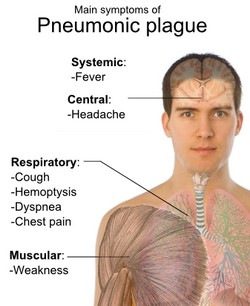
And the medical stakes are real. Pneumonic plague attacks the lungs, bringing fever, shortness of breath, and coughing up blood, usually three to seven days after exposure. Left untreated, it kills almost everyone it infects. Doctors who start antibiotics within the first 24 hours can cut the death rate to around 17 percent, according to the Daily Mail.
That’s why reports of treatment drugs running short in the region matter so much. And every hour a government spends managing headlines is an hour sick people could spend getting the medicine that saves them.
The lesson applies closer to home, too. Americans watched their own health bureaucracy flip its guidance over and over during the pandemic, and plenty of them stopped trusting it. The Make America Healthy Again movement grew out of that frustration with institutions that demanded blind faith instead of handing over the facts. Trust comes from telling the truth early, even when the truth is ugly.
Russia now faces that same test, with its neighbors guarding their borders and the US watching closely.
If Moscow keeps hitting delete, the rest of the world will assume the worst. And if that second death turns out to be real, “pneumonia of an unspecified type” is going to look an awful lot like Wuhan’s first press releases.
“Russian media claims a second victim has died from ‘plague outbreak’ at infection zone hospital as Kremlin scrambles to cover up details,” Daily Mail
“Has plague returned to Siberia? Panic in Russia after death of lab worker,” Euronews
“Reports of a Plague Outbreak in Russia Follow the Death of a Researcher,” Mother Jones
“Russia Hides Potential Pneumonic Plague Outbreak After Fatal Lab Breach,” UNITED24 Media
“‘Black death plague kills second victim’ as officials scramble to deny outbreak,” Daily Star