Donald Trump doesn’t like being told no.
An old enemy just told him no anyway.
And what the President posted afterward on Truth Social is the kind of message that reopens a fight nobody wanted to have again.
Trump Blasts the Fed’s First Rate Hike in Three Years
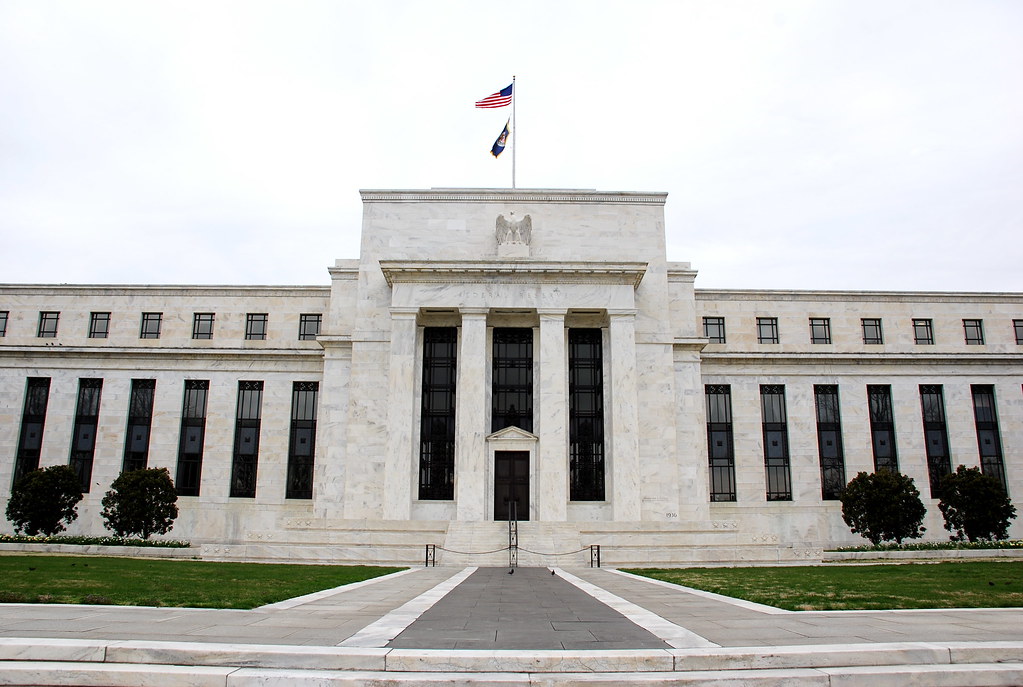
The Federal Reserve raised interest rates by a quarter point, marking an interest rate hike of 0.25 percentage points as a way to battle inflation. It was the first increase in over three years, and it happened to be the very first rate decision made under newly installed Fed Chair Kevin Warsh, whom Trump nominated to the post earlier this year.
Trump did not take it well.
He fired off a Truth Social post declaring that “Interest Rates in the United States should be 1%, or less, because we are the Best Credit in the World — BY FAR. Our Country is BOOMING with new Investment!”
He wasn’t finished.
Trump added that if we stopped Trading with every country that we have a Deficit with, which is most of them, we would make, at least, 1.5 Trillion Dollars a year, and he made clear he views trade imbalances as a national embarrassment rather than a normal feature of global commerce.
“The word ‘Deficit’ is nothing more than a fancy word for LOSS. We are ‘carrying’ almost every country in the World, and that cannot go on any longer,” he wrote.
Then came the all-caps line that will end up in every headline about this story.
“LOWER THE INTEREST RATES FOR THE UNITED STATES OF AMERICA, AND FAST!”
Warsh Stays Quiet While Trump Keeps the Pressure On
Reporters tried to get Fed Chair Kevin Warsh to say whether he and Trump had talked about the decision beforehand.
He wouldn’t bite. Federal Reserve Chair Kevin Warsh, nominated this year by Trump, refused to discuss any conversation he had with Trump about the topic during a presser after the decision was announced.
But Trump wasn’t done making his case for why the hike never should have happened in the first place.
“A STRONG COUNTRY MEANS A LOWER INTEREST RATE – IT’S A BETTER CREDIT…Very simple! We should have the LOWEST RATE of any country in the World, like ‘the old days,'” Trump wrote.
And he tied the whole thing back to trade leverage, arguing that without the United States agreeing to allow them their big surpluses, and we could stop that immediately, they would no longer be considered financially ELITE.
Trump went a step further and connected his interest rate demand directly to his tariff authority, writing “LOWER THE RATE OR I’LL STOP TRADING WITH COUNTRIES WITH WHICH WE HAVE A DEFICIT, which the U.S. Supreme Court, in its ridiculous and very costly Tariff decision, strongly acknowledged ‘the President’ has an absolute right to do.”
He capped it off with a line that sums up his whole trade philosophy in five words: “IT’S BETTER THAN TARIFFS!”
Trump’s parting shot to the central bank was blunt. “The Fed Board, with its great new leader, must get smart – BE PATRIOTS for a change. High interest rates put the U.S.A. at a very unfair disadvantage, and I won’t allow that to happen!”
The Federal Open Market Committee didn’t exactly split on the decision either. The vote to raise rates was unanimous, with officials pointing to inflation that has stayed stubbornly elevated. Reporting on the hike noted that the rate increase was largely expected, as inflation has ticked up as a result of the ongoing conflict involving Iran, alongside elevated energy costs that have squeezed household budgets across the country.
An Unelected Board Still Runs America’s Money Supply
Here’s the part of this story that doesn’t get said enough.
The Federal Reserve is not a neutral, above-politics referee quietly balancing the economy for the good of the country. It’s a central bank with the power to set interest rates and expand the money supply, and that power lets it centrally plan enormous portions of the American economy from behind closed doors.
That same power is what allows Washington to run up deficits that would otherwise be politically impossible, because the Fed can simply create the money to paper over the difference.
Nobody should forget how that has played out before. The Fed’s prolonged low-rate, cheap-money policies in the run-up to 2008 helped inflate the housing bubble that eventually blew up the economy and led straight to the TARP bailouts. Money creation during the Biden years poured fuel directly onto the inflation fire that Americans are still paying for at the grocery store and the gas pump.
And the Fed’s September 2024 decision to cut rates, right in the heat of a presidential election, looked to plenty of Americans like a thumb on the scale rather than sound monetary policy.
Now the same institution wants credit for finally raising rates to fight inflation it helped create in the first place.
But it still won’t open its books to a full, independent audit. That secrecy is not a minor bureaucratic quirk. It’s the whole problem.
What This Means for the Rest of Trump’s Economic Agenda
Trump’s frustration here isn’t happening in a vacuum.
He has spent much of his second term arguing that tariffs and trade enforcement, not central bank tinkering, are the real path to correcting decades of one-sided trade deals that hollowed out American industry.
His reference to the Supreme Court’s tariff ruling wasn’t a throwaway line. It’s a reminder that his administration views tariffs as leverage the executive branch is entitled to use, and that a Fed unwilling to cooperate on rates just gives him more reason to lean harder on tariffs instead.
But there’s a fair question buried in all of this that goes beyond any one rate decision. If a single unelected board can raise borrowing costs on every small business, every mortgage holder, and every credit card user in the country while refusing to explain its private deliberations to the President or the public, who exactly is that board accountable to?
Not voters. Not Congress in any meaningful day-to-day sense. Certainly not the working families who feel every basis point in their monthly bills long before Wall Street does.
That’s the case for a full audit of the Fed that goes beyond partisan grievance of the moment. It’s also the case, for a growing number of Americans on the right, for winding the institution down altogether and replacing central planning of money with something closer to sound, transparent monetary policy that isn’t run by a handful of appointed officials who never have to face voters.
Trump got a rate hike he didn’t want, from a Fed chair he personally nominated, delivered by a unanimous vote he had no say in. Whether that changes anything about how the Fed operates going forward is anyone’s guess. Warsh isn’t talking, and the Fed rarely does more than it has to.
But the fight over who really controls the cost of money in America isn’t going away, and Trump made it very clear this week that he isn’t backing off it either.
Sources: Mediaite, “NEW: Trump Demands the Fed ‘LOWER THE INTEREST RATES’ In Angry Post Following Hike”; Gizmodo, “Trump Flips Out on Truth Social as Fed Hikes Interest Rates”; CNBC, “Trump still has confidence in Fed’s Warsh, wants lower interest rates”