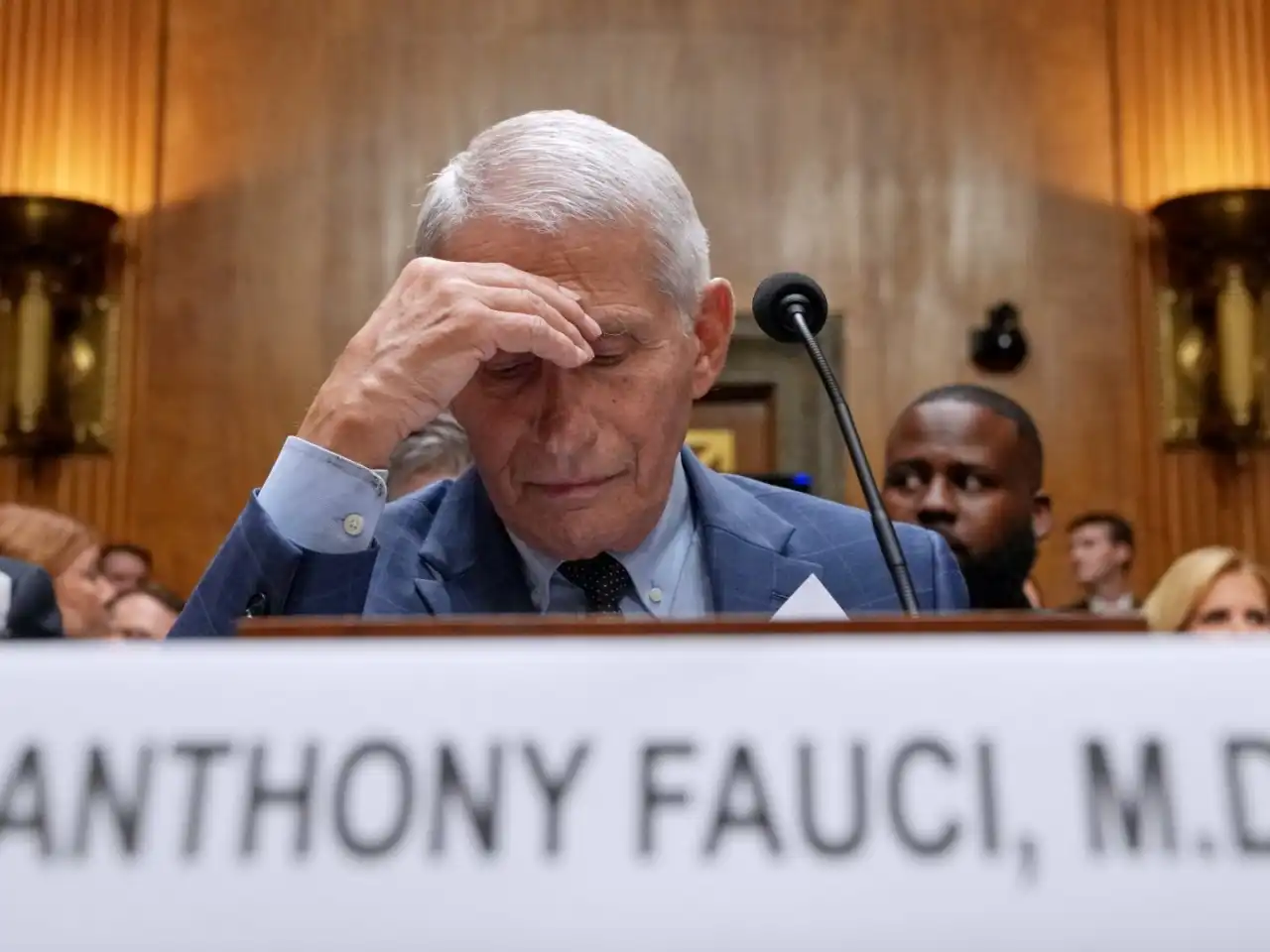
Anthony Fauci sat before a Senate committee and refused to answer a single question.
He did it 111 times. And now the states are coming for him.
Louisiana just joined the growing list of states that aren’t willing to let the man who shaped America’s COVID response walk away behind a presidential pardon.
Louisiana Joins the Fight After Fauci’s Senate Silence
Louisiana Attorney General Liz Murrill said her office will investigate Dr Anthony Fauci, days after the former top health official invoked his Fifth Amendment right during a contentious Senate hearing.
Fauci, the former director of the National Institute of Allergy and Infectious Diseases, invoked his Fifth Amendment right against self-incrimination 111 times during the Senate Homeland Security and Governmental Affairs Committee hearing and declined to answer lawmakers’ questions.
Murrill didn’t mince words.
“Fauci lied,” Murrill wrote. “Louisiana and Missouri deposed Dr Fauci. At the time, he claimed to not recall many key details of his own actions and now we are discovering contemporaneous records he kept.”
“Louisiana will join Alabama and Florida in investigating Fauci and whether he committed any other offenses that could be pursued in our State courts,” she added.
Louisiana Governor Jeff Landry didn’t stay quiet either.
Landry wrote on X, “As someone who was Attorney General alongside Eric Schmitt, and deposed Dr Fauci, I am happy to have Louisiana join Alabama and Florida!”
That’s three states now. And the number could grow.
The Diary That Changed Everything
The Senate hearing didn’t happen in a vacuum. Senator Rand Paul (R-KY), who chairs the Senate Homeland Security and Governmental Affairs Committee, had been building toward this moment for years.
The release of a 1,141-page document came ahead of Fauci’s appearance before the Senate committee. Paul and his investigators had uncovered something Fauci almost certainly never expected to see made public: his own private diary entries from the pandemic years.
The internal notes, which Paul and others have taken to referring to as Fauci’s “diary,” suggest Fauci appeared to publicly overstate the death rate from COVID-19 compared to what he wrote privately.
That gap between what Fauci wrote privately and what he told the American public is exactly what Republicans on the committee wanted him to answer for. He refused every single time.
“On the advice of counsel, I respectfully decline to answer, based upon my rights, under the Fifth Amendment of the Constitution,” Fauci repeated over the course of the nearly three-hour hearing.
After making a brief opening statement in which he accused Paul of an “unhinged obsession with me,” Fauci did not answer any questions during the hearing, citing his Fifth Amendment right.
And yet Fauci had no problem talking when it benefited him. For years, he appeared on television, gave interviews, and lectured the country about what to do. Now, faced with direct questions under oath, he went silent.
Republican members of the committee took turns raising claims that Fauci was responsible for COVID lockdowns and school closures, that he lied about the safety of COVID-19 vaccines and discredited alternative treatments like ivermectin and hydroxychloroquine, that he abused his power.
None of it got a response.
Biden’s Pardon Won’t Reach the States
Here’s where things get complicated for Fauci. Joe Biden handed him a preemptive pardon before leaving the White House in January 2025. His legal team pointed to that pardon as the reason he couldn’t safely answer questions without risking new legal exposure.
But a presidential pardon covers federal offenses. It doesn’t touch the states.
Senator Tommy Tuberville (R-AL) told Fox News Digital that the pardon cannot prevent prosecution at the state level under the Constitution, which says presidential pardons cover “offenses against the United States.”
“Anthony Fauci is responsible for the deaths of millions of Americans and tens of thousands of Alabamians,” Tuberville told Fox News Digital. “The ‘pardon’ signed by Joe Biden’s autopen doesn’t apply to state-level crimes.”
Tuberville, who is running for governor of Alabama, made clear what he intends to do if he wins.
“When I’m governor of Alabama, I will look into ways we can hold Fauci accountable for all of the Alabamians who died under his watch,” he said.
And he wasn’t done.
“We lost 20-30,000 people in Alabama alone, and I hope every damn one of them sues Fauci.”
Florida Attorney General James Uthmeier had already moved before Louisiana’s announcement.
“Fauci’s lack of candor to Congress is unbelievable. My office is launching an investigation into Dr Fauci.”
Rand Paul said the committee will vote on a contempt resolution against Fauci. That vote could add federal pressure on top of whatever the states decide to pursue.
Although Biden’s pardon protects Fauci from prosecution for actions before January 2025, Republicans say any false statements made under oath during this hearing could still expose him to perjury charges.
What This Really Means for the COVID Reckoning
The broader story here isn’t just about Anthony Fauci. It’s about whether the people who ran America’s COVID response will ever face any real accountability at all.
Americans who lost businesses, who watched their children fall behind in government schools that stayed closed for years, who were fired from jobs for refusing vaccine mandates, who buried family members while being told to follow the science — they never got answers. The lockdowns came and went. The mandates came and went. The officials who made those calls moved on to book deals and speaking fees.
Fauci sat in that hearing room knowing he would say nothing. His lawyers told him to say nothing. And the pardon Biden handed him on the way out the door was supposed to make sure he never had to say anything at all.
But Louisiana, Alabama, and Florida are now signaling that the strategy of running out the clock may not work as cleanly as Fauci’s legal team hoped. Presidential pardons apply only to federal offenses and do not automatically prevent state investigations or prosecutions. Republicans argue that Biden’s pardon therefore cannot shield Fauci from every possible legal consequence.
The contempt vote coming in the Senate adds another layer. Paul warned Fauci during the hearing it is “against the law to obstruct an investigation of Congress” and suggested he could face “repercussions” for refusing to answer.
Fauci spent 38 years at the NIH believing the rules didn’t quite apply to him the way they applied to everyone else. He may be about to find out what happens when three state attorneys general and a Senate committee chairman disagree.
The diary entries alone raise questions that deserved answers under oath. What Fauci wrote privately about COVID death rates and what he told the public and Congress are, by the accounts of Paul’s investigation, two very different things. That gap matters. It matters to the families who made decisions based on what they were told by the government’s top health official. And it matters to the states now lining up to ask the questions the Senate hearing never got to hear answered.
Fauci took the Fifth 111 times. That number will follow him for a long time.
Sources: Fox News Digital; Washington Times; Truth Press; CIDRAP; Axios; Forbes