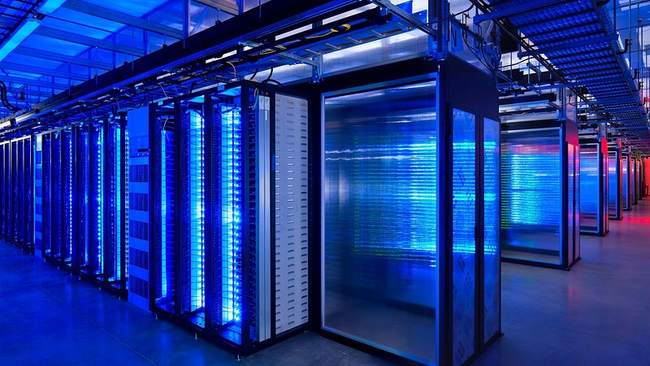
Big Tech has been racing to plant massive data centers in communities across the country, and most Americans want no part of it.
The numbers are in, and they are not close.
And now even CNN’s own data analyst is calling the whole thing “electoral poison” — and the poll backing him up came straight from Fox News.
The Numbers Are Lopsided and Getting Worse
A recent Fox News survey found 76% of Democrats and 60% of Republicans said they oppose building a data center in their area “to support artificial intelligence technology,” as the survey put it.
A broader question about whether AI development itself is “bad for society” also produced rare cross-partisan agreement, with 63% of Republicans, 74% of Democrats, and 75% of independents saying yes, alongside 70% of Americans overall.
The Fox survey also found the most likely Americans to oppose data centers were white women with a college degree at a whopping 84%; those most in favor were MAGA-identified Republicans, but that still came in at only 46% in favor.
“There is no debate when it comes to where people stand on AI and data centers, and simply put: it’s electoral poison at this point,” CNN chief data analyst Harry Enten said.
That quote came from a CNN segment, but the data Enten was citing came from a Fox News poll. When CNN and Fox News data are pointing the same direction, something real is happening in the electorate.
“You see across the board a clear position which is a vast majority of Americans and voters are against building AI data centers,” Enten added.
And he is not wrong. The opposition is not a fringe position. It is the majority position, held by people in rural counties, suburbs, and cities alike.
What Ordinary Americans Already Know About These Facilities
The grievances driving this sentiment are not abstract. Rural landowners, ranchers, and both Republican and Democrat officials have raised concerns about strained water supplies and rising electricity costs, as well as land use.
A growing fight is brewing nationwide as the rapid expansion of data centers pits Big Tech against local homeowners, raising concerns about transparency, power demand, diesel generator pollution, and rising electricity prices.
These are the same companies that spent years throttling conservative voices on COVID policy, the 2020 election, and what happened at the Capitol on January 6. Now they want to move into red counties, consume enormous amounts of water and power, drive up electricity bills for working families, and pocket the profits back at their coastal headquarters. The communities bearing the costs get a handful of permanent jobs in return, if they are lucky.
ERCOT is currently reviewing about 474 gigawatts of proposed new electricity demand — more than five times the state’s record peak load — and roughly 90% of that is coming from data centers, according to Reuters. That number alone tells the story of what Big Tech is trying to do to the Texas grid.
And the AI systems these facilities are built to run are not creating new industries for working Americans. They are being designed to automate the jobs those Americans currently hold. The data centers are the physical infrastructure for a wave of white-collar and service-sector displacement that Silicon Valley is not particularly eager to discuss in its press releases about “economic opportunity.”
Texas Pumped the Brakes
Amid growing public backlash to the rapid buildout of data centers across Texas, Governor Greg Abbott announced a moratorium on the approval of data centers until regulatory agencies can audit proposed data centers seeking connection to the state’s electric grid.
Data centers have increased American electricity demand nationwide, with one notable exception: Texas, according to the US Energy Information Agency. The EIA lowered Texas’s projected electricity demand from 14% to 6% due to Abbott’s pause on data center development.
That is a significant swing. Half the projected electricity demand, gone, because one governor decided his constituents came before Big Tech’s expansion plans.
That is a real tension worth naming. The president’s instinct to promote economic development is understandable. But the voters who put him back in office are the same people watching their electricity bills climb and their rural landscapes get carved up for facilities that generate enormous profits for companies with a documented track record of silencing conservative speech.
A poll conducted by the University of Texas/Texas Politics Project found that 56% of self-reported Texas voters said they opposed data center construction in their community. That is not a protest movement. That is a majority of Republican-leaning voters in one of the reddest states in the country.
The Big Tech pitch to local communities always sounds the same. Jobs. Tax revenue. Economic growth. But the permanent employment at these facilities is minimal. The tax breaks negotiated before the ribbon-cutting are substantial. And the power demand that hits ratepayers does not come with an asterisk.
Concerns over energy affordability, grid reliability, and water usage have sparked a nationwide pushback against data centers. New York issued a moratorium. Maine’s legislature passed one. Texas froze new approvals. These are not fringe reactions — they are elected officials responding to what their constituents are telling them.
What does all of this mean going into the 2026 midterms? Enten said both parties would be wise to drop data center construction as a campaign talking point like a hot potato. That is probably good advice for any candidate who wants to survive November.
But the deeper question is not electoral strategy. It is whether anyone in Washington is actually listening to what ordinary Americans are saying about what Big Tech is doing to their communities. The poll numbers suggest voters are not confused about this. They know what they want. They want these facilities out of their backyards, off their grids, and away from their water supplies.
And the companies building them — the same ones that spent years deciding what conservatives were and were not allowed to say online — are not exactly in a strong position to demand the benefit of the doubt from the communities they are now asking to absorb the costs of their expansion.
The Fox News poll did not ask whether data centers are good for America in the abstract. It asked whether people want one built near them. Seven in ten said no. That answer came from Republicans and Democrats, from rural counties and urban zip codes, from college-educated women and MAGA-identified voters who were still only narrowly in favor.
That is about as clear a signal as polling ever produces. Whether politicians in either party choose to hear it is a different question entirely.
Sources: Mediaite, Fox News, Texas Tribune, US Energy Information Agency, Reuters, University of Texas/Texas Politics Project, Reason, NewsNation