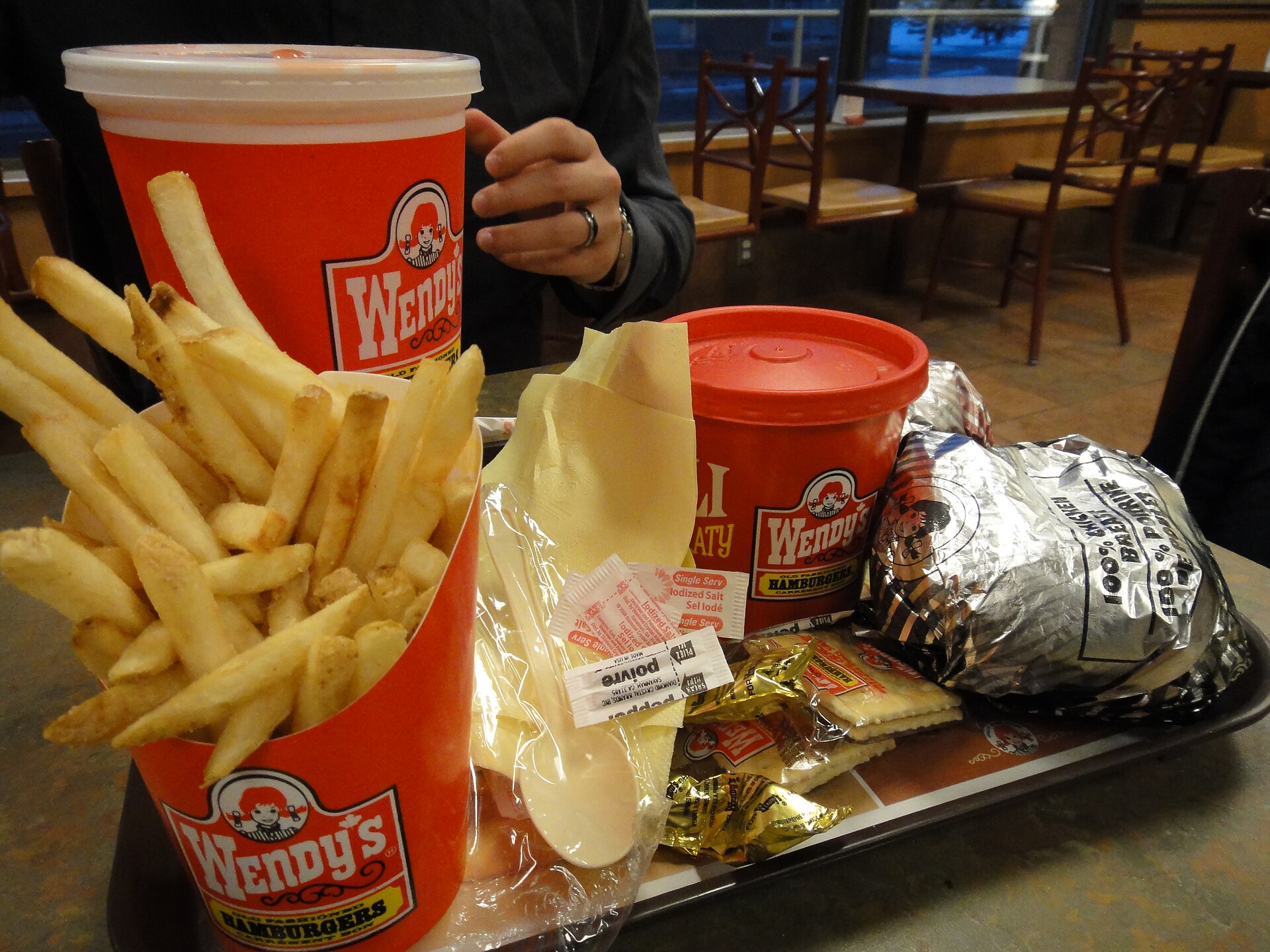
Wendy’s is shutting restaurants faster than franchisees can pull down the signs, and Wall Street has all but written the chain off.
The analysts keep warning that the worst closures haven’t even hit yet.
And Nelson Peltz just answered them with a move nobody on the trading floor expected.
Peltz Puts $1.4 Billion on the Table
Billionaire investor Nelson Peltz wants to buy Wendy’s outright.
His firm, Trian Fund Management, leads a group that offered $7.35 a share in cash to take the burger chain private, a deal worth roughly $1.4 billion. That price sits about 20% above where the stock closed the day before the offer turned up in a regulatory filing.
Investors loved it. The shares jumped about 15% once trading opened.
But Peltz is no stranger wandering in off the street. Trian and its related parties already own about 16.3% of the company, Peltz once served as chairman, and his son Bradley joined the board last year.
His partners know the territory too. Flynn Group runs more than 340 Wendy’s restaurants across the country, and investment firms BlueFive Capital and Sixth Street Partners round out the group.
Peltz and Flynn Group CEO Greg Flynn signed the offer letter together. It says Wendy’s sits at a “critical juncture,” and it points to squeezed customers, economic uncertainty, stubborn commodity inflation, and a burger fight that keeps getting meaner.
The offer is non-binding. A special committee of independent directors on the Wendy’s board gets the first crack at it.
Dave Thomas Never Had to Run It Like This
Dave Thomas opened the first Wendy’s in Columbus, Ohio, in 1969 and named it after his daughter. He sold square hamburgers made with fresh beef, then spent years starring in his own commercials like everybody’s favorite uncle.
That Wendy’s feels like a long time ago.
The chain reported a 7% drop in US same-store sales in the second quarter, its sixth straight quarter going backward. Burger King jumped 8.5% over the same stretch and grabbed back the second-place spot behind McDonald’s that Wendy’s had held for six years.
And the closures keep piling up. Wendy’s admitted on its brutal second-quarter earnings call that franchisees shut 289 US locations in the first half of the year.
Then came Meritage Hospitality Group. One of the chain’s biggest franchise operators, with more than 300 restaurants, filed for Chapter 11 bankruptcy protection in September and moved to close at least 41 of them. Newer reports put that number as high as 60.
Veteran restaurant analyst Andy Barish expects more trouble ahead. He warned of “additional franchise operators in the system facing challenges with leveraged balance sheets, higher interest rates and profitability pressures from higher beef, labor & build costs.” Barish figures the US store count will shrink from about 5,700 to around 5,600 by the end of 2027.
The front office hasn’t helped. Longtime CEO Todd Penegor retired in 2024. His successor, former PepsiCo executive Kirk Tanner, bolted for Hershey a little more than a year later. CFO Ken Cook kept the seat warm until the board picked former Potbelly chief Bob Wright in May.
Wright didn’t sugarcoat it when the company released its second-quarter numbers. “Today we are clearly not performing at our potential,” he wrote.
The Disney Brawler Wants a Burger to Just Be a Burger
Here’s where the story gets more interesting than a balance sheet.
Peltz spent early 2024 in a proxy war with Bob Iger’s Disney, and he didn’t fight it with spreadsheets alone. He went after the studio’s message-first movies. “People go to watch a movie or a show to be entertained, they don’t go to get a message,” Peltz told the Financial Times.
Hollywood howled, and Disney shareholders sided with Iger. But Peltz sold his entire Disney stake within 48 hours of losing. By his own account, he bought in the mid-$80s and walked away at $119.
That same year, Peltz found his way back to Donald Trump. He had soured on Trump after January 6, yet he told the Financial Times he would “probably” vote for him in 2024. His reasons were the flood of illegal aliens pouring across the border and what he called the “really scary” mental health of Joe Biden.
Peltz hosted Trump and Elon Musk for breakfast at his Palm Beach estate in March 2024, and after the election he claimed he played matchmaker between the two. “Elon is a friend of mine,” Peltz said at a CNBC conference.
So the man who told Hollywood to entertain people instead of lecturing them now wants to sell people a burger without the drama. Hard to argue with that.
And Wendy’s has plenty of self-inflicted drama to clean up. Back in February 2024, Tanner floated “dynamic pricing” on an earnings call, and customers heard surge pricing on their Baconator. The company scrambled to promise it wouldn’t jack up prices during the busiest hours.
That kind of mess happens when executives perform for Wall Street analysts every 90 days. A private Wendy’s ends the quarterly show. Peltz’s group argues a turnaround works better away from the glare of the public markets, and the last few public quarters make a decent case for him.
Washington Handed Franchisees the Bill
Barish’s list of franchisee headaches deserves a second look, because a good chunk of it runs straight through Washington, DC.
Higher interest rates didn’t fall from the sky. The Federal Reserve kept the money printers humming through the Biden years to bankroll trillions in deficit spending, inflation exploded, and then the Fed slammed on the brakes. The 10-year Treasury yield recently sat above 5%. For a franchisee carrying heavy debt on a string of restaurants, that’s a noose.
Labor costs tell a similar story. California Democrats passed a law that imposed a $20 minimum wage on fast-food workers starting in April 2024, and every burger chain in the state had to swallow the cost or hand it to customers.
Not every shuttered Wendy’s traces back to Sacramento or the Fed, though. Burger King faced the same economy and still found a way to win customers back. Wendy’s management made plenty of its own mistakes.
But the company also lugs around roughly $2.4 billion in net debt as of late June, and debt gets a lot heavier when rates refuse to come down.
Peltz doesn’t run a charity, either. A 20% premium for a chain on this kind of losing streak is a business bet, and Trian plans to roll its existing stake into the deal rather than cash out. Some shareholders will almost certainly push for a fatter check.
Trian has flirted with this idea before. It studied a buyout in 2022 and backed away the following year. In February, Peltz called the stock undervalued and said his firm had talked with financing sources. This time he put a number on paper.
And if the board says yes, Dave Thomas’s chain lands in the hands of a man who already knows the menu, the franchisees, and the books.
In 1984, actress Clara Peller peeled back an oversized bun in a Wendy’s commercial and demanded, “Where’s the beef?” Walter Mondale borrowed the line that same year to knock Gary Hart around a Democrat primary debate.
Forty-two years later, Nelson Peltz is betting $1.4 billion that Wendy’s still has a good answer.
Sources: Yahoo Finance; Reuters; Fox Business; Quartz; The Globe and Mail; Financial Times; The Washington Post; Agence France-Presse; Fortune; CNBC