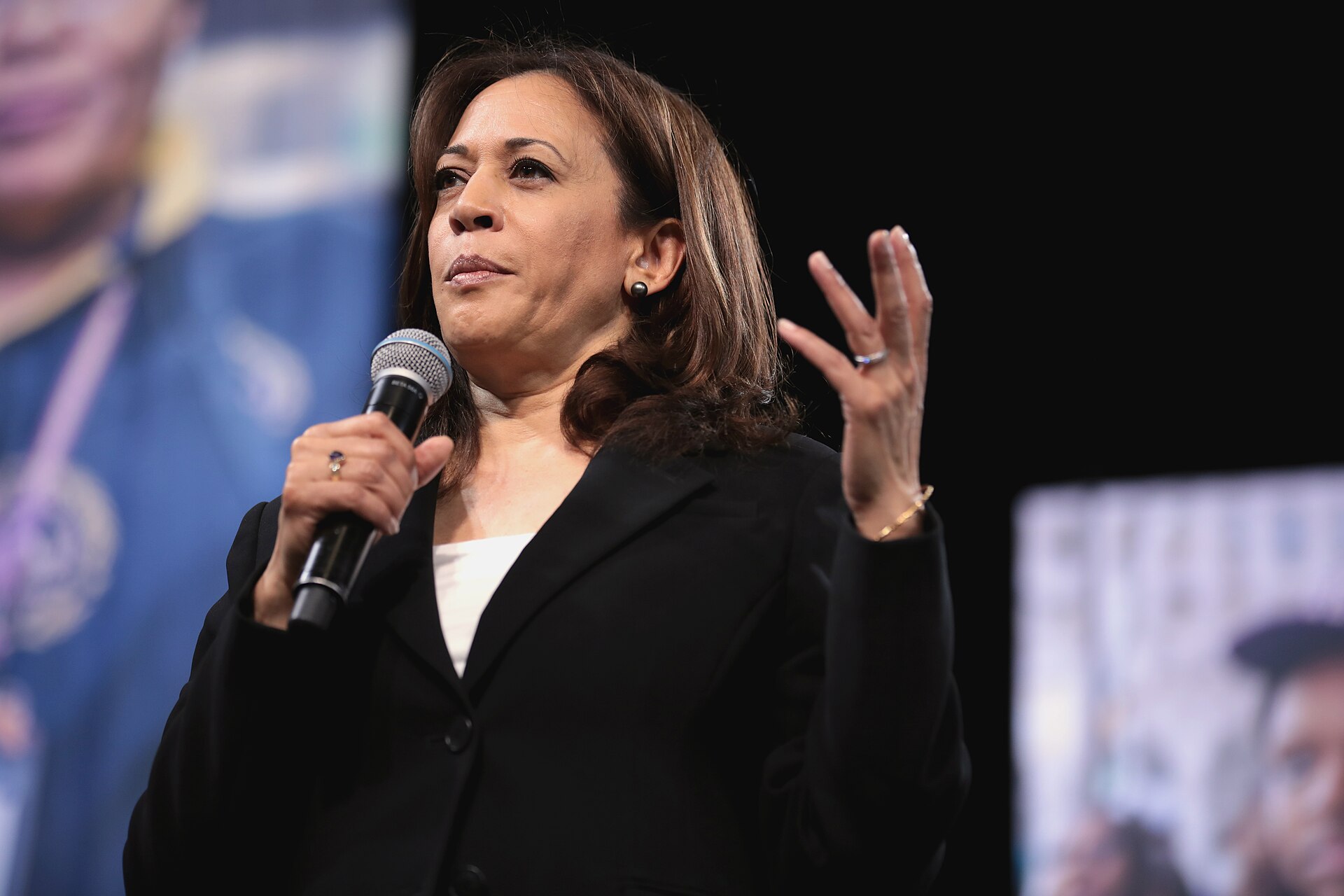
Kamala Harris lost to President Trump in 2024, and the Democrat Party still hasn’t figured out what to do with her.
Now she’s trying to insert herself into the 2026 midterms.
And the knives are out for Kamala Harris after this explosive demand.
A Candidate Nobody Wants on Their Doorstep
The former Vice President has been slowly ramping up her involvement in the 2026 midterms, but the reception in competitive races has been somewhere between chilly and outright rejection.
In recent days, both top Democrat candidates in Iowa said they do not want Harris in the Hawkeye State campaigning for them. A spokesperson for Mary Peltola, a former House Democrat running for Senate in Alaska, said she “isn’t seeking endorsements from anyone from the Lower 48” after Harris’ team sent a fundraising email on their behalf. Adam Hamilton, Kansas’ Democrat Senate nominee, and Rebecca Cooke, who is running to unseat GOP Representative Derrick Van Orden in western Wisconsin, added their voices to the same chorus, telling Politico that they’re not seeking Harris’ support in their races.
Cooke put a number on it. “I received 9,000 more votes than Harris in 2024,” she said in a statement. “I don’t need anyone to come and campaign with me in my district.”
That’s not subtle. That’s a sitting candidate in a competitive race telling the former standard-bearer of her own party that her presence would be a net negative. And Cooke isn’t wrong.
In Kansas, Hamilton said he was running a Kansas-centered campaign and described himself as an independent-minded Democrat. “Having somebody from California come in and try to tell Kansans who they should vote for is a pretty bad idea,” Hamilton said.
Hamilton is running in a state that has not elected a Democrat to the Senate since 1932. So the man is already fighting uphill. The last thing he needs is Kamala Harris showing up to remind voters exactly which party he belongs to.
Harris Shrugs It Off — and That Tells You Everything
Harris spoke on MS Now’s *State of Play* with host Peter Alexander, initially joining to discuss journalist and feminist activist Gloria Steinem, who died recently at age 92. Alexander pivoted at the end of the interview to confront Harris about Politico reporting that red-and-purple-state Democrats are actively distancing themselves from her.
Her response: “Bottom line: We need to win. I have run locally. I’ve run for statewide office, and obviously nationally, and these candidates know what they need to do to win. So, I support them in doing whatever they need to do to win.”
Read that again. The former Vice President of the United States just said, in public, that she’s fine with her own party’s candidates running away from her. That’s not graciousness. That’s a politician who has run out of better options and is calling the retreat a strategy.
Harris spokesman Eduardo Negrón offered a statement to Politico that said, in part, “It’s all good.”
Sure it is.
The spokesman also said Harris “will continue to raise money and travel on behalf of candidates in races where she can help make a difference.” Which, based on the list of candidates who want nothing to do with her, may be a pretty short itinerary.
Other Democrat campaigns have opted for silence rather than open rejection. Representatives for candidates in Michigan, Maine, and North Carolina declined to comment to Politico on how involved they want Harris to be. Silence, in this case, is its own answer.
Where She Is Still Welcome — and What That Reveals
Not every Democrat is running for the exits. The split is telling.
Harris is scheduled to attend a canvass launch in Las Vegas with Nevada Attorney General Aaron Ford, who is running for governor. Ford said Harris’ appearance would help highlight Nevada’s importance in future presidential elections. “As anyone who is interested in 2028 should do, Kamala Harris will be coming through,” Ford said.
Ford’s framing is worth sitting with. He’s not saying Harris helps his race. He’s saying Nevada matters for 2028 and Harris should show up for that reason. The midterm is, in his telling, an afterthought. The audition is the point.
Senator Jon Ossoff’s campaign said he was grateful for her help and would welcome her to campaign in Georgia. In Massachusetts, former Biden White House aide Dan Koh ran with endorsements from Harris and former President Joe Biden during his successful House primary campaign.
So she’s welcome in Georgia, which has trended purple, and in Massachusetts, which is about as safe a Democrat seat as exists in America. The pattern writes itself. In places where Democrats don’t actually need to persuade anyone, Harris is an asset. The moment a race gets genuinely competitive, the invitations dry up.
That’s not a political coalition. That’s a base-only operation dressed up as a national comeback.
The Democrat Party has spent two years telling itself that the 2024 loss was a fluke, that the right message or the right candidate could have broken differently. What the 2026 midterm cycle is making plain is that the damage runs deeper than a single bad campaign. Harris lost working-class voters, rural voters, men, and a significant slice of voters who had supported Democrats in prior cycles. Those voters didn’t just disappear. They’re still in Iowa, in Kansas, in Wisconsin, in Alaska, and the candidates trying to win them back know exactly what a Harris endorsement does to their chances.
As one analyst told the Washington Examiner, Iowa Democrats “understand they don’t want to spoil that by appearing to be too far to the left on issues. And so if they were to associate with Kamala Harris, it could be a problem for them.”
That’s a polite way of saying the brand is broken in the places that decide elections.
And yet Harris is out here talking about “being on the trail” and putting “a check on this lawless administration.” She said, “I look forward to being on the trail and helping folks where I can be helpful, but we have got to put a check on this lawless administration and deliver what Americans need and deserve.” The language is familiar. The audience for it is increasingly narrow.
The 2028 question is hovering over all of this. Harris hasn’t ruled out another presidential run. Nevada Attorney General Aaron Ford is already framing her Las Vegas visit in those terms. But a politician who can’t campaign in Iowa or Kansas or Wisconsin without hurting the candidates she’s trying to help has a ceiling problem that no amount of rebranding fixes.
The voters who rejected her in 2024 haven’t changed their minds. The candidates who need those voters know it. And Kamala Harris, for all her talk of supporting people in “doing whatever they need to do to win,” is slowly being defined not by where she goes, but by the growing list of places where her own party asks her not to show up.
Sources: Politico; Yahoo News / MS Now interview transcript; The Western Journal; Washington Examiner; Blabber.buzz