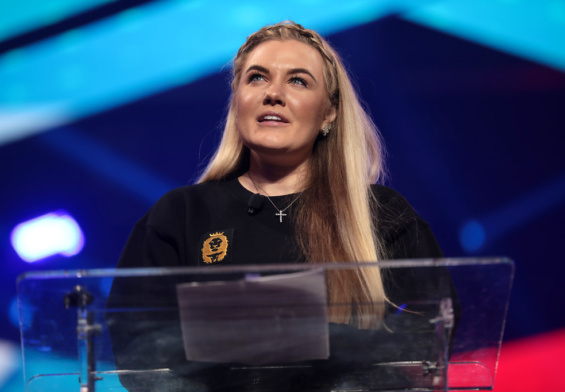
Ilhan Omar’s defenders call the federal case against her a political stunt chasing paperwork older than most of her staff.
Time, they promise, already slammed the door on any charge.
And a judge who heard immigration cases this year just walked through the trouble she could still face.
A Judge Fresh Off the Bench Ran Down Omar’s Exposure
Nathan Hansen practiced law in Minnesota for 23 years before former Attorney General Pam Bondi tapped him for the immigration bench. He started hearing cases in April 2026 and stayed four months.
So he knows the kind of paperwork Omar’s critics keep circling. And he sat down with Fox News Digital to explain what happens if investigators can show something in hers doesn’t hold up.
Omar faces two separate federal probes. One looks at alleged immigration fraud tied to how she or her late father filled out her citizenship papers, while the other digs into her financial disclosures to Congress.
Neither probe has produced a charge. Omar denies any wrongdoing, and her office branded the search of her Washington, DC home an “outrageous abuse of power and an unprecedented escalation in the weaponization of federal law enforcement to target political enemies.”
Homeland Security Investigations agents carried out that search in mid-October. They reportedly left with her phone, her passport, and her computer, and Fox News later confirmed that authorities have her DNA.
Hansen started with what a conviction would and wouldn’t do.
“If somebody who’s a naturalized citizen . . . is convicted of a crime, that doesn’t automatically mean that they face denaturalization or anything like that,” Hansen said. “They would be handled by any type of other normal punishment that would come from the court.”
Stripping citizenship runs on its own track. Hansen described it as a civil case the Justice Department would file, “presumably maybe on behalf of the Department for Homeland Security, who handles most of these things.”
But a crime connected to the citizenship itself changes the math. “If there was some sort of nexus between the criminal conviction and somebody’s citizenship, it might be more likely that the Department of Justice would bring a denaturalization proceeding,” he said.
Then he added the part Omar’s lawyers will underline twice. He called it “a discretionary matter within the people who are running the Justice Department.”
No automatic switch flips. Somebody at Justice has to make the call.
And that goes a long way toward explaining why 175 House Democrats signed a letter demanding the administration drop the probe altogether. They know exactly which office holds the pen.
The Clock Argument Springs a Leak
Omar’s allies have leaned hard on one escape hatch. Her family’s immigration paperwork dates back to the 1990s, so the statutes of limitations surely expired ages ago.
Hansen has heard that pitch. He isn’t buying it.
“My view of that is generally that fraud stops any statute of limitations. In other words, if something isn’t disclosed or something’s hidden, then it would be unfair to the other party to toll a statute of limitations against them,” Hansen said. “That’s just sort of a general principle of law.”
Think of it like a fellow who buries the family silver in the backyard and then claims the theft is too old to prosecute. Courts generally don’t let him start the stopwatch the same day he picks up the shovel.
But Hansen offered a principle, not a ruling on Omar’s file. Judges will decide how far that principle stretches in any real case, and nobody has charged Omar with hiding anything.
Still, the “too late” crowd just lost the luxury of treating their favorite argument as a sure thing.
Four Months of Fake Papers and Insult Claims
The most eye-opening part of the interview had nothing to do with Omar directly. Hansen described what four months on the bench looked like.
He said Minnesota alone has somewhere between 20,000 and 30,000 removal cases sitting with no court date on the calendar. Syracuse University’s TRAC research group puts the backlog at the Fort Snelling court at 35,000 cases, with more than 3.3 million nationwide.
“Whether you want to call it fraud or whatever, it’s like an overwhelming of the system and the system is not being used in the way in which it was intended,” Hansen said.
He pointed to bogus asylum claims as a big part of the pileup. Hansen said he regularly saw stories that “just totally didn’t add up” and documents that were “clearly fake.”
Asylum law covers persecution by a government, or with its blessing, over race, religion, ethnicity, or political views. Hansen said plenty of applicants never came close.
“I’ve seen cases where people would say, ‘Well, people insulted me in my country.’ And my response to that is, ‘Your country probably provides more protection against insults than the United States. In the United States, we have freedom of speech, and for the most part, you can be as rude as you want to someone and insult them, and it’s not a crime,’” he said.
Somebody ought to frame that answer and hang it in the faculty lounge of every college with a speech code. It’s the best two-sentence civics lesson a federal courtroom has produced in a while.
Minnesota’s Left-Wing Press Smeared Him Before He Heard a Case
Hansen’s critics didn’t wait for his first ruling. When the Executive Office for Immigration Review announced his appointment in April, the Minnesota Reformer ran a headline calling him “one of Minnesota’s most unhinged right-wing posters.”
The Mankato Free Press editorial board gave the pick a thumbs down. Reporters combed through years of his social media posts, and when one Reformer reporter called him for comment, Hansen hung up.
Then the numbers arrived. TRAC found that Hansen ruled on 180 asylum claims on their merits and denied 98.9 percent of them, compared with 62.9 percent for immigration judges nationwide and 80 percent at his own court.
Activists read that figure as proof of bias. But even TRAC concedes that denial rates depend on the kinds of cases on a judge’s docket, whether applicants sit in detention, and the policies in force at the time.
And Hansen’s own account of what crossed his desk suggests a simpler reading. A judge who keeps seeing fake documents and insult complaints will deny a lot of claims, because the law tells him to.
Omar’s Case Sits Inside a System That Ran on Trust
Omar arrived in the United States as a refugee from Somalia in 1995 and became a citizen in 2000, at 17, through her father’s naturalization. Investigators reportedly want to know whether she had actually turned 18 by then, which would have required her to go through the process on her own.
A grand jury in Minnesota has issued more than a dozen subpoenas, including to some of her relatives. Omar’s office insists “The Congresswoman has done nothing wrong.”
Refugee resettlement and asylum court aren’t the same door, so Hansen’s war stories describe a different line at the counter. But both doors open onto the same agencies, and in the 1990s those agencies processed families from a country whose central government had collapsed in 1991. Paper from a failed state is awfully hard to check.
That’s the bigger problem the Left never wants to discuss. High volume doesn’t just slow the system down. It forces officers to take people at their word, and it leaves no time to make sure newcomers actually join the American community instead of rebuilding the old one somewhere new.
Hansen guessed the total number of arrivals in recent years at “tens of millions of people coming here, I think, but certainly millions.” He hedged the figure himself, but even the low end swamps any court system on earth.
Americans have noticed. A Cygnal survey of 1,004 likely midterm voters taken January 27 and 28, 2026, found 61 percent support deporting illegal aliens, with just 34 percent opposed. A Reuters/Ipsos poll in February 2026 also landed at 61 percent, including 35 percent of Democrats.
The financial probe adds a separate headache. Omar’s disclosures showed her husband’s business interests jumping from as little as $51,000 in 2023 to as much as $30 million the following year, before she amended the filing down to between $18,004 and $95,000.
The Office of Congressional Conduct cleared her after reviewing it. But US Attorney Jeanine Pirro shrugged that off. “If there was a crime that was committed it will be prosecuted,” Pirro said.
Vice President JD Vance struck a measured note. “If there’s a real case there, we’re going to follow the facts,” he said.
Expect Democrats to spend the coming months attacking the discretion Hansen described. If they can’t knock down the evidence, they’ll go after the authority to act on it, and civil denaturalization will become their next favorite villain.
Omar’s defenders still tell anyone who will listen that time already slammed the door on this case. The man who just spent four months on the immigration bench says fraud has a funny way of propping that door back open.
Sources: Fox News Digital, “What’s next for Ilhan Omar? Former immigration judge breaks down legal risks amid federal probes” (Peter D’Abrosca); The National News Desk, “Investigation into Ilhan Omar intensifies after home searched, subpoenas issued”; Minnesota Reformer, “One of Minnesota’s most unhinged right-wing posters is the state’s newest immigration judge”; Mankato Free Press editorial board; Sahan Journal, Fort Snelling Immigration Court coverage; TRAC Immigration, Judge Nathan M Hansen report; Cygnal, National Deportation Issue Poll Memo; The Daily Signal, Reuters/Ipsos deportation poll.