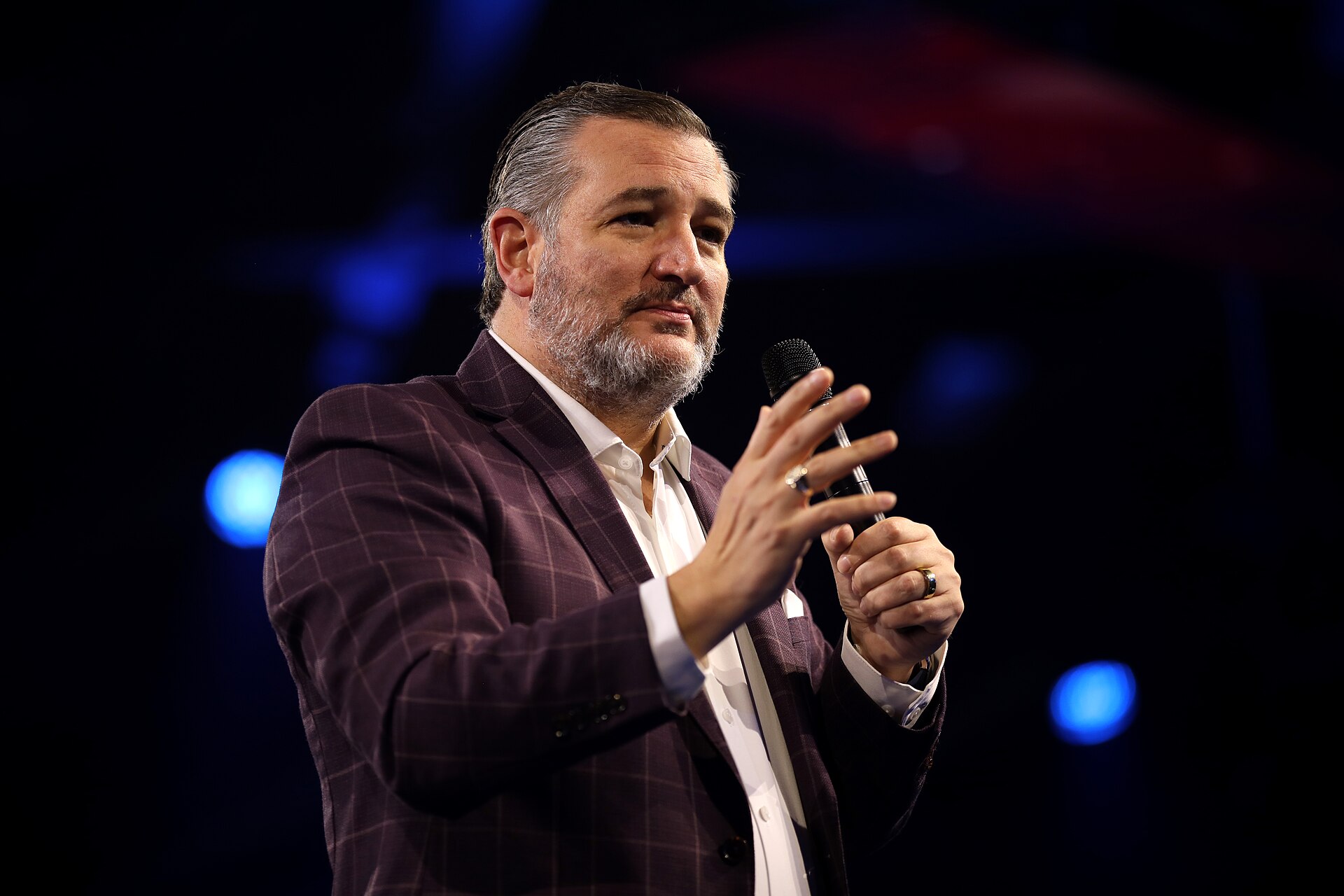
Ted Cruz has been playing it coy about 2028. His allies have been calling it speculation.
Vice President JD Vance just ripped the curtain down.
And what Vance said in a recent NBC News interview is going to make Cruz’s maneuvering a whole lot harder to deny.
Vance Calls Cruz’s Play Exactly What It Is
In an interview with NBC News, Vance was asked whether big Republican losses in the midterms might affect his own thinking about a 2028 presidential run. His answer was careful and noncommittal — he said he plans to “sit down with the president of the United States and talk to him about it” after the election cycle wraps.
But then Vance said something about Ted Cruz that landed a lot harder than anything he said about himself.
Vance said of Texas Sen. Ted Cruz, “it is really obvious to me that, at this very moment” Cruz is running for the White House, while adding that currently, “I’m not.”
Short. Direct. And impossible to walk back.
Vance also confirmed his own timeline. He answered that he makes decisions “by collecting as much information and trying to make a wise decision,” adding, “Regardless of what happens over the next 35 days, there will be new information, new things you have to make a decision over.”
He is not closing the door. He is simply not opening it yet. Cruz, according to Vance, has already walked through his.
Cruz Has Been Positioning for Months — and It Shows
None of this comes out of nowhere. Cruz, the Texas Republican senator who served as the leading Never Trump candidate in the 2016 Republican primary, has spent a great deal of energy lately cultivating donors who want a return to the pre-Trump Republican Party.
His positioning on tariffs, his resistance to President Trump’s Iran diplomacy, his opposition to the $5,000 rebate checks — none of that tracks with an America First lane. It tracks with a neoconservative lane. And the donor class that funds that lane has been paying attention.
Cruz has told donors that Vance’s views are “dangerously isolationist,” according to people familiar with his comments. That is not the language of a man who has made peace with the direction the party has moved. That is the language of someone preparing an argument against the frontrunner.
Earlier this year, Cruz addressed his political future directly. Cruz stated, “It’s no secret that I want to be president.” When asked if he plans to run again, Cruz replied, “Time will tell.”
And on the Iran peace deal — President Trump’s hard-headed diplomatic effort to end the cycle of foreign entanglement — Cruz was one of the senators who criticized a potential peace deal with Iran.
That puts him squarely in the interventionist camp, alongside the neoconservative voices who spent a generation selling the American people on Iraq and similar adventures that left body bags and debt as their legacy.
The Neoconservative Lane Cruz Is Claiming
Here is the part worth watching carefully. The donor class that wants to restore the pre-Trump Republican Party has a problem. Their most electable vehicle in 2028 needs to be someone who can at least claim Trump’s voters without fully adopting Trump’s foreign policy restraint. Cruz is auditioning for that role.
His digs at Vance’s America First foreign policy are not accidental. Cruz has said, “Economically, I think we should be a conservative party, and on foreign policy, we’ve got a debate: Are we an isolationist party that withdraws from the world, or do we believe in American leadership?” That framing — casting restraint as “isolationism” — is the classic neoconservative move. It is the same argument that was used to justify every failed military adventure of the last 25 years. And Cruz is deploying it against Vance’s refusal to be dragged into another forever war.
What Cruz calls “American leadership,” a generation of American families called something else when they buried their sons and daughters after Iraq and Afghanistan. President Trump ran twice on the promise to end exactly that kind of thinking. Vance has been its most principled defender inside the current administration.
Cruz knows that. That is precisely why he is framing Vance’s restraint as weakness rather than wisdom. It is a preview of the argument he plans to make to the establishment donors who are already cutting checks.
Prediction markets are reflecting some of this. On Polymarket, odds were at 74 percent recently that Cruz will launch a bid by the end of next year. Vance’s chances to become the GOP nominee stood at 47.3 percent on Polymarket, with Cruz’s chances listed at 1 percent.
So the market sees the same thing Vance sees — Cruz is running — but gives him long odds against the America First frontrunner.
And yet long odds have not stopped Cruz before. He won the Iowa caucuses in 2016 against Trump. He understands primaries. He understands early-state organizing. And he understands that the donor network willing to fund a neoconservative alternative to Vance is large enough to keep him credible for a long time.
Vance, for his part, is not taking any of it personally. He said of Cruz, “He is a very good guy. He is a very good friend of mine.” That is a gracious thing to say about someone who is openly building a campaign against the lane Vance represents. Grace in public, however, does not change the underlying political reality.
Cruz is running a neoconservative primary campaign against an America First incumbent Vice President.
That is the actual story underneath the polite language and the prediction markets and the careful hedging about what “time will tell.”
Vance saw it clearly enough to say so out loud. Whether Republican voters reward Cruz’s positioning or reject it the way they rejected the pre-Trump establishment in 2016 is a question that will eventually answer itself.
But the competition is real, it is already underway, and the Vice President of the United States just confirmed it.
The 2026 midterms are the immediate test for everyone involved. Vance noted that he really wants the GOP to win in 2026 “because, if the Democrats get in power, they’re gonna try to screw up a lot of the great things the president of the United States has done over the past ten months.” That is where his public focus sits right now — protecting the Trump agenda, not launching his own.
But after the midterms, the next chapter opens. And by Vance’s own reckoning, Cruz will already be several chapters ahead.
Sources: NBC News via AP/SooLeader; Newsweek; The National Desk; Yahoo News/Washington Post; Axios; Wonderwall/AP