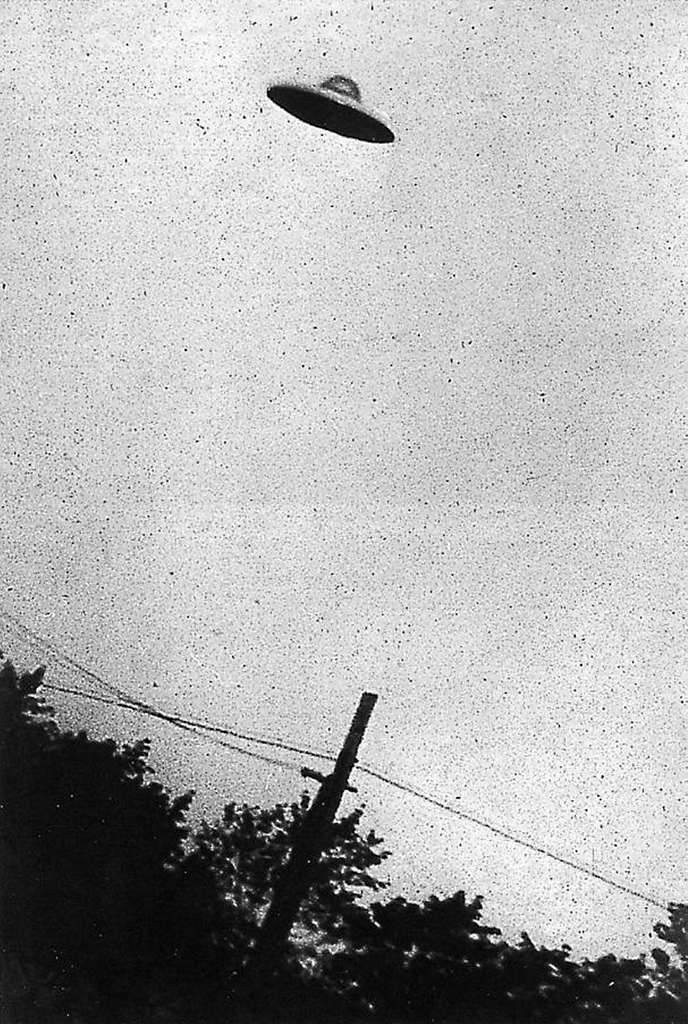
The US government has been caught flat-footed on UFOs for decades.
Now sworn testimony and actual legislation have changed the game entirely.
And what Congress quietly wrote into federal law should have every American demanding answers.
What Congress Actually Put Into the Books
Since 2023, Congress has written the phrases “non-human intelligence” and “technologies of unknown origin” into federal law. Not into a press release. Not into a cable news chyron. Into statute.
That happened after military pilots testified publicly about objects they could not explain, and after David Grusch, a former intelligence officer who was officially assigned to investigate UFOs, testified under oath before a House subcommittee that the US government had secretly recovered and attempted to reverse-engineer crashed craft. Grusch told lawmakers that people with direct knowledge of the program informed him that some of those recoveries included “nonhuman” biological material.
Congress did not laugh him out of the room. Congress responded with hearings, whistleblower protections, and legislation requiring federal agencies to preserve and hand over UFO records.
Since 2023, eleven witnesses have testified at three dedicated House hearings on the subject, including military veterans, former intelligence and Defense Department officials, a retired Navy admiral, a former NASA associate administrator, and journalists. These are not tinfoil-hat hobbyists. These are people who held security clearances and swore oaths before taking their seats.
And yet the Pentagon and NASA say they have found no evidence of nonhuman craft.
Both things are true at the same time. Congress has embedded extraordinary language into federal law based on sworn testimony, and the official agencies tasked with investigating the subject say there is nothing to see. That gap deserves more scrutiny than it has received from the press.
The Stigma Argument Expired Years Ago
For a long time, the easiest way to kill a UFO story was to invoke the stigma. Editors spiked it. Reporters who touched it got labeled as cranks. The subject was treated as the exclusive property of late-night comedy writers and supermarket tabloids.
But that era ended in December 2017, when the *New York Times* put a Pentagon UAP program on its front page. The story, titled “Glowing Auras and ‘Black Money’: The Pentagon’s Mysterious U.F.O. Program,” revealed the existence of the Advanced Aerospace Threat Identification Program, a previously classified Defense Department initiative. From that moment forward, UAP coverage belonged to the national security beat, not the fringe.
Luis Elizondo, the former head of that Pentagon program, testified before the House Oversight Committee in November 2024 and told lawmakers under oath that “excessive secrecy has led to grave misdeeds against loyal civil servants, military personnel and the public, all to hide the fact that we are not alone in the cosmos.” He called the group suppressing the information a “cabal.” He said the technology observed outperforms anything in the US military’s inventory, and that if these objects belong to an adversarial nation, it would represent “an intelligence failure eclipsing 9/11 by an order of magnitude.”
That is a former senior Pentagon official, testifying under oath, before Congress, on the record.
The stigma argument is gone. What remains is a serious question about what the government knows, who controls that knowledge, and whether any institution with the authority to hide it also has the right to do so permanently.
The Question That Actually Matters Now
No one serious is asking the public to simply believe everything Grusch or Elizondo has said. That is not the point.
The point is that these claims were made under oath, before Congress, by people with documented careers in intelligence and defense. The Pentagon denied the claims. But the Pentagon’s denial does not settle the matter, because the question at the center of all of this is whether the Pentagon is the appropriate institution to adjudicate its own transparency.
Consider the logic: if Grusch fabricated his testimony, he committed perjury before Congress. That is a federal crime. And yet, rather than face consequences for allegedly lying to Congress, he became someone congressional offices sought out for expertise on the very subject he raised. That is not proof he was right. But it is evidence that the people in the room took the claims seriously enough to keep engaging with him rather than prosecute him.
The harder question is not whether UAPs are real in some general sense. The harder question is whether parts of the US government found evidence of something extraordinary and made a unilateral decision, in secret, that the rest of the country should not know. A government has a legitimate duty to protect information whose disclosure could endanger national security. But secrecy justified on those grounds looks very different from secrecy designed to control what citizens are permitted to know about the universe they inhabit.
Those are not the same thing. And the line between them matters enormously.
A free press cannot restrict itself to questions that arrive pre-approved by the institutions being questioned. Some of the most consequential reporting in American history began at the margins, dismissed before it was examined. The UAP subject has now moved well past the margins. It is sitting inside federal statute, inside congressional hearing rooms, inside sworn testimony from decorated veterans and senior officials.
The press should be covering it with the same rigor applied to any other story where government officials testify under oath to extraordinary things, agencies deny those things, and Congress writes legislation in response to the resulting standoff.
But the press has largely not done that. And so the public is left with a strange situation: sworn testimony that the government recovered nonhuman craft, official denials from the agencies accused of the cover-up, and federal law that now contains language about non-human intelligence, all sitting together in plain sight while most major newsrooms treat the subject as too embarrassing to pursue seriously.
The possible explanations for what military pilots and sensors have observed remain genuinely open. The objects could represent advanced classified US military technology. They could represent foreign adversary systems that have achieved capabilities far beyond what is publicly known. If that second possibility is true, the national security implications are severe. And the third possibility, that the origin is something outside the category of human-made technology, remains unresolved by any official body with access to the full classified record.
None of those possibilities can be dismissed on the basis of embarrassment. And the government’s own actions, writing the relevant language into law and holding hearing after hearing with credentialed witnesses, have made dismissal increasingly difficult to defend.
Americans who have watched federal agencies get major calls wrong, on COVID origins, on intelligence failures before September 11, on weapons programs that turned out not to exist, have earned the right to ask hard questions about what else those agencies might be getting wrong. Or hiding.
The question is no longer whether UAPs are real. The government has conceded that much. The question is who decided the rest of the country should not know what was found, and whether that decision was ever theirs to make.
Sources: Greg Scaduto, “It’s time we grew up about UFOs,” Substack; Fox News, “UFO hearing: Ex-Pentagon official says government ‘cabal’ is hiding ‘the fact that we are not alone'”; CBS News, “UFO hearing key takeaways: What a whistleblower told Congress about UAPs”; New York Times, “Glowing Auras and ‘Black Money’: The Pentagon’s Mysterious U.F.O. Program,” December 16, 2017; Pentagon/AARO annual UAP report; Representative Nancy Mace office, “Congress Heard More Testimony About UFOs: Here are the biggest revelations”