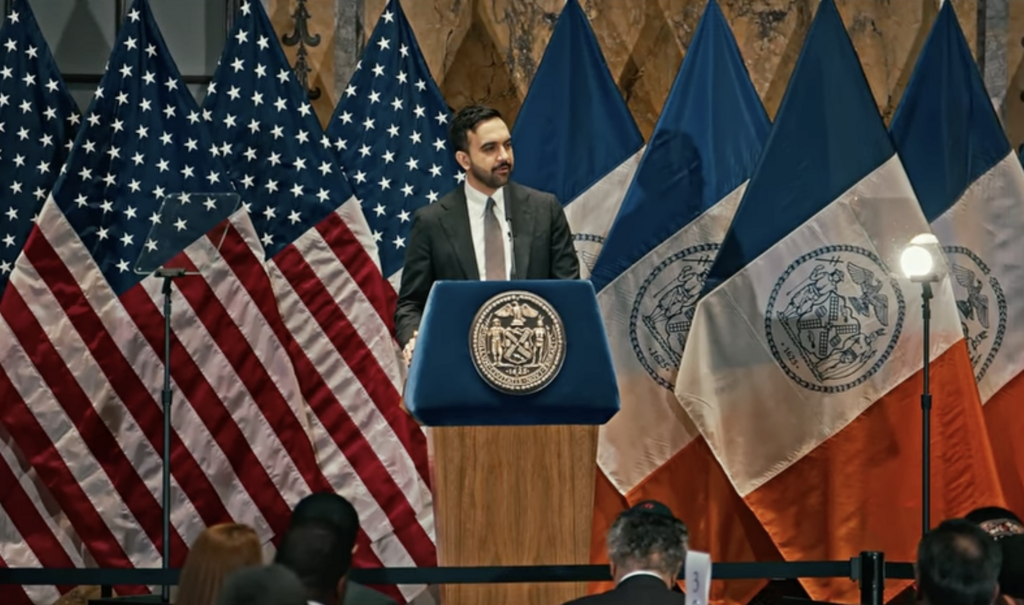
Zohran Mamdani is finding out that not everyone is thrilled to have him as the new face of the Democratic Party.
The knives are out.
And now Bill Maher nuked Zohran Mamdani with one truth bomb that will leave Democrats in tears.
As West Wing Daily reports:
As a late-night television host, Bill Maher sharply criticized Mayor Mamdani during a recent episode of Real Time.
Despite being a dedicated Liberal, Maher has had enough of the dissembling over Mamdani by the Left and cut straight through it all to the core issue.
Maher argued that party leaders and liberal voters are engaged in unnecessary semantic gymnastics over Mamdani’s ideology, debating whether he should be described as a socialist, democratic socialist, or something else entirely.
Maher dismissed those distinctions outright. In his view, the mayor’s political orientation is unmistakable.
He said his conclusion came from paying attention not only to Mamdani’s rhetoric but also to statements made by people within his inner circle.
Maher pointed specifically to remarks by Cea Weaver, a senior advisor to the mayor, who has publicly encouraged voters to “elect more communists.”
For Maher, that comment alone was enough to clarify the issue.
Bill Maher destroyed the entire façade that Mamdani and his allies have tried to build with this one word: Communist.
Maher labeled the newly elected mayor a communist and cautioned Democrats that refusing to acknowledge it could cost them future elections.
While Maher acknowledged that communism is a legitimate political belief system and that voters are free to support candidates who embrace it, he warned against what he sees as denial within liberal circles.
According to him, pretending that Mamdani’s ideology is a harmless phase or a branding issue ignores political reality.
Maher stressed that the United States is not a communist country and argued that downplaying radical positions risks alienating moderate voters.
The comedian also expressed frustration with what he described as an increasingly polarized political landscape.
In his view, American voters are often presented with extreme choices rather than balanced alternatives.
Maher joked that elections now seem to offer a choice between unchecked crony capitalism on one end and sweeping collectivist policies on the other.
He framed this dynamic as politically disastrous, particularly for Democrats trying to appeal to a broad electorate.
Maher referenced additional controversy surrounding Weaver, who was appointed director of the Mayor’s Office to Protect Tenants at the start of Mamdani’s term through an executive order.
Past social media posts from Weaver, which have since been deleted, resurfaced online and sparked backlash.
According to reporting, Weaver had previously described homeownership as a failed and discriminatory system, called for the seizure of private property, and suggested that traditional housing policy reinforces racial inequality.
One of her most widely criticized statements called for “impoverishing the white middle class.”
Maher used these remarks to bolster his argument that Mamdani’s administration is aligned with far-left ideology rather than mainstream progressive politics.
This is not the first time Maher has sounded the alarm about Mamdani and the broader rise of democratic socialist candidates within the Democratic Party.
Following Mamdani’s mayoral election victory last November, Maher mocked the celebratory tone of the mayor’s victory speech, suggesting it would provide ample material for Republican attack ads in upcoming election cycles.
Although Maher said Mamdani appears personable and well-intentioned, he maintained that personality alone is not enough to offset the political consequences of embracing radical economic ideas.
He urged Democrats to reconsider their growing enthusiasm for socialist-aligned candidates before, in his words, the left side of the country becomes consumed by what he called “socialism fever.”
Maher concluded by advising Democrats to learn from recent special election results, warning that ideological overreach could hand electoral advantages to their opponents for years to come.