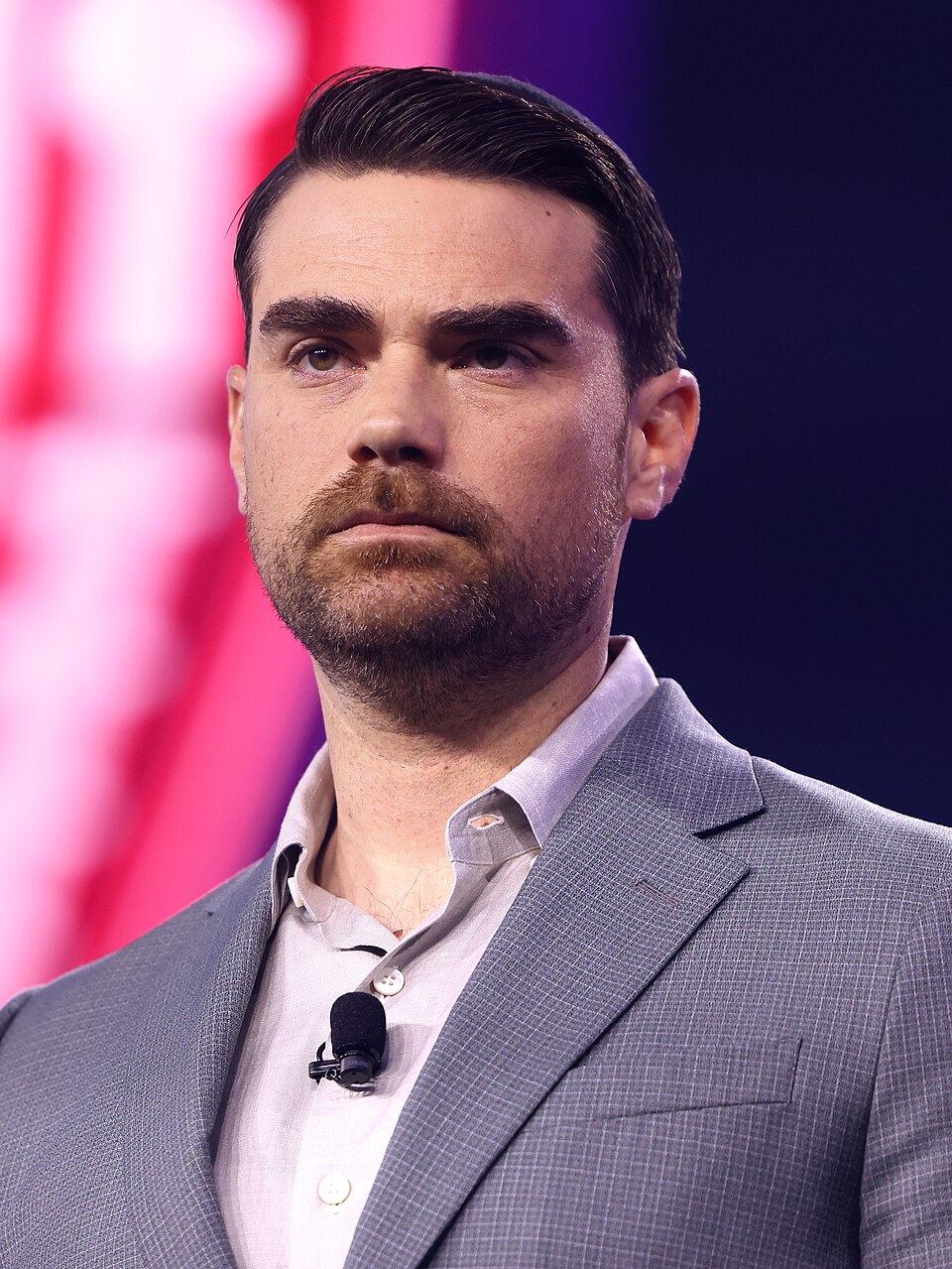
Ben Shapiro went on public radio to argue JD Vance would shrink Donald Trump’s winning coalition.
The old Never-Trumper saved his nastiest jab for the audience Vance keeps courting.
And Shapiro once made a confident call about that same crowd that aged like milk.
Ben Shapiro Found a Friendly Microphone at NPR
Of all the places a conservative podcaster could go to trash podcasts, Ben Shapiro picked NPR.
The Daily Wire co-founder sat down with Steve Inskeep for an episode of Newsmakers and used a big chunk of the interview to explain why Vice President JD Vance would make a weaker 2028 candidate than Secretary of State Marco Rubio.
“I look at Trump’s coalition and I say, I’m not sure where Vice President Vance doesn’t shrink that coalition,” Shapiro said.
Then he ran down the list. Hispanics, blue-collar white voters, married women, single women, college-educated voters. By Shapiro’s math, Vance comes up short with every one of them, and Rubio is “far more electable.”
But the line that set people off came next.
“I think he’s extraordinarily online. I think the vice president spends an inordinate amount of time worrying what the podcast bros think, like the Tucker Carlsons,” Shapiro said. He added that Vance carries himself in ways “designed to appeal to 21-year-old Joe Rogan listeners,” and he declared flatly that “that is not how you win a broadscale national election.”
A podcast host warning a politician not to pay attention to podcast hosts. Sit with that one for a second.
Shapiro runs one of the biggest daily shows in the business. He also has a habit of sneering at the shows he doesn’t own. Back in June 2026, he waved off Shawn Ryan on his own program as “one of these podcast bros who doesn’t know anything.”
The Same Shows Carried Trump Across the Finish Line
Anybody with a memory longer than a goldfish knows how the 2024 campaign actually played out.
Donald Trump skipped plenty of the usual stops on the legacy media circuit and sat down for three hours with Joe Rogan instead. He visited Theo Von. He went on comedy shows and gaming streams that most Washington consultants had never heard of. Trump has credited his son Barron with steering him toward some of those audiences.
And Vance made the rounds too, including his own long sit-down with Rogan just days before the election.
NPR’s reporters noticed it at the time. Their own coverage described a months-long swing through podcasters and influencers, nearly all of them men, a lot of them young.
Trump went on to carry all seven battleground states and win the national popular vote.
Nobody serious looked at that result and decided the podcast audience was a trap. Shapiro now wants the next Republican nominee to treat it like one.
Ben Shapiro Already Bet Against This Crowd Once
This isn’t the first time Shapiro told Republicans the podcast crowd didn’t matter.
In April 2026, Fox News’ Jacqui Heinrich asked him on The Sunday Briefing whether Tucker Carlson and Megyn Kelly turning on the Iran war spelled trouble for the GOP. Shapiro brushed it off. “I don’t think it’s a major issue for the Republican base,” he said, dismissing the pair as voices with “fringe audiences.”
He pointed to a J.L. Partners survey showing just 6% of Republicans siding with Carlson and Kelly. And he predicted the war would wrap up within a couple of months anyway, so voters would forget all about it by November.
Kelly, for her part, had already named Shapiro and Mark Levin as the people who wanted the war more than anyone.
The fighting didn’t wrap up in a couple of months. It dragged on through the summer and into the fall, and the neocon wing that cheered it on got its bill on Election Day.
Democrats grabbed both chambers of Congress. According to NBC News exit polling, close to two-thirds of voters called the decision to take military action against Iran the wrong one, and Democrats walked off with 83 percent of that group.
But the clearest admission came from inside the President’s own circle. David Sacks, Trump’s AI czar, put it bluntly on the All-In Podcast. “We lost all the podcast bros,” Sacks said. “I mean, obviously, it was Tucker Carlson and Joe Rogan and Theo Von and that whole set. Megyn Kelly.”
Sacks didn’t stop there. “I think that a lot of those people showed up and then did a protest vote because they wanted to send the message that they want out of this war,” he said.
J.L. Partners, the same outfit Shapiro leaned on in April, later found that more than a third of Trump’s 2024 voters simply never showed up for the midterms. Maybe not every one of them listens to Rogan on the drive to work. Probably not. But the missing voters and the crowd Shapiro called fringe sure look like they share a zip code.
Shapiro’s Record Explains More Than His Polling
So who exactly is handing Vance this advice?
Shapiro refused to back Trump in 2016. During the 2024 primary he talked up Ron DeSantis, and he only got behind Trump once DeSantis quit the race. He has pushed for confrontation with Iran for most of his career, and when Vance helped broker a framework with Tehran in June, Shapiro shrugged it off as “JD’s deal.”
Over the summer, after Vance’s appearance on Rogan’s show, Shapiro said he heard “Bernie Sanders’ economics, Barack Obama’s foreign policy, and Ro Khanna’s conspiracy theories” coming out of the Vice President’s mouth.
Put those facts side by side and the pattern isn’t hard to spot.
The neoconservative and Never-Trump wing of the party never made peace with America First. It wants the old party back, the one that waved through amnesty, signed trade deals that sent factory jobs overseas, and never met a foreign war it wouldn’t fund. Vance stands in the way of that project, and he stands there because he opposes endless wars and the open-borders policies that undercut American workers. That makes him the obvious target, and “extraordinarily online” works as a polite way of saying he listens to the wrong people.
The wrong people, in this case, happen to be the voters who stayed home in November.
The 2028 Fight Is Already Being Rigged From the Sidelines
The irony runs deeper than one interview.
Sacks argued that Republicans lean on alternative media because the legacy outlets will never give them a fair shake. Congress voted in 2025 to claw back the federal money that flowed to public broadcasting for exactly that reason. And Shapiro chose public radio as the place to tell Republicans to tune out the alternative media that delivered 2024.
Democrats, meanwhile, take control of Congress in January with a socialist wing that grows bolder by the month. They’d love nothing more than a Republican Party busy fighting itself over whether young men with earbuds deserve a seat at the table.
Expect more of these scorecards. Every few weeks, another establishment voice will rank the 2028 field, and Vance will keep landing near the bottom with the same complaint attached. Rubio, through no doing of his own, keeps getting drafted as the alternative by people who never warmed to the America First movement in the first place.
Maybe Shapiro really does believe the demographic math he laid out for Inskeep. It’s possible. But he believed his April math too.
Back then, he had one word for anybody who thought the podcast crowd could hand Republicans a beating in November.
“I think that’s insane,” Shapiro said.
Sources: Mediaite, “Ben Shapiro Unloads on ‘Extraordinarily Online’ JD Vance During NPR Interview”; NPR, “Ben Shapiro on conservative media and the future of the Republican Party”; Mediaite, “‘Insane!’ Ben Shapiro Scoffs at the Idea That Tucker Carlson and Megyn Kelly are Leading a MAGA Revolt Against Trump”; TheWrap and Washington Examiner on Shapiro’s April 2026 Sunday Briefing appearance; Media Matters, June 3, 2026 edition of The Ben Shapiro Show; Ground News and Washington Examiner on Shapiro’s July 2026 Rogan critique; NPR, 2024 coverage of the Trump-Vance podcast tour; All-In Podcast, David Sacks remarks on the midterms; NBC News exit polls; J.L. Partners turnout analysis via the New York Post.