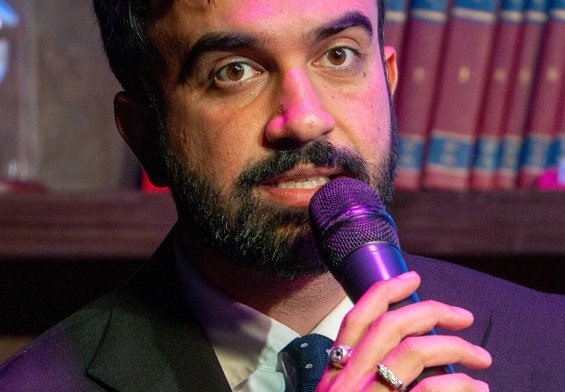
The cable hawks have spent days questioning JD Vance’s loyalty because he refused to sugarcoat why Democrats grabbed both chambers of Congress.
Their idea of loyalty sounds a lot like a yes-man’s job description.
And Laura Ingraham answered them with one question she first asked back in the spring.
A Fox News Host Flipped the Loyalty Charge Upside Down
Laura Ingraham used her opening segment on The Ingraham Angle after the midterms to preview life under a Democrat-run Congress. Then she aimed straight at the knife-sharpening going on inside her own network.
Fox News boiled her point down to one line for the clip. The most loyal advisers, Ingraham made clear, are the ones most willing to tell the President the truth.
Everybody watching knew who she meant.
Marc Thiessen, the Fox News contributor and former speechwriter for Donald Rumsfeld and George W Bush, went on Special Report hours after Vance posted his election autopsy and put the Vice President on trial.
“I was kind of shocked by that statement that Vice President Vance put out,” Thiessen told Bret Baier. “It was, quite frankly, disloyal to the president of the United States.”
Thiessen even supplied the lines he wanted to hear. “I didn’t see Vice President Vance say, ‘It was the right thing to do,’” he complained.
So in the world of the war crowd, loyalty means reading from a script. Ingraham wants the guy in the room who tells the boss where the bodies are buried before the next election digs a few more graves.
What the Vice President Actually Put in Writing
Vance didn’t hedge. “The reason we lost is the war,” he wrote on X.
He walked readers through what his own team’s data showed. Turnout held up. Plenty of Republican voters showed up. The trouble came from people who voted for Trump and Vance in 2024 and then pulled the lever for Democrats in 2026.
Vance also passed along four fixes from a pollster he called one of the smartest people he knows in politics: end the war, focus on the cost of living and inflation, put America First, and change the country’s relationship with Israel.
Then he dared his critics to make their case in the open. “If you’d like to argue it was worth it, that losing the Senate for the next 6 years was worth it, then do so,” Vance wrote. “Argue it was a worthwhile cost to pay. Agree or disagree, that’s at least honest.”
Nobody on the hawk side took him up on it. They went after his character instead.
But the numbers back Vance. Quincy Institute polling showed close to 79 percent of Trump voters wanted the administration to call the war a win and wrap it up before Election Day. Echelon Insights found that among Trump 2024 voters who turned sour on the President, complaints about the wars outran complaints about tariffs five to one.
And the man Thiessen claims to be protecting didn’t take offense. President Trump called Vance’s analysis “largely true.” Asked about the post, he said, “Yeah, I thought it was good.”
Some disloyalty. The boss read it and nodded.
The Question Ingraham Asked Before Anyone Wanted to Hear It
Ingraham earned the right to make this argument. She made it on March 30, a month into Operation Epic Fury, when saying it out loud cost a lot more.
Oil had just punched through $100 a barrel. Gas averaged $3.99 a gallon. Reports had the Pentagon weighing a risky ground mission to dig nearly 1,000 pounds of enriched uranium out of bombed-out tunnels.
“Was the president fully briefed about the risks of all of this from the beginning?” Ingraham asked her audience.
That question landed hard in a building full of war boosters. Somebody sold the President on this war. Somebody promised the voters it would end fast.
And the cable hawks spent the spring handing out timetables like coupons. Thiessen wrote a May column telling readers Trump sat 14 days from decisive victory. November came, and the war still dragged on as voters headed to the polls.
Funny how the people who blew the deadline now want to grade everybody else on loyalty.
The New York Times reported that Vance argued against launching the war during a Situation Room meeting in February, then pledged to support the President once the decision was made. That’s the job. Speak up before the shooting starts, salute after, and level with the boss when the bill comes due.
PJ Media’s Eric Florack wrote that if Vance believed the war would cost Republicans Congress, the time to say so was when it might have changed something. By the Times’ account, he did exactly that. The hawks just didn’t like the answer then, either.
Dwight Eisenhower Kept a Truth-Teller in the Room
The fight over which advisers deserve a President’s ear isn’t new. Dwight Eisenhower faced it in the spring of 1954.
French troops sat trapped at Dien Bien Phu. Admiral Arthur Radford, the top military officer in the country, pushed a plan called Operation Vulture to rescue them with American air power. Planners even floated a few tactical atomic bombs.
Army Chief of Staff Matthew Ridgway told Ike the ugly truth. Air power alone wouldn’t save the garrison. Rescuing the French would take seven Army divisions, and an American move so close to China could drag Beijing into the fight just like Korea.
Ridgway didn’t win any popularity contests at the Pentagon. But Eisenhower trusted him, and the United States stayed out. Dien Bien Phu fell on May 7, 1954, and American boys didn’t die in the rice paddies that year.
One of the lawmakers Eisenhower briefed that April was a Texas senator named Lyndon Johnson. A decade later, Johnson sat in the Oval Office and listened to the advisers promising a quick win in the same jungle.
Iran isn’t Vietnam, and no column should pretend history runs on a photocopier. But the human part repeats every time. Presidents get burned by the advisers who tell them what they want to hear, not by the ones who walk in with bad news.
The Hawks Need Vance Out of the Room Before 2028
The Wall Street Journal editorial page piled on too, claiming Vance’s focus on getting out of the war comes close to “a public counsel of surrender.” Same tune, different instrument. The Bush-era foreign policy crowd that steered Republicans into the 2006 and 2008 disasters never forgave the America First movement for taking the party away from it.
That crowd knows Vance stands as the MAGA heir apparent. It knows he opposes endless wars, amnesty, and trade deals that shipped jobs overseas. So it wants him tagged as disloyal now, while the tag might still stick.
Meanwhile Democrats are already cashing in the war crowd’s mistakes. A socialist knocked off Karen Bass in the Los Angeles mayor’s race. Democrats are threatening to impeach Defense Secretary Pete Hegseth. The new majority will spend two years running subpoenas through the Trump administration and pushing government-run health care, open borders, and higher taxes.
Ingraham saw this coalition clearly back in 2024. She described it as “optimistic and pragmatic, patriotic and peace-seeking.” The peace-seeking part didn’t end up on the cutting room floor just because a few Fox News regulars wanted a war.
And Ingraham didn’t wait for the returns to say it. Back on March 30, she put the question to the people running this war that the hawks still refuse to answer.
“Or was he told this would be relatively quick, in and out?” she asked.
Sources: Fox News, “Laura Ingraham: The most loyal advisors are those who are most willing to state the truth”; Mediaite, “Fox News Contributor Accuses JD Vance of Being ‘Disloyal’ to Trump”; Axios, “Trump’s VP says the Iran war cost them the midterms”; Fox News, “Vance courting disgruntled Trump voters to form ‘new right’ alliance after Republican bloodbath”; ABC News live blog, “Trump says Vance post blaming GOP losses on Iran war is ‘largely true’”; The Daily Beast, “Trump’s Favorite Fox News Host Raises Red Flags Over President’s Unpopular War”; Power Line, “Vance strikes out”; PJ Media, “Vance Wants an ‘Honest Conversation’? Fine, Here’s One.”; Fox News, “LAURA INGRAHAM: JD Vance is helping to lead the new Republican coalition”; The American Spectator, “When Ike Said No”; Wikipedia, “Operation Vulture” and “1954 in Vietnam”; Quincy Institute; Echelon Insights; The New York Times.