Democrats swear up and down that cheating at the ballot box is a fairy tale cooked up by sore losers.
Their election chiefs insist every safeguard works exactly as designed.
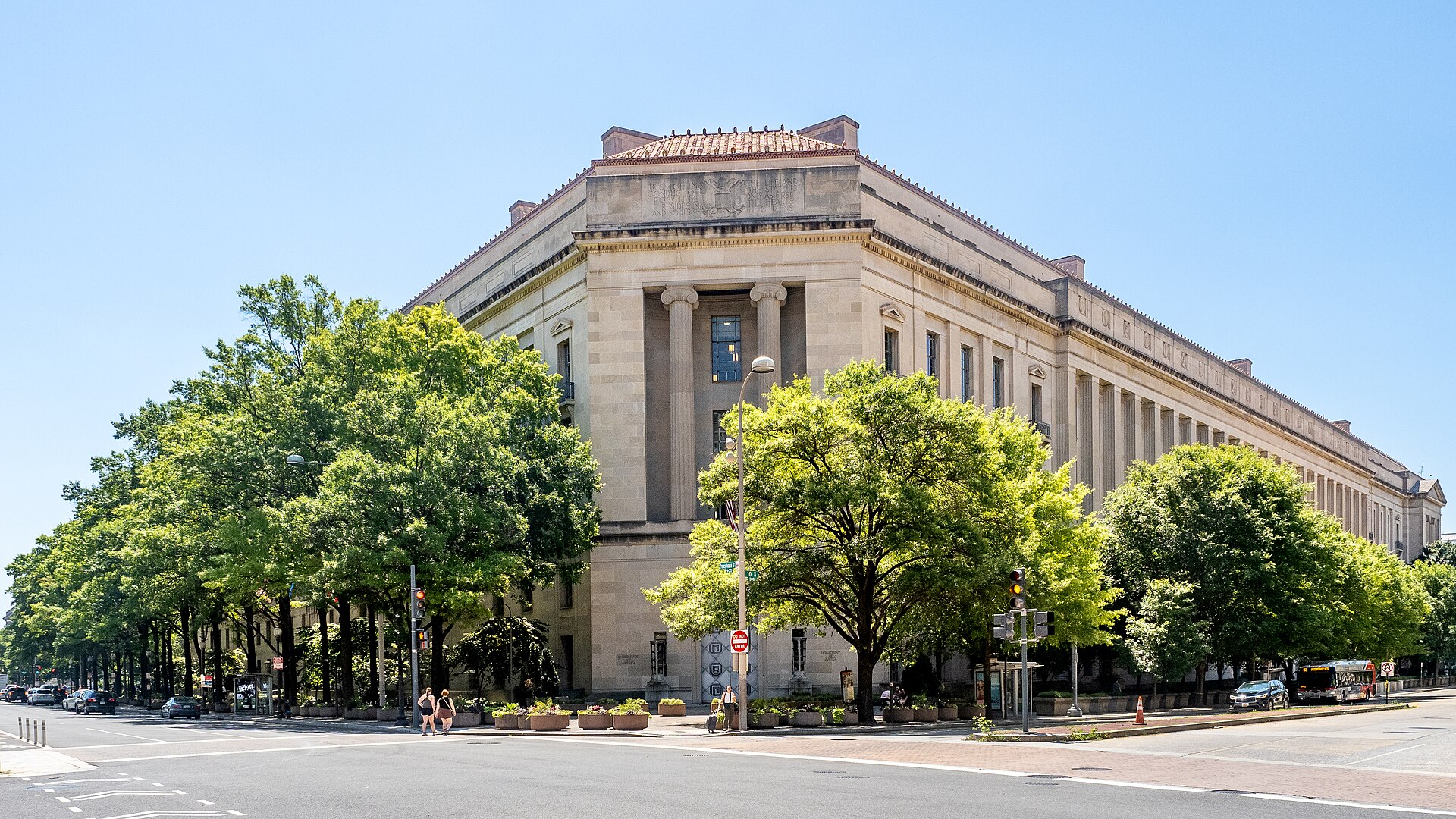
And Donald Trump’s Justice Department just got its hands on hours of tape that could put that promise to the test.
140 Hours of Tape Landed on a Federal Prosecutor’s Desk
The tape comes from the security cameras inside Lewiston City Hall in Maine, where early in-person voting opened on October 13, 2026.
The Maine Wire, a conservative outlet in the state, pried roughly 140 hours of that footage loose with a Freedom of Access Act request. On October 30, 2026, it published what it found.
According to the outlet, the video shows interpreters working with Somali voters who don’t speak English. Some of those interpreters allegedly pointed to choices on the ballot, handled the paper, and walked up to voters who never asked for help. The Maine Wire went further and accused “left-wing NGOs” of “running an industrial-scale ballot stuffing scheme” to deliver a party-line vote for Democrats.
That’s a heavy charge. Nobody has proven it, and prosecutors haven’t charged a single person.
But US Attorney for Maine Andrew Benson, whom President Trump appointed, didn’t wave it away.
“We review all evidence concerning complaints of voter intimidation and election interference, including the video from Lewiston’s early voting at City Hall,” Benson told The Robinson Report, the Substack run by Maine Wire Editor-in-Chief Steve Robinson.
Maine Wire reporter Jon Fetherston had already been watching the room in person. On October 20, he said he saw interpreters “pointing at the ballots” and “a couple of people actually touching the ballots.”
According to the Maine Wire, election officials stepped in during some of those exchanges. After the national spotlight landed on the city, the clerk started handing out a printed sheet spelling out the rules for anyone helping a voter. Residents also filed three complaints with Lewiston police, covering the interpreter activity and a separate Maine People’s Alliance demonstration that allegedly put political signs inside City Hall.
A clerk doesn’t usually print up a rule sheet for a problem that doesn’t exist.
The Law Draws a Bright Line, and the Mayor Keeps Skipping Past It
Nobody disputes that a voter can bring help into the booth. Maine law lets a voter who can’t read or mark a ballot pick an aide, and the ACLU of Maine tells voters they can bring “a friend, relative, interpreter, or other helper.”
But the same statute shuts the door on the obvious abuse. “When assisting a voter, the aide may not tell the voter how to make the voter’s choices or otherwise influence the voter,” the law reads.
So the fight was never about whether interpreters belong in City Hall. It’s about what they did once they got there.
Lewiston Mayor Carl Sheline, a Democrat, told The Wall Street Journal that bad-faith actors are unfairly targeting the Somali community. “People are just trying to vote. It’s very frustrating,” he said.
He’s right about one thing. Those folks were trying to vote.
And if a handler from an activist group decided which boxes got filled in, the first person cheated is the citizen standing in that booth. A ballot somebody else steers belongs to the steerer, not the voter whose name sits on the roll.
Mediaite rushed to insist that nothing in the videos proves any ballot stuffing, let alone stuffing on an industrial scale. Fair enough, as far as it goes. Not every pointed finger breaks the law, either. An interpreter could be pointing at the very name a voter just asked for, and a silent security camera can’t hear that conversation.
That’s exactly why the footage belongs in front of investigators instead of getting brushed off by the people who run the building.
Benson Wants Help From an Official Who Already Picked a Side
Benson closed his statement with a line worth reading twice. “We will not tolerate threats to the integrity of our elections, and we look forward to working with the Attorney General’s Office and the Secretary of State’s office to defend our democracy,” he said.
The Secretary of State’s office belongs to Shenna Bellows, a Democrat who calls herself Maine’s chief elections official.
In December 2023, Bellows used the 14th Amendment to strike Donald Trump from Maine’s presidential primary ballot. The US Supreme Court unanimously knocked down that theory in Trump v Anderson in March 2024.
She has battled the Trump Justice Department over Maine’s voter rolls ever since. The department sued her after she repeatedly refused its requests for voter information, and a federal judge tossed that lawsuit in May 2026.
And in January 2026, Bellows stood before roughly 1,000 protesters at a Lewiston event center and shouted, “We need ICE out of Minnesota. We need ICE out of Maine. We need them out now!”
Same city. Same community. Now her office gets a seat at the table while investigators sort out whether anybody leaned on voters inside Lewiston City Hall.
Maybe Bellows plays it straight. Her office has every reason to look at the tape honestly, if only to protect Maine’s reputation for clean elections.
But a referee who already ran onto the field in one team’s jersey shouldn’t be surprised when the other side asks for a second look at the replay.
A Warning Washington Ignored for Two Decades
None of this should shock anyone who remembers 2005. That year, the bipartisan Carter-Baker Commission, led by former President Jimmy Carter and former Secretary of State James Baker, warned that “Absentee ballots remain the largest source of potential voter fraud.”
The commission’s worry boiled down to one idea. Once a third party gets between a voter and a ballot, nobody can be sure whose choice ends up on the paper.
Lewiston suggests that risk doesn’t stay at the kitchen table with a mail-in envelope. It can walk right up to a voting booth wearing a lanyard that says “interpreter.”
There’s a bigger question lurking under all of this, and Democrats would rather nobody ask it. Federal naturalization law generally requires new citizens to show basic ability to read, write, and speak English, though it exempts older applicants who have lived here for decades. Many of these voters may well fall under those exemptions.
But a polling place where dozens of citizens reportedly needed a handler just to read their own ballot says something about the pace of immigration into small American cities. When newcomers arrive in large numbers, activist groups step in to manage their civic lives, and assimilation turns into an afterthought. The country used to expect newcomers to learn the language of the ballot. Now nonprofits volunteer to stand in the booth with them.
That arrangement doesn’t need a single illegal vote to go wrong. It only needs voters who can’t read the ballot and eager helpers who can.
Maine voters head to the polls on November 3, 2026, and the tape won’t stop rolling just because the counting starts. If Benson’s office finds that interpreters crossed the line, Democrats will have to explain why their mayor called the whole thing a bad-faith attack. If it finds clean hands, the city will finally have something better than a press quote to point to.
On December 28, 2023, Shenna Bellows decided on her own authority that Maine voters couldn’t choose Donald Trump. Her office now has a hand in reviewing whether someone else tried to make choices for Lewiston’s voters.
Sources: Mediaite, “DOJ Investigating Conservative Outlet’s Allegations of Voter Fraud in Maine”; The Maine Wire and The Robinson Report, Lewiston City Hall early voting coverage; The Wall Street Journal, as cited by Mediaite and Yahoo News; Yahoo News, “Maine Voting Videos Draw DOJ Scrutiny”; The Daily Wire, “DOJ Reviewing Video After Claims Somali Voters Were Illegally Coached”; Breitbart, “Somali ‘Translators’ Seen on Video Apparently Violating Voting Laws in Polling Center”; Hot Air, “It’s All in the Translation”; Maine Revised Statutes, Title 21-A, Section 672; ACLU of Maine voter assistance guidance; The Boston Globe, “How ICE enforcement is unfolding differently in Maine and Minnesota”; Maine Public, “Judge rejects Trump administration’s lawsuit for Maine voter data”; Spectrum News Maine, early voting coverage; Commission on Federal Election Reform (Carter-Baker), 2005 report