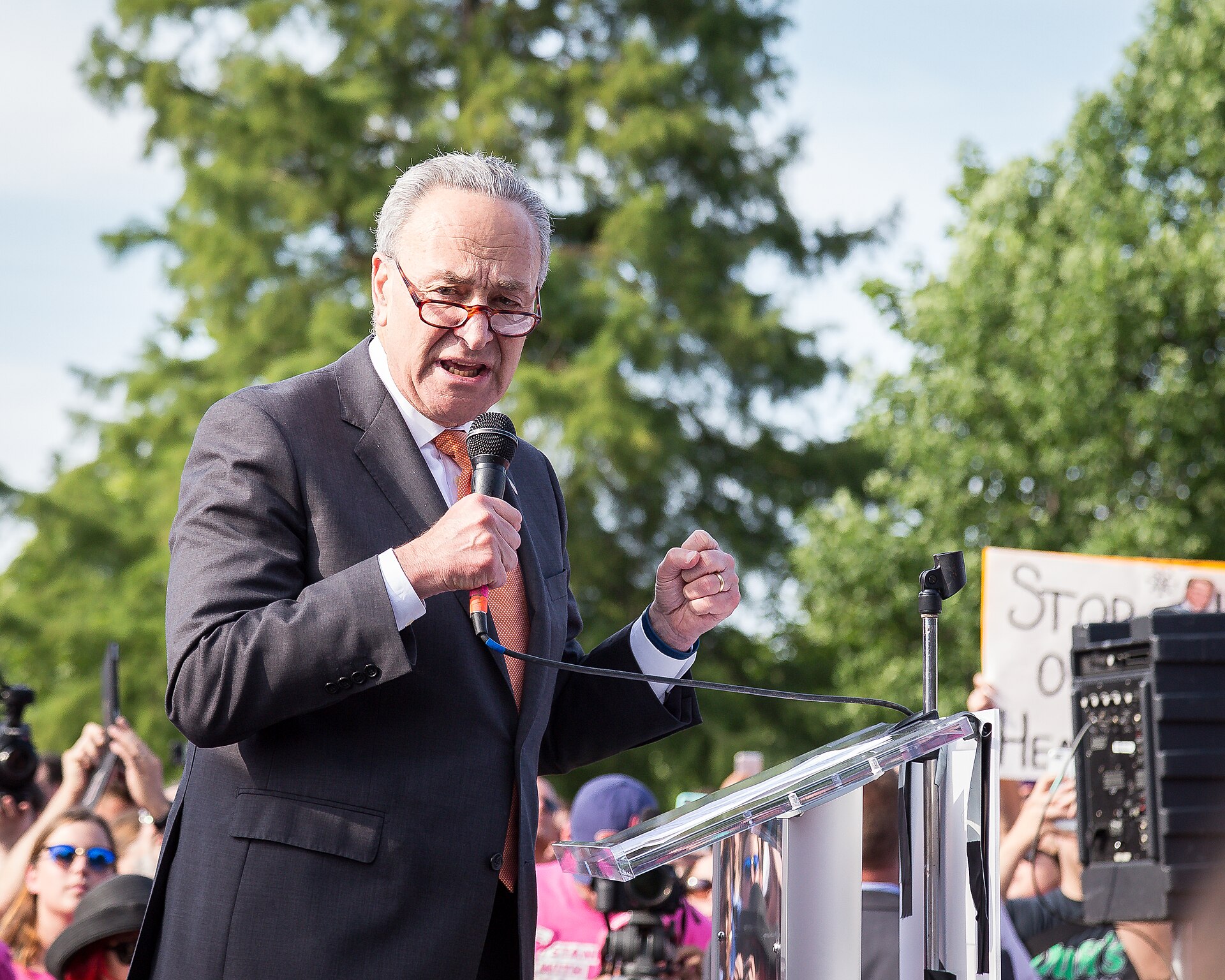
Chuck Schumer needs a handful of red-state Senate seats to grab the gavel back.
Democrats can’t win most of those races straight up, and everybody in Washington knows it.
So somebody found a sneakier route, and the money trail behind it tells on itself.
A Conservative-Sounding PAC With a Very Long Guest List
A political committee calling itself Principled Patriots PAC has planted its flag right in the middle of the 2026 midterms.
Its website could pass for something a small-town Republican chairman typed up between church and Sunday dinner. The group says it backs candidates who put constitutional values ahead of Washington insiders, and it insists Americans “deserve better than choosing between the lesser of two evils.”
Plenty of conservatives have grumbled the same thing in a voting booth. Nothing wrong with that.
But take a look at who the PAC actually promotes. In Iowa, it touts Libertarian Thomas Laehn, the elected prosecutor in Greene County. In Kansas, it pushes Overland Park attorney David Graham. And in Alaska, it boosts Gerald “Jerry” Heikes, an Anchorage minister who calls himself a “Constitutional Christian conservative.”
The list keeps rolling from there. The PAC also features Libertarian Ted Brown in Texas, a slate of independent and third-party House hopefuls across Colorado and Nevada, and Senate candidates in places like South Carolina, Nebraska, North Carolina, and Ohio.
Read the candidate blurbs and a pattern jumps off the page. Second Amendment rights. Homeschool freedom. Lower taxes. No more endless foreign wars. Warrants before government spying. The PAC writes every pitch in the language conservative voters respond to.
And funny how that works.
Patrick Svitek Followed the Cash Straight Back to the Resistance
And then the campaign finance reports landed.
Patrick Svitek, a national political reporter who spent nine years covering campaigns for The Texas Tribune, combed through the PAC’s third-quarter 2026 filings. What he posted pokes a big hole in the “Principles Over Partisanship” slogan the group plasters across its homepage.
According to Svitek, every dollar Principled Patriots PAC took in came from a single super PAC called Building America.
And Building America didn’t exactly pass a hat at the county fair, either. Svitek reported that its money came entirely from a nonprofit called Rapid Resist Action.
If that name sounds like it belongs on a protest sign outside Trump Tower, there’s a good reason. InfluenceWatch, a research site that tracks the money behind political groups, describes Rapid Resist Action as a left-of-center outfit that launched in 2017 to fight President Trump and his administration.
The group bragged about running one of the biggest peer-to-peer texting operations in the country in its first year. Its client list included Planned Parenthood, the abortion industry’s biggest lobby and a dependable partner of the Democrat Party.
InfluenceWatch also reports, citing OpenSecrets data, that Rapid Resist Action sent millions to left-wing political groups in 2024, including $600,000 to Building America PAC.
So follow the chain. A group born to resist Donald Trump bankrolls a super PAC. That super PAC bankrolls another PAC. And the second PAC fans out across red states telling conservative voters the Republican on their ballot just isn’t conservative enough.
Somebody went to a lot of trouble to keep the fingerprints off the final product. Nonprofit groups of this kind often don’t have to name their donors, which means the trail tends to go cold right about where it gets interesting.
Democrats Ran This Same Spoiler Play in Pennsylvania in 2024
Which brings the story around to Senator Chuck Schumer (D-NY).
No filing links Schumer to Principled Patriots PAC, and no reporting shows he knew anything about it. But the Senate Democrat leader doesn’t need his name on the paperwork to come out ahead. His party’s road back to a Senate majority runs through states Republicans normally count on, and Iowa, Kansas, and Alaska sit near the top of that list.
And the math here isn’t complicated. In a tight race, a third-party candidate who pulls three or four points from the right can hand the seat to a Democrat who never cracked 50%.
The PAC’s own website even brags about Ted Brown’s track record, noting that a record 267,000 Texans voted for him in 2024. In a high-dollar Texas Senate race, a number like that gets plenty of people’s attention.
But Democrats have tried this trick before, and not all that quietly. Big League Politics reported in October 2024 that a Democrat-connected group called Defend Our Constitution spent roughly $370,000 on TV ads touting Constitution Party candidate Marty Selker as the true conservative in Pennsylvania’s Senate race. The aim, according to that report, was to drain votes from Republican Dave McCormick.
McCormick won anyway.
Pennsylvania offers one more lesson. The Associated Press noted in 2022 that Democrats in the Keystone State have a history of going to court to knock Green Party candidates off the ballot, precisely because third-party votes can tip close races. Republicans there have gone after Libertarian paperwork for the same reason, so both parties understand the spoiler game perfectly well.
The left’s version just has a twist. Democrats fight to clear spoilers off their own flank, while money with left-wing roots flows toward conservative-sounding candidates on the other side.
But none of this means the candidates on the PAC’s list are phonies. Nothing in the reporting suggests Laehn, Graham, Heikes, Brown, or anyone else knew where the PAC’s money came from, and the PAC’s own disclaimer states that no candidate authorized its efforts. Many of these folks have run outside the two-party system for years and plainly believe what they’re saying.
A better question sits underneath all of it. Why would a group with roots in the anti-Trump Resistance pour money into putting conservative-sounding names in front of Republican voters?
And expect more of this before the polls close in November. Dark-money nonprofits, layered super PACs, and patriotic-sounding committee names make a handy recipe for anybody who wants to split the conservative vote without leaving a return address.
Voters in Iowa, Kansas, and Alaska will probably see mailers and digital ads that sound like Ronald Reagan wrote them. The smart move is to flip to the fine print, find the “paid for by” line, and then ask who paid the people who paid for it.
The PAC calls itself principled. Its money trail runs back to the Resistance.
Sources: Patrick Svitek, post on X regarding Principled Patriots PAC third-quarter 2026 filings; Principled Patriots PAC website (principledpatriots.com); InfluenceWatch, “Rapid Resist Action”; The Washington Post, Patrick Svitek author page; Big League Politics, “Democratic Super PAC Is Propping a Third Party Candidate in Pennsylvania Senate Race” (October 31, 2024); Associated Press, “Third-party candidates file to run for Pa. governor, Senate” (August 2022); Federal Election Commission, super PAC financial summary tables.