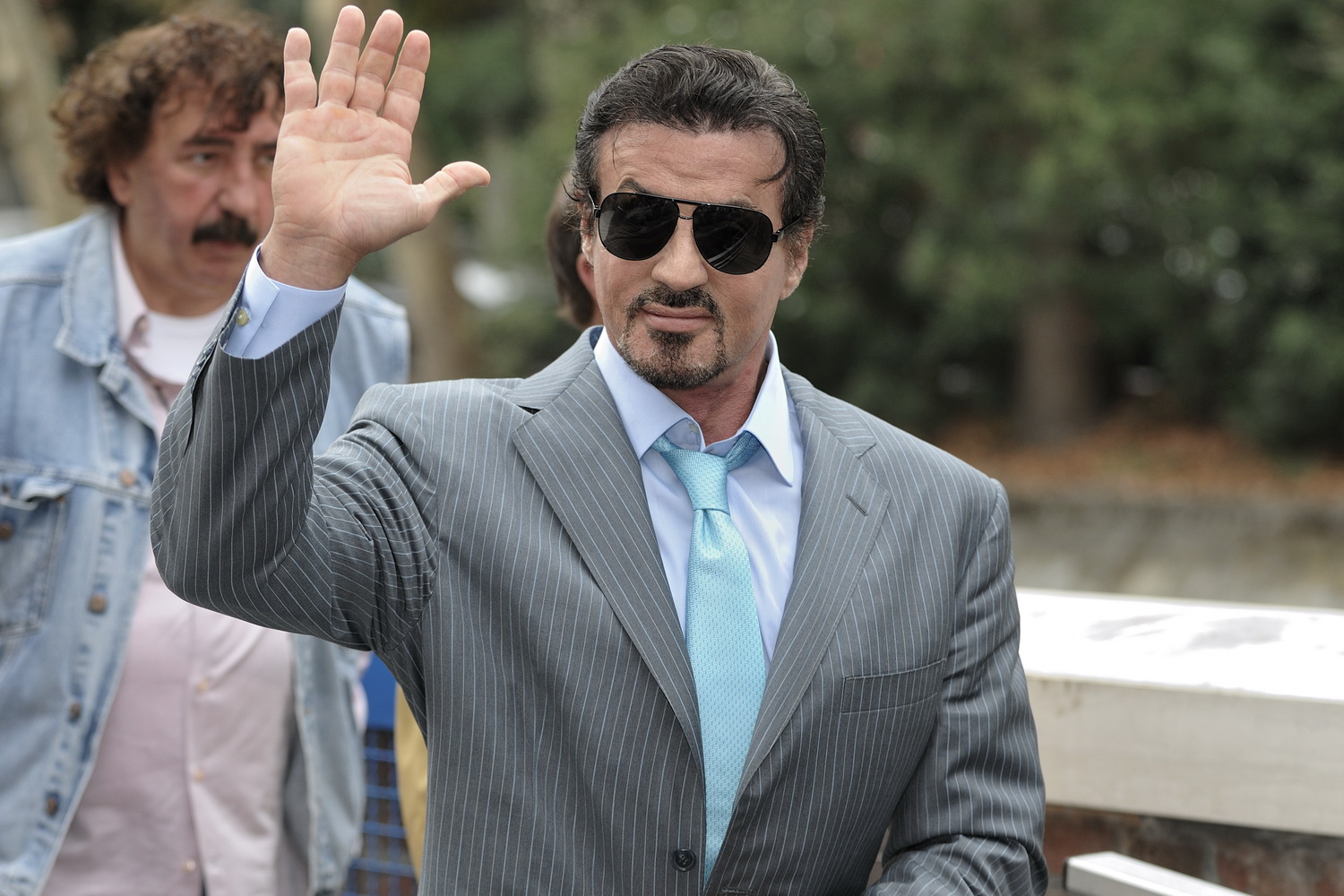
Sylvester Stallone has a long history with President Donald Trump. Now some surprisingly frank words are making headlines.
The 80-year-old action legend sat down with The Sunday Times, and what came out was not what the woke Hollywood crowd expected.
And what Stallone told Trump directly about the ambassador role is raising eyebrows everywhere.
How Stallone Found Out He Had a New Job
In January 2025, days before his second inauguration, President Trump posted on Truth Social naming Stallone, Mel Gibson, and Jon Voight as “Special Envoys” to Hollywood. Trump described the role as a way for the three actors to serve as his “eyes and ears” and help bring film and television production back to the United States. He called Hollywood “a great but very troubled place” and promised the trio would help make it “BIGGER, BETTER, AND STRONGER THAN EVER BEFORE!”
Stallone found out the way millions of ordinary Americans did. He was watching television.
“Well, it just happened,” Stallone recalled. “I was watching TV one night and they go, ‘So Stallone and Mel Gibson and Jon Voight will be …’ And I went, ‘What?'”
“I said, ‘Excuse me? Really?’ Because if they had asked me in the beginning, I would have said, this is not possible.”
That is not the polished non-answer of a man who chose his words carefully. Stallone went further and explained exactly what he told Trump when he finally got the chance to speak with him directly.
“I said thank you and ciao, because it’s impossible,” Stallone said. “Hollywood works, and it will evolve. It’s corporate and corporate people won’t want to hear me tell them about finance.”
Why Stallone Thought the Whole Thing Would Collapse
The skepticism runs deeper than a simple reluctance to take on extra work. Stallone laid out a clear-eyed assessment of how the entertainment industry actually operates, and it is an assessment that squares with what anyone familiar with the business already knows.
“Yes, because Hollywood, I guess it’s like feudal states,” he said when asked about his reservations. “They have their little kingdoms. You don’t go in and tell six studios how to do things. And Mel Gibson and Jon Voight, we’re kind of do-our-own-thing people. No, it won’t work.”
That is a fair description of an industry that answers to Wall Street, streaming subscriber numbers, and global box office receipts. Three actors with strong individual identities and no institutional authority were never going to walk into studio boardrooms and dictate terms.
Gibson reacted with similar surprise when the announcement dropped. “I got the tweet at the same time as all of you and was just as surprised,” Gibson told Variety in January 2025. “Nevertheless, I heed the call. My duty as a citizen is to give any help and insight I can.”
Gibson also added, “Any chance the position comes with an Ambassador’s residence?”
The actual record of activity confirms Stallone’s skepticism. Of the three envoys, Voight has been the one taking visible action, lobbying the White House for a federal film and television tax incentive. Stallone joined Voight in signing a letter urging Trump to support tax measures and a federal tax incentive that would help bring production back to the United States. But in terms of the ambassador role as originally announced, what it would entail was never clarified.
Gibson, separately, proposed a co-production agreement between Italy and the United States to serve as a pilot program for partnerships with other countries. That idea has not moved into public view in any meaningful way.
What Stallone Actually Thinks of Trump
None of this indicates any cooling between Stallone and Trump the man. The relationship is warm, and Stallone has made that plain in public and in private.
In November 2024, Stallone introduced Trump at the America First Policy Institute Gala at Mar-a-Lago in Palm Beach, Florida. What he said that night was not the cautious endorsement of a Hollywood figure covering his professional bases. Stallone went all in.
“We are in the presence of a really mythical character,” Stallone told the crowd. “Nobody in the world could have pulled off what he pulled off, so I’m in awe.”
He also called Trump “the second George Washington” before a room packed with prominent Trump supporters. That is not the language of a man hedging his bets.
The Kennedy Center connection deepened the relationship further. Stallone received a 2025 Kennedy Center honor, and Trump personally presented him the medal during an Oval Office ceremony. Trump, in turn, spoke glowingly of Stallone when asked how the actor could thrive as a Hollywood ambassador. “If Sly is himself, that’s all he can be,” Trump said. “He’s a great guy. He’s done a fantastic job and he really deserves this honor.”
Trump noted during the same conversation: “He’s a force of nature. Sylvester Stallone has captured our imagination in several different roles and performed them beautifully.”
In 2016, Stallone said he “loved” Trump. That posture has not changed even as Stallone turned down the formal ambassador title.
The Real Problem With Hollywood and What Trump Is Trying to Do About It
Stallone’s skepticism about the ambassador arrangement does not diminish what Trump was trying to accomplish. The underlying goal — bringing film and television production back to the United States after years of losing it to foreign tax incentives and cheaper labor markets — is a legitimate and important economic objective.
Productions fleeing to Canada, the United Kingdom, Eastern Europe, and elsewhere have cost American workers real jobs. Grips, camera operators, carpenters, electricians, prop masters — these are working-class tradespeople who built careers in the industry and watched the jobs leave for places that dangled aggressive production subsidies.
Hollywood’s woke elites who run the studios spend enormous energy lecturing ordinary Americans about inequality while quietly routing their productions overseas to pad the margins. Trump recognized the problem and tried to put high-profile names behind the effort to correct it. Stallone’s frank admission that three independent-minded actors cannot strong-arm six major corporate studios does not make the goal wrong. It raises the question of what tools actually can move that needle.
The answer Voight has been pushing — a federal film and television tax incentive — is precisely the kind of market-oriented mechanism that could create a genuine competitive alternative to the foreign subsidies draining American production jobs. Other countries have understood for decades that tax policy shapes where creative industry locates. The United States simply chose not to compete at the federal level, leaving the fight to individual states with mixed results.
Stallone, in his own blunt way, identified the structural reality that makes the ambassador model insufficient: Hollywood is corporate, and corporate institutions respond to financial incentives, not to celebrity authority. That is not a criticism of Trump’s instinct to use prominent cultural figures to signal seriousness about the issue. But it does point to where the real work has to happen — in tax legislation, not in personalities.
Trump’s Truth Social post described the three men as his “Special Envoys to me for the purpose of bringing Hollywood, which has lost much business over the last four years to Foreign Countries, BACK.” That is the right diagnosis. The four years of the Biden administration accelerated production flight as costs rose, regulation expanded, and the federal government showed no interest in competing for those jobs.
Stallone said it plainly: “Hollywood works, and it will evolve.” But evolution in the right direction requires the right incentives. The ambassador announcement was a signal. The tax incentive legislation, if it moves, would be the substance. Those are two different things, and Stallone seems to understand the difference better than the coverage of his candid interview gives him credit for.
And through all of it, he still calls Trump a mythical character. That is not the profile of a disgruntled appointee. That is an honest man who knows his limits and respects the president who did not ask him first.
Sources: Fox News; Variety; The Hollywood Reporter; CPA Practice Advisor