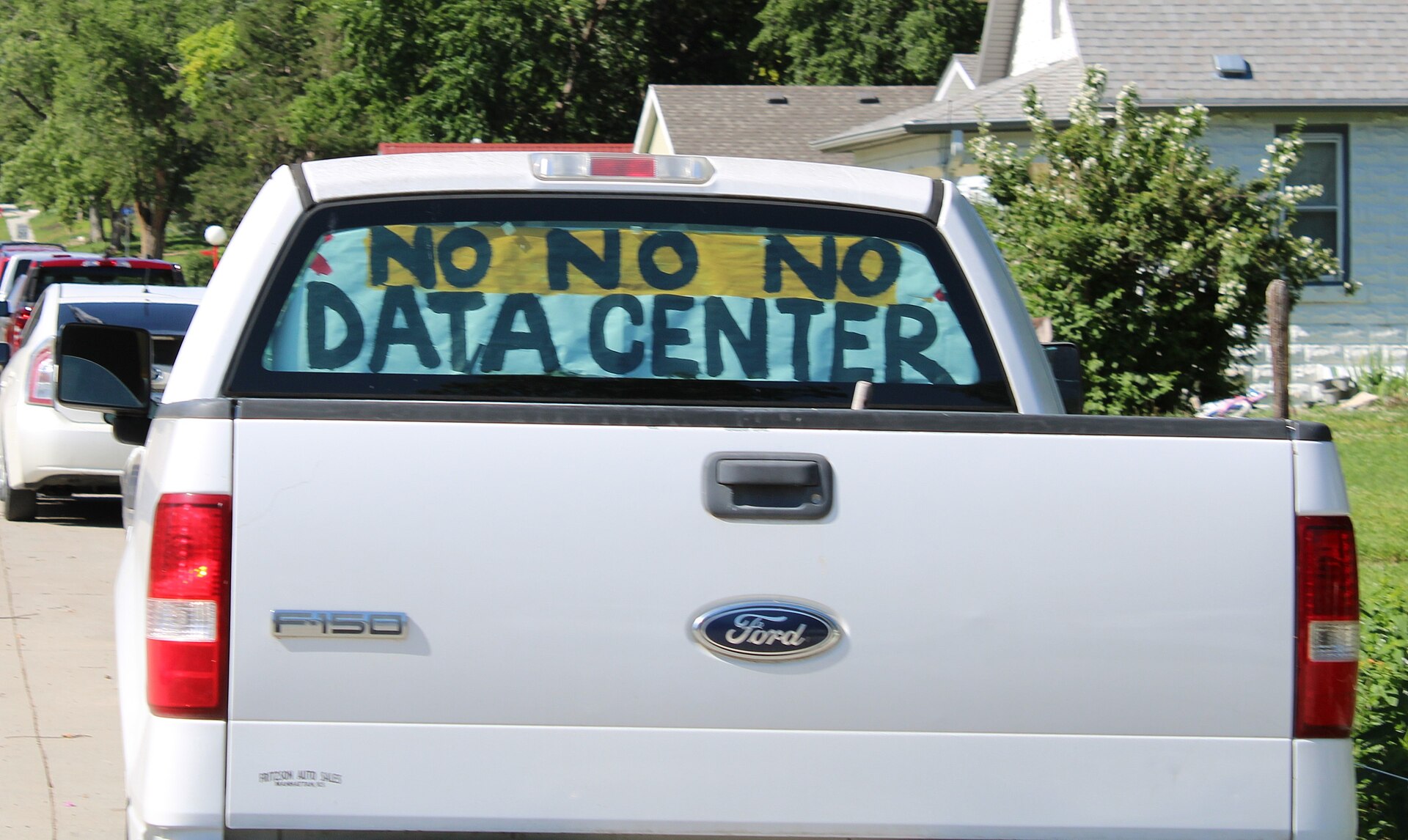
Big Tech keeps promising that AI data centers will bring jobs and prosperity to small towns across America.
Communities aren’t buying it anymore, and they’re fighting back in bigger numbers than anyone expected.
New research just tallied how much money corporate America lost to local resistance in a single quarter, and the total is staggering.
Data Center Watch Tallies The Damage
Researchers have revealed that 45 data center projects worth $68 billion were blocked or delayed by local pushback across the United States between April and June. Bloomberg reports that the projects, tracked by Data Center Watch, a project of the AI intelligence company 10a Labs, made up more than half of all new large-scale developments the group monitored during that period.
Data Center Watch’s lead analyst put it plainly. Miquel Vila said opposition to the industry is broadening, telling reporters, “New groups continue to emerge, opposition is appearing across a wide range of states and jurisdictions, and online petition signatures continue to grow.”
The numbers back him up. Data Center Watch counted 843 opposition groups spread across 49 states; Hawaii is the only state without one. About 30 statehouses have introduced or adopted rules covering data center siting, electricity use or water consumption.
And this quarter wasn’t even the worst one. The first quarter of 2026 was worse, with at least 75 projects worth about $130 billion blocked or delayed from January through March across the country as a result of data center opponents, according to a Data Center Watch study. The authors of the study noted that this hindering of AI data centers is the most on record in a three-month period since they began tracking the matter in 2023.
Combine the two quarters and the total blows past the $68 billion headline number by a mile. Collectively, nearly $200 billion worth of proposed data center projects ran into delays or were blocked during the first half of 2026.
Nationwide Opposition Keeps Multiplying
Ordinary Americans aren’t just filing complaints at zoning board meetings anymore. One petition against a project in Tennessee garnered over 500,000 signatures on online activism platform Change.org, accounting for more than one third of those on the service during the quarter, according to Data Center Watch.
Communities across the country are now pushing through moratoriums on new construction, often before developers can even apply for permissions. That’s not a small procedural detail. It means towns are trying to slam the door shut before Big Tech’s lawyers and lobbyists even get a foot in it.
Public polling shows the resistance isn’t a fringe reaction. Seven in 10 Americans oppose the construction of an AI data center in their local area, including 48% strongly opposed, according to Gallup. Democrats are much more likely than Republicans to be strongly opposed, 56% versus 39%, with independents in between at 48%, Gallup found.
Even Republicans who might normally cheer on any private investment project are pumping the brakes. Trump has repeatedly lashed out against communities and lawmakers who oppose data centers, contradicting a growing number of Republicans who are pumping the brakes on their public support for data centers.
President Trump has made his own position clear, and it cuts against the local resistance. He told reporters recently, “If I were running a state or a town, if I was a mayor or a governor, I would want as many data centers as I can because they throw off tremendous amounts of money,” adding, “if you want to go through poverty, crime and squalor, I would say don’t approve data centers.”
But that framing skips over what’s actually driving the backlash in these towns, and it isn’t ignorance about economic development.
What Does This Mean For Big Tech And Working Families
Amazon, Microsoft, Meta and Google aren’t building these facilities out of civic generosity. These tech giants are pouring hundreds of billions of dollars into the infrastructure needed to train and run their competing AI models, and together they are expected to spend at least $700 billion this year on AI infrastructure and development, according to CNBC.
That’s the piece of this story Big Tech would rather not talk about at town hall meetings. Hyperscale data centers draw enormous amounts of electricity off local grids, and the cost of that demand tends to land on the residential ratepayers and small businesses in the county, not on the coastal headquarters collecting the profits. It’s a corporate power grab dressed up as economic development, and rural and suburban communities are catching on fast.
The same companies racing to build this infrastructure spent years throttling, labeling and deplatforming conservative voices during the COVID lockdown debates, the 2020 election, and the events of January 6. Americans who watched Silicon Valley police their speech during those years have little reason to trust that these corporations are now acting in the public interest when they roll into a farm town promising jobs.
And the job promises themselves deserve scrutiny. Data centers are notoriously light on permanent local employment once construction wraps up, and the entire purpose of the buildout is to power artificial intelligence systems that industry insiders themselves have warned could gut entry-level white-collar employment. Anthropic’s own chief executive has cautioned that AI could eliminate a significant share of entry-level office jobs and push unemployment sharply higher within the next few years. Communities are being asked to accept higher electricity bills, strained water supplies and industrial-scale construction in exchange for a technology that may ultimately come for their kids’ jobs.
None of this means data centers are inherently illegitimate business ventures. It means the current model, where Big Tech shows up in red counties and rural communities expecting a rubber stamp, is running headlong into voters who are done being told what’s good for them. Opposition is slightly lower in the West and East than in the Midwest and South, according to Gallup, meaning some of the loudest resistance is coming from exactly the kind of communities that make up the Republican base.
State legislators appear to be listening even where Washington isn’t. Thirty statehouses moving on siting, water and electricity rules in a single stretch is not a rounding error. It’s a signal that the political pressure building at the local level is starting to translate into actual legislative action, regardless of what the White House or Big Tech’s lobbying arms would prefer.
Expect this fight to keep escalating through the rest of the year. Every quarter Data Center Watch tracks so far in 2026 has set a new record for money blocked or delayed, and there’s no indication Big Tech is slowing its spending pace to match. Something is going to give, and it’s not going to be the communities that are already organized, already litigating, and already winning.
Sources: Bloomberg, Insurance Journal, Yahoo Finance, Gizmodo, Forbes, Gallup, Breitbart