Republicans drew a new congressional map to flip an illegal Democrat-held seat.
The legal mess got so bad that state officials didn’t know which map to use for ballots already headed to the printer.
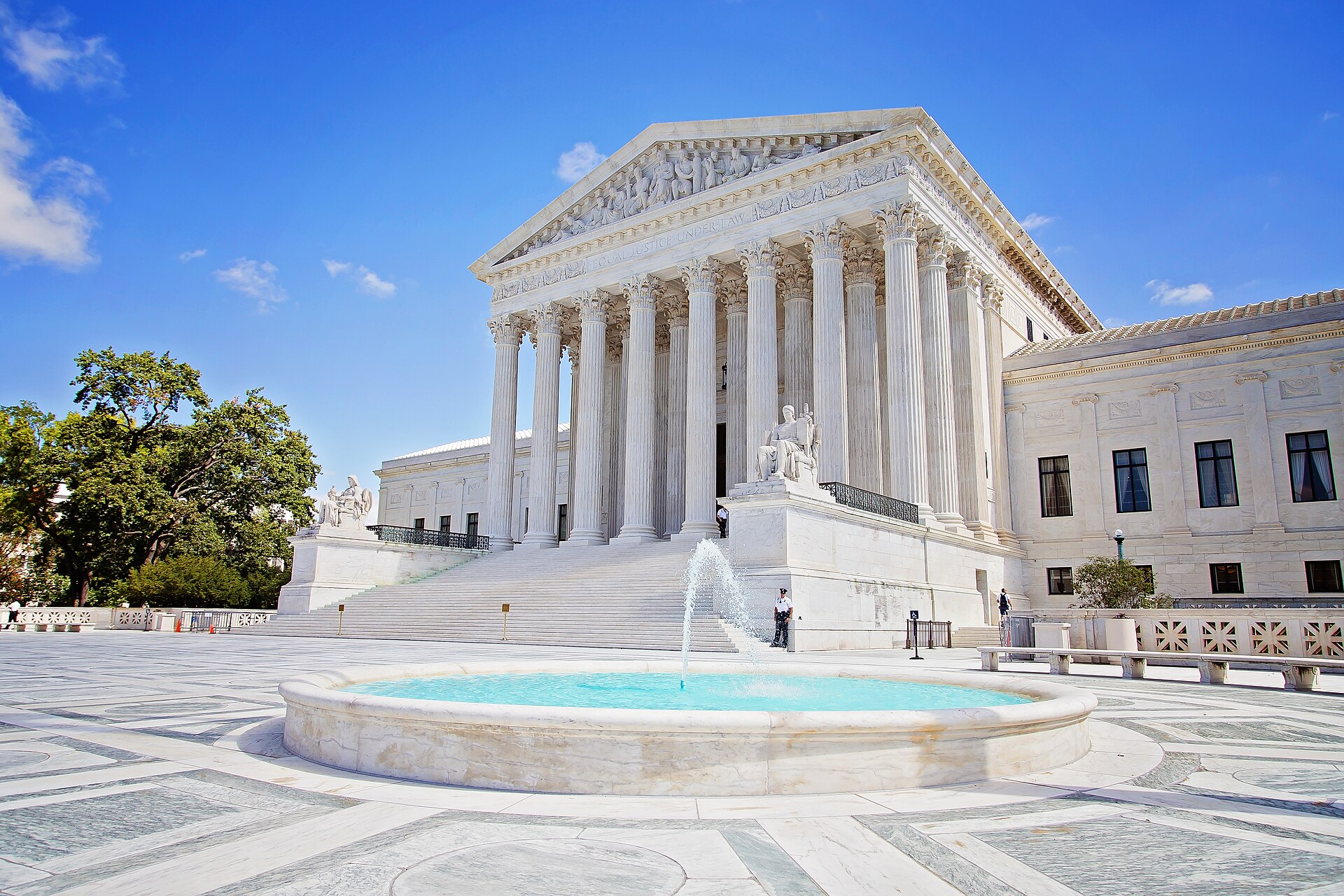
And the US Supreme Court just ruled against the new Missouri redistricting map — again — leaving the state scrambling weeks before November.
How Missouri Got Into This Mess
The backstory here matters. Republican Missouri Gov Mike Kehoe called a special session in 2025 at the urging of President Donald Trump to redraw the state’s congressional districts. The goal was straightforward: the 2025 map, dubbed the “Missouri First” map by Kehoe, was designed to eliminate one of Missouri’s two Democrat-held congressional seats — specifically the Kansas City-based 5th Congressional District held by Democratic US Rep Emanuel Cleaver.
Under the old 2022 map, Missouri sends six Republicans and two Democrats to Washington. The new map could have pushed that to seven Republicans and one Democrat.
A group called People Not Politicians Missouri, led by executive director Richard von Glahn, wasn’t having it. The group collected more than 300,000 signatures to force a statewide voter referendum on the new map. They submitted those signatures, and under Missouri law, a valid referendum petition automatically suspends a law until voters weigh in.
But Missouri Secretary of State Denny Hoskins waited until the very day of the August primary election to reject the petition, arguing that redistricting plans aren’t subject to voter referendums. That delay allowed the state to run its August primaries using the new 2025 districts. State Sen Rick Brattin won the Republican primary in the redrawn district, setting up a challenge against Cleaver. Rep Bob Onder (R-MO) and two voters joined Brattin in a federal lawsuit to keep the new map in place.
Two Courts, Two Opposite Orders
The Missouri Supreme Court ruled unanimously that Hoskins had it wrong. The state constitution, the court found, gives voters the right to referendum on congressional redistricting just like any other legislation. The court declared the 2025 map was “not the law and has never been the law,” ordered Hoskins to place the question on the November ballot as Proposition A, and directed that the 2022 map govern this fall’s general election.
The state appealed to the US Supreme Court. Justice Brett Kavanaugh, who handles emergency requests arising from Missouri, declined to block the state court ruling.
Then things got complicated. Chief US District Judge Stephen Clark in St Louis issued a temporary restraining order in the separate federal lawsuit brought by Brattin and Onder. Clark ruled that using a different map in the general election than the one used in the primary would violate the Equal Protection Clause of the US Constitution. His order required Hoskins to use the 2025 map for November.
That created a legal collision almost nobody had seen before — a federal judge ordering the state to use one map while the state Supreme Court had ruled that same map never legally existed.
The 8th US Circuit Court of Appeals declined to disturb Clark’s order. So People Not Politicians went back to the US Supreme Court, filing an emergency application. This time, the full court acted. In a brief, one-page order with no noted dissents, the justices granted the emergency request, halted Clark’s order, and restored the Missouri Supreme Court’s ruling. The 2022 map is back in effect for November.
“The law is the law, the Missouri Constitution is clear as was the Missouri Supreme Court,” von Glahn said in a statement after the ruling. He added: “The courts have settled this, now it’s up to Missouri voters to finish the job and vote NO on Proposition A.”
Hoskins and Attorney General Catherine Hanaway had both previously released statements saying the 2025 map would be used in November. That position is now off the table.
What This Actually Means Going Forward
Redistricting fights like this one don’t happen in a vacuum. Republicans in state legislatures across the country have been drawing new maps at the urging of President Trump, part of a broader push to lock in congressional advantages heading into the midterms. Missouri was one of the more aggressive examples — a mid-decade redraw, without a new census, specifically engineered to take out a sitting Democrat congressman.
The legal theory Missouri Republicans leaned on — that the state legislature’s power over congressional elections under the US Constitution’s elections clause shields redistricting from voter referendum — is not new. The US Supreme Court rejected a similar argument in a 2023 redistricting case out of North Carolina.
And Hoskins’ decision to run out the clock on the petition before rejecting it didn’t help the Republican cause. The Missouri Supreme Court noted explicitly that he had done everything he could to delay a valid petition. That kind of procedural maneuvering tends not to sit well with courts, including the ones you’re hoping will bail you out later.
The practical fallout is significant. Missouri already ran its August primaries under the 2025 map. Brattin won his primary expecting to run in a newly redrawn, Republican-friendly district. Now he’s running against Cleaver in a district drawn in 2022 that encompasses most of heavily Democratic Kansas City. The math on that race changed dramatically.
And Missouri election officials are now scrambling to get the right ballots printed and distributed before the September 15 deadline for mailing absentee ballots to voters.
There’s also the Proposition A question sitting out there. Even though the 2025 map is blocked for November, if Missouri voters approve it at the ballot box, the map could take effect for the 2028 and 2030 elections. So the underlying fight over whether Missouri will eventually get its Republican-friendly map isn’t finished — it’s just moved to a different arena.
But the more interesting question is what this episode reveals about the limits of legislative map-drawing when a state constitution gives voters a direct check on the process. Missouri Republicans had the legislature, the governor, and a sympathetic federal district judge. They still lost — twice — at the Supreme Court level.
That’s a lesson worth noting for anyone watching redistricting fights play out in other states. Courts have shown they’ll intervene when procedural games get too obvious, and 300,000 petition signatures are hard to explain away as a fringe reaction to a perfectly reasonable legislative exercise.
The November elections in Missouri will proceed under the 2022 lines. Six Republicans, two Democrats. Brattin runs in a district he almost certainly can’t win. And Missouri voters get to decide in November whether they want the new map at all — which is exactly what the referendum process was designed to produce.
Sources: Breitbart/UPI; Missouri Independent; NBC News; STLPR; Slay News; Epoch Times