President Trump made a promise at the Republican midterm convention that nobody saw coming.
Trump caught Democrats and the fake news media off guard.
But it was Laura Ingraham who asked the question every American voter wants answered.
What Trump Promised in Dallas
At the Republican midterm convention in Dallas, Trump stood on stage and told the crowd exactly what was on the line in November.
“If the Republicans win the House of Representatives and the United States Senate, because of our tremendous economic success, like, in history we’ve never had anything like what’s happening, but because of our tremendous strength and success economically, I will issue a dividend to every adult citizen in the United States of America for $5,000,” Trump said.
He called it the Trump dividend. He said the money would have to be spent in the United States.
The crowd responded the way crowds respond when a President who has spent two terms delivering on his promises tells them he’s about to do it again.
But the question hanging in the air was obvious, and Ingraham was the one who asked it.
Ingraham Presses Trump on the Timing
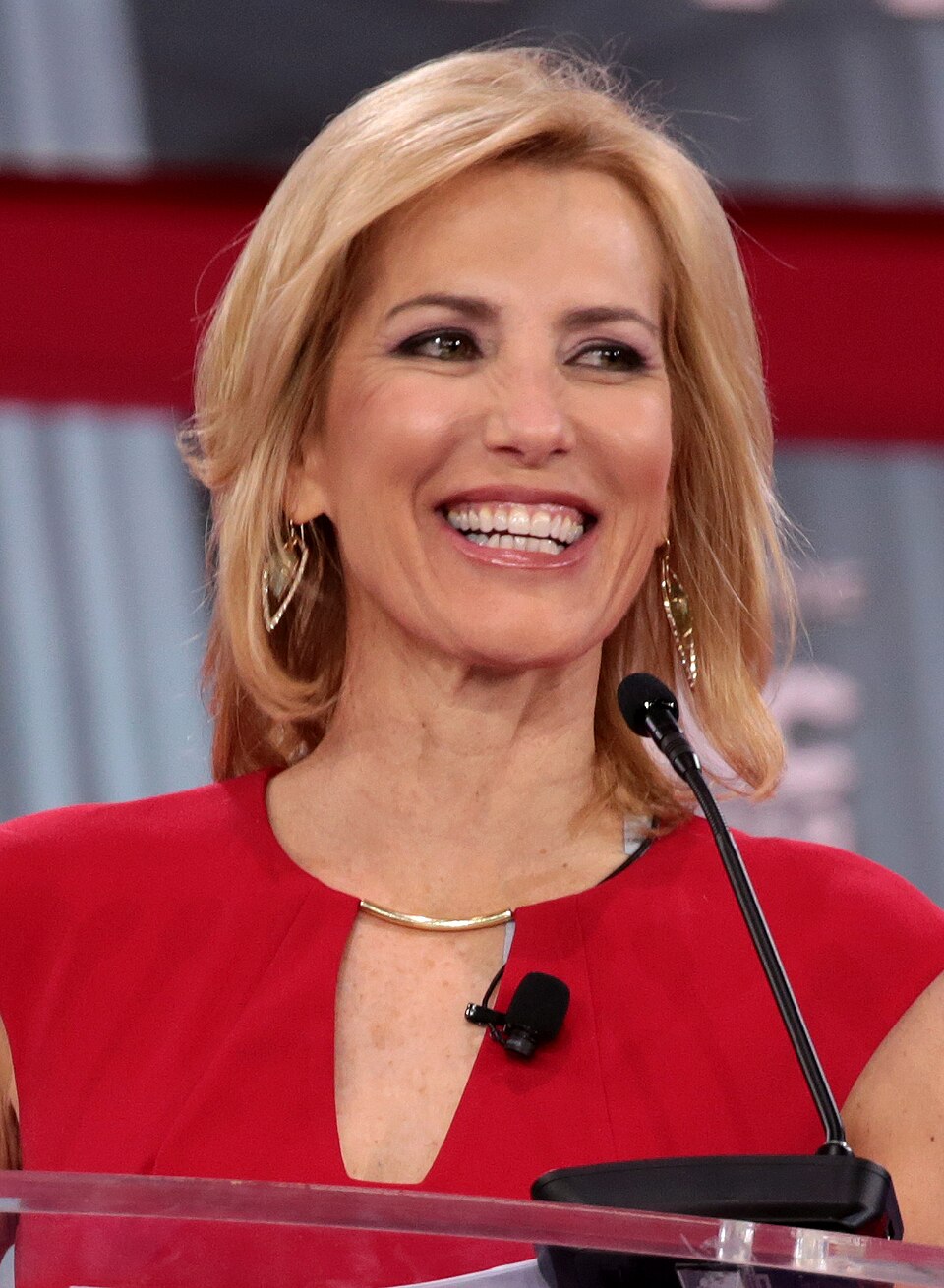
In a sit-down interview on The Ingraham Angle, Fox News host Laura Ingraham went straight at the most uncomfortable detail of the proposal.
“Why not just give the money now? If you have the money, why not give it now?” she asked.
Trump’s answer was blunt. “Because the Democrats can’t do it. Because for them, it’s negative growth. With us, it’s so positive,” he said. “So, we’re taking in $21 trillion. No country has ever taken in anywhere near that. It’s four or five times higher than the next one. All because of the beautiful word you and I love more than most others, tariffs.”
Ingraham also asked whether Trump had coordinated the proposal with congressional leadership. “Have you talked to Speaker Johnson or Thune about this $5,000 rebate or dividend?” she pressed.
Trump’s answer was characteristically loose. “I do speak to them,” he said. “We can do it. A lot of people think I don’t even need congressional approval because we have made so much money.”
And then Ingraham noted that some critics were already labeling the proposal “MAGA socialism.”
Trump rejected that framing immediately. “It’s real entrepreneurship. That’s really what it is. You know, I see that. Oh, some people say, ‘That’s communism.’ It’s not communism. It’s actually good entrepreneurship,” he said.
The Tariff Case Behind the Dividend
Trump’s argument rests on a specific claim: that his trade enforcement agenda has generated revenue at a scale that makes a direct payment to American citizens not just possible but justified.
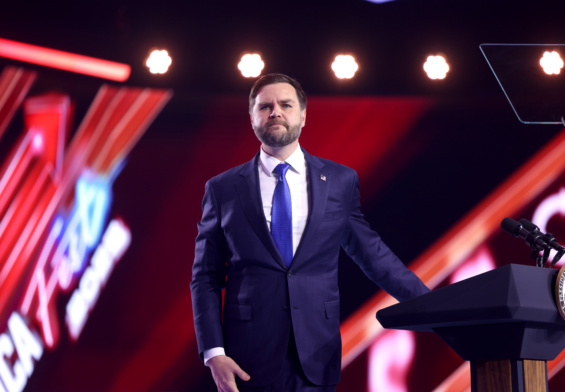
Vice President JD Vance, appearing on Fox News after the convention speech, framed it the same way. “What the president is just saying is, if you keep it going, to the American people, if you keep us in power and allow us to continue to do these things, then you’re gonna share in some of the benefit of this incredible wealth that we’re creating,” Vance said.
And that’s the core of the America First economic argument. Tariffs are not a tax on American consumers. Tariffs are trade enforcement. They are the mechanism by which decades of one-sided arrangements with foreign competitors get corrected, and when they generate revenue, that revenue belongs to the American people who absorbed the cost of bad trade deals for a generation.
The critics who call this “MAGA socialism” are the same voices who had no objection when Washington sent trillions overseas in foreign aid, bankrolled the Ukraine conflict without a single audit, and watched American manufacturing hollow out for thirty years without lifting a finger. Their sudden concern for fiscal responsibility is a posture, not a principle.
Trump has floated dividend proposals before. In late 2025, he posted on Truth Social that “a dividend of at least $2000 a person (not including high income people!) will be paid to everyone.” That earlier proposal never materialized. The $5,000 figure at the Dallas convention is a larger and more explicit commitment, tied directly to the midterm outcome.
But the question Ingraham raised is a fair one, and it is not going away. The proposal would cost well over a trillion dollars to implement at scale. The math requires either a significant reduction in spending elsewhere, continued tariff revenue at historic levels, or some combination of executive authority that sidesteps the normal appropriations process.
Trump’s suggestion that he may not need congressional approval is the part of this that deserves the most scrutiny. Governments do not create wealth. They redistribute it. Every dollar that flows through Washington first had to be taken from somewhere, and the mechanism by which the executive branch would distribute $5,000 to every adult American citizen without an act of Congress is not a detail that can be waved away.
JD Vance has also suggested that wealthy Americans would not qualify, which narrows the cost but also narrows the political simplicity of the pitch.
What This Moment Actually Tells You
Ingraham asking hard questions of a sitting President she broadly supports is not a sign of disloyalty. It is what serious political journalism looks like.
And the fact that Trump’s answer leaned on the tariff revenue argument rather than a specific legislative mechanism is worth noting. The $21 trillion figure he cited appears to reference investment commitments and economic activity rather than direct government receipts, which is a different thing from the kind of cash-on-hand that would fund direct payments to 270 million adults.
The establishment media will use Ingraham’s question as evidence that even Fox News is turning on Trump. That reading is wrong. A host asking a President to defend his proposal is not opposition. It is accountability.
What the exchange actually reveals is that the Trump economic argument is strongest when it focuses on the structural case for trade enforcement: jobs returning, factories opening, leverage over foreign competitors who spent decades taking advantage of American workers. That case is real and it is documented. The dividend proposal is a political extension of that argument, and like most political extensions, it raises questions that the underlying policy does not.
The midterms are the backdrop for all of this. Republicans are fighting to hold the House and the Senate against a Democrat Party that has nothing to offer working Americans except higher taxes, open borders, and a return to the regulatory stranglehold that killed American industry in the first place.
Trump’s dividend proposal, whatever its implementation challenges, is a direct message to voters: the economic gains of the last two years belong to you, not to the permanent Washington class that spent decades trading your jobs away for access and campaign contributions.
Whether the checks ever arrive is a separate question. But the political logic is unmistakable.
Sources: Mediaite, “Fox’s Laura Ingraham Confronts Trump About His Proposed $5K Giveaway: ‘Why Not Just Give the Money Now?'”; Raw Story, “Trump tells Fox News he can skip Congress on $5K checks — and calls it ‘entrepreneurship'”; MEAWW, “Trump defends $5,000 dividend as ‘real entrepreneurship’, says Democrats ‘can’t do it'”; The Hill, “Trump defends timing of $5,000 dividend proposal in Fox News interview”; CBS News, “At RNC midterm convention, Trump pitches $5,000 payments to U.S. citizens — but only if GOP wins House and Senate”