The government is watching every move Americans make on the road.
And the technology doing it was quietly installed in thousands of towns before most residents had any idea what was happening.
Now a former top Pentagon official is sounding the alarm about what these Flock Safety cameras could mean for the future of American freedom.
What Flock Safety Actually Does to Your Data
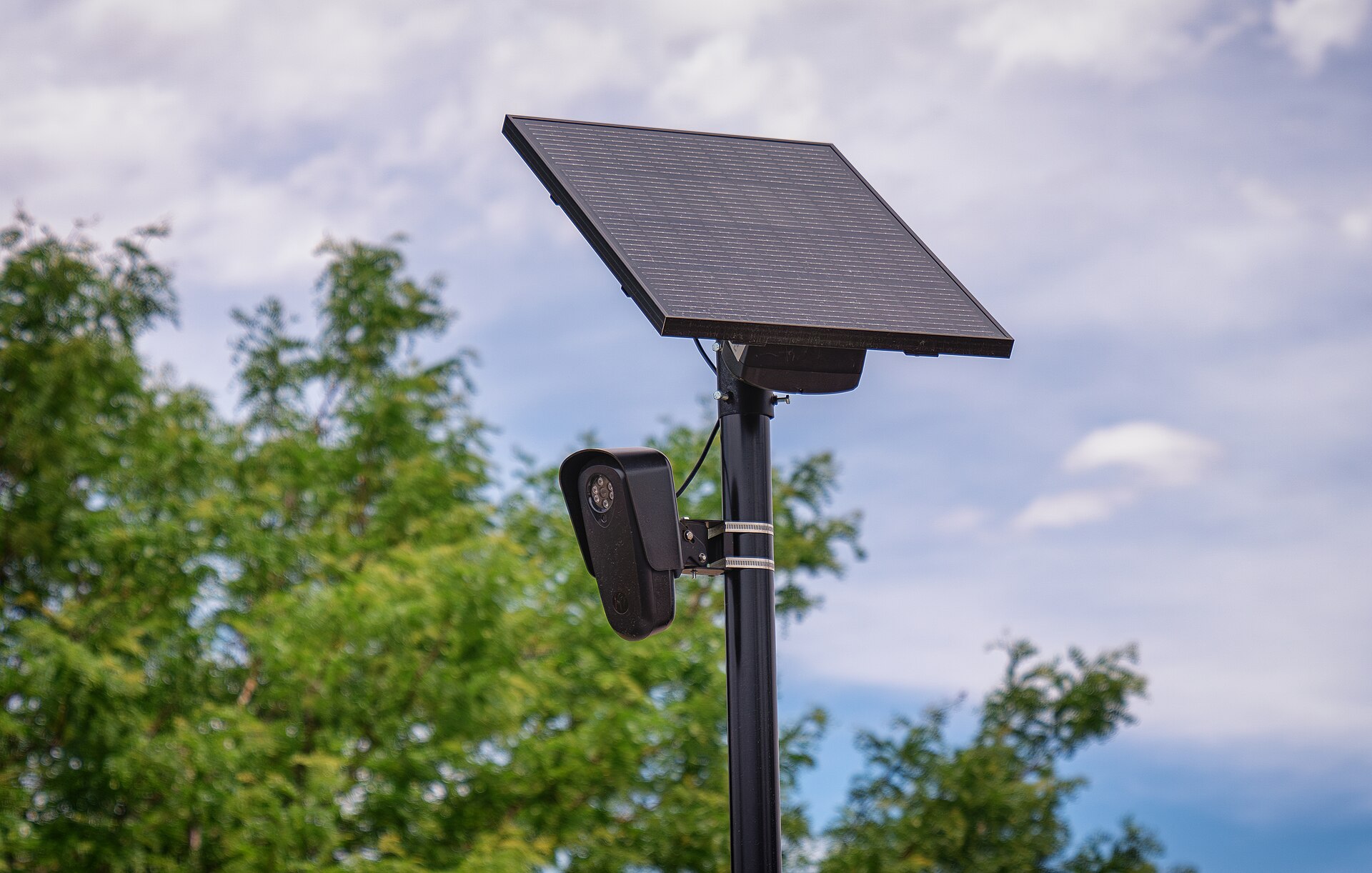
Flock Safety makes automated license plate reader cameras — the kind that are popping up at intersections, neighborhood entrances, and along highways in communities across the country.
These are not cameras that activate when a crime is being committed.
They log every vehicle that passes, recording the plate, the time, and the location, whether the driver is a convicted felon or a grandmother heading to church.
That data gets stored. It gets shared. And in many cases, the people who live in the communities where these cameras operate have no real idea which outside agencies can pull that information or how long it sits in a database somewhere waiting to be queried.
That’s the part that should make every freedom-loving American stop and think.
The Pentagon AI Chief Who Raised the Red Flag
Ret Lt Col Tucker Hamilton, the former chief of AI test and operations for the US Air Force, appeared on Fox News recently and did not mince words about what this technology represents.
Hamilton warned that the Flock Safety camera network risks creating what he described as a China-like surveillance state inside the United States.
And Hamilton knows something about surveillance systems. His background in AI and military technology gives him a vantage point that most local city council members approving these contracts simply don’t have.
The concern he raised isn’t hypothetical. Communist China built its social credit and mass surveillance apparatus one camera at a time, one database at a time, one data-sharing agreement at a time. The infrastructure didn’t appear overnight. It accumulated quietly, justified at each step by public safety rationales that sounded reasonable in isolation.
But Hamilton’s warning goes to something deeper than just the cameras themselves. It’s about what happens when you build a system capable of tracking the movements of an entire population without any requirement that law enforcement have a reason to suspect any particular person of anything.
That’s not law enforcement. That’s mass surveillance.
The Fourth Amendment Doesn’t Have a License Plate Exception
The constitutional problem here is straightforward, even if local governments have been happy to ignore it.
The Fourth Amendment protects Americans against unreasonable searches. To search a car, police need probable cause and typically a warrant. To track a person’s movements over time, courts have increasingly required similar protections.
But Flock Safety cameras do an end-run around all of that. Because the cameras sit on public roads, local governments have argued the data collection is not a “search” in the constitutional sense. The vehicle is in public. Anyone could theoretically see it.
That argument might have made sense in 1791. It strains credulity in an era when a networked system can reconstruct weeks of a person’s daily movements — where they worship, where they receive medical care, which political events they attend — from nothing more than license plate pings.
And the data doesn’t stay local. These systems frequently feed into regional and federal databases through sharing agreements that local residents never voted on and often don’t know exist.
The position here is not that law enforcement should be blind. A detective investigating a specific crime should absolutely be able to request camera footage tied to that investigation. That’s targeted, warranted access. That’s how constitutional policing works.
What’s happening instead is that every driver in a Flock-equipped community gets logged by default, permanently, whether or not they’ve done anything wrong. That’s the difference between a search warrant and a dragnet.
There’s a reason the Founders wrote the Fourth Amendment the way they did. They had lived under a government that treated the general population as suspects. They were not interested in recreating that arrangement on American soil.
How These Systems Get Installed With Almost No Scrutiny
One of the more troubling aspects of the Flock Safety expansion is how little public debate accompanies it.
In most communities, the contract gets approved by a police department or city council with minimal transparency about data retention periods, which outside agencies get access, and what happens to the information if it’s subpoenaed by a federal agency pursuing a politically motivated investigation.
That last scenario isn’t paranoid. Americans have watched federal agencies get weaponized against political opponents in recent years. The IRS targeted conservative nonprofits. The FBI opened investigations based on manufactured evidence. The idea that a national license plate tracking network couldn’t be turned against ordinary citizens who attend the wrong rally or donate to the wrong candidate requires a level of institutional trust that the government has not earned.
Local governments often frame these installations as neutral public safety upgrades. But there’s nothing neutral about building a mass surveillance infrastructure. Every decision to install one of these systems is a policy choice with real constitutional tradeoffs, and those tradeoffs deserve public debate before the cameras go up, not after.
The vendor contracts themselves often lack meaningful transparency requirements. Residents may not know how long their data is retained, whether it can be sold or shared with private entities, or what legal standard — if any — is required before a federal agency can access the local database.
That’s a problem regardless of which party controls the city council or the White House. Surveillance infrastructure built under one administration doesn’t disappear when the next one takes over. It expands.
What This Looks Like at Scale
Hamilton’s China comparison is worth sitting with for a moment.
The Chinese Communist Party did not announce one day that it was building a system to track the movements of its entire population and assign social scores to citizens who stepped out of line. It built that system piece by piece, camera by camera, database by database, always with a public safety justification ready for anyone who asked.
The United States is not China. But the technology is the same technology. The data-sharing capabilities are the same capabilities. And the institutional temptation to use available surveillance tools against political opponents is not a uniquely Chinese phenomenon — it’s a human one, documented repeatedly in American history by agencies that were supposed to protect civil liberties and instead treated them as obstacles.
The question Hamilton is really asking is whether Americans want to build the infrastructure of a surveillance state and then trust that future governments will choose not to use it. That’s a bet that requires an enormous amount of faith in institutions that have repeatedly demonstrated they don’t deserve it.
Opposing warrantless mass surveillance is not opposition to public safety or to law enforcement. It’s the position the Founders took. It’s the position the Fourth Amendment encodes. And it’s the position that every American who values the right to move through their own country without being tracked by their own government should be willing to defend.
The cameras are already up in thousands of communities. The databases are already filling. And the data-sharing agreements are already in place.
At some point, the question stops being whether this kind of system could be abused. The question becomes whether anyone in a position of authority is willing to do anything about it before the infrastructure becomes too entrenched to dismantle.
Hamilton raised the alarm. Whether anyone in Washington, DC is listening is another matter entirely.
Sources: Fox News, “Former Pentagon AI chief warns Flock cameras could create China-like surveillance state in US”