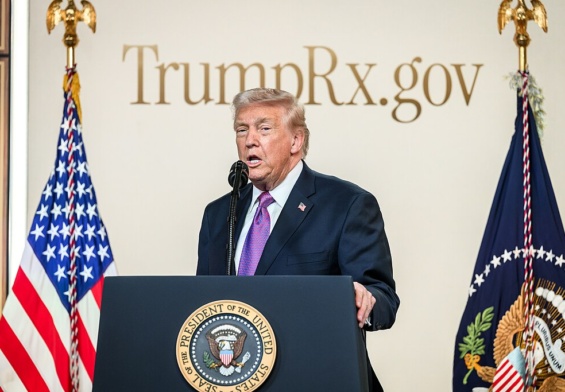
President Trump loves McDonald’s. Everybody knows it.
Now one fast food executive is using the Canada trade dispute to make his pitch directly.
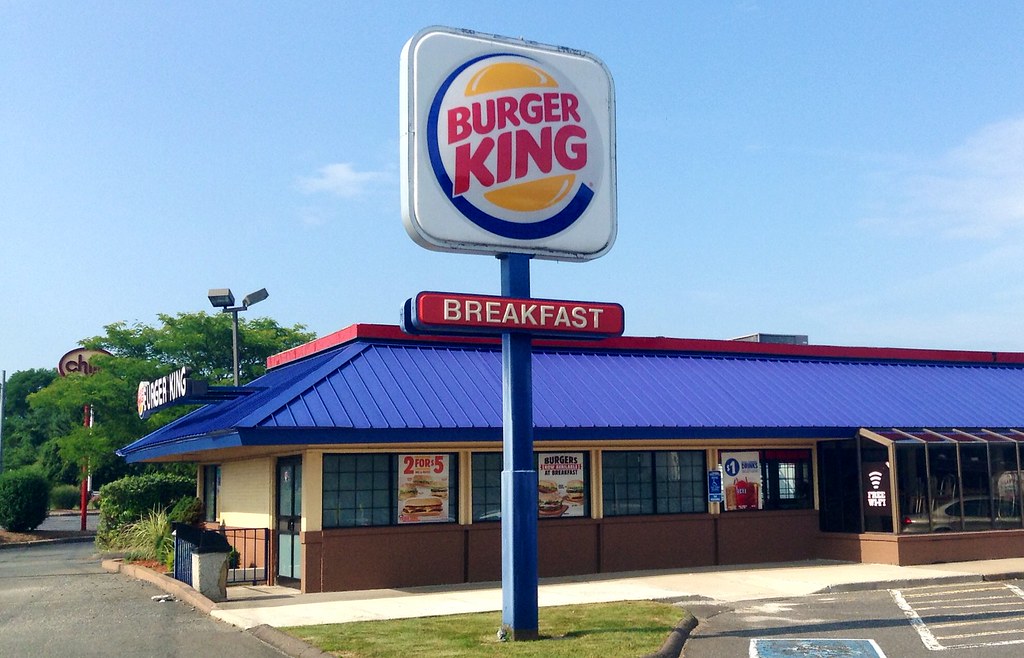
And the president of Burger King just went on CNN to plead with the famously McDonald’s-loyal Commander in Chief to swing by his chain a little more often.
The Pitch Nobody Saw Coming
Tom Curtis, President of Burger King US and Canada, sat down with CNN News Central’s Kate Bolduan to talk about the impact of President Trump’s tariff enforcement push on the beef industry and what it means for fast food prices.
American ranchers are already dealing with the smallest cattle herd in 75 years, and the trade dispute with Canada has added another layer of pressure on the supply chain.
But Curtis found a moment in all of that to make a very specific request of the President of the United States.
When the conversation turned to Trump’s well-documented affection for McDonald’s, Curtis seized the opening and made his case for why the President ought to give Burger King a shot.
It is a genuinely unusual moment — a fast food chain president using a cable news segment about international trade enforcement to lobby the sitting president of the United States for his burger business.
And it comes at a moment when Burger King is riding a real wave of momentum.
Burger King Is Actually Winning Right Now
Curtis is not exactly making his pitch from a position of weakness.
Burger King recently posted an 8.5% increase in US same-store sales last quarter, outpacing McDonald’s by the largest margin in more than a decade, according to CNN Business.
The chain surpassed Wendy’s in US sales this year to claim the No. 2 spot among burger chains, with McDonald’s still holding the top position.
A revamped Whopper sits at the center of the turnaround. Curtis and the company’s franchisees absorbed the added costs of the upgrade rather than passing price hikes directly to customers — a calculated bet that has, at least so far, paid off.
“We asked our franchisees once again when we relaunched the Whopper, when we elevated the Whopper, ‘Hey, we need you to hold price here. Consumers are hurting, and we’ve got to be there for them in these tough times,'” Curtis said.
Curtis also went viral earlier this year when Burger King posted a video of him taking an enthusiastic, full-commitment bite out of the new Whopper — a not-so-subtle response to McDonald’s CEO Chris Kempczinski drawing widespread ridicule for a promotional clip in which he took a noticeably small nibble of the chain’s new Big Arch burger and repeatedly called it a “product.”
The contrast was hard to miss. Curtis looked like a man who actually wanted to eat the burger. Kempczinski looked like a man who had been briefed on what a burger is.
That video racked up millions of views and sent foot traffic to Burger King locations sharply higher in the days that followed, according to tracking data from Placer.ai.
Burger King’s parent company, Restaurant Brands International, which also owns Popeyes and Tim Hortons, called Burger King US a “standout performer” on its most recent earnings call.
The Canada Angle and What It Means for Your Wallet
The CNN interview was not really about the burger wars. It was about beef.
President Trump’s trade enforcement push against Canada — which saw tariffs raised on $20 billion in Canadian imports after negotiations broke down — has rattled supply chains that the fast food industry depends on.
Canada is a significant source of beef for US processors, and the tariff dispute has added cost pressure on top of an already strained cattle market.
Trump moved to pause tariffs on imported ground beef for 90 days in an attempt to bring prices down and give American ranchers time to rebuild the herd, according to Fox Business.
That 90-day window is the kind of targeted, America First trade enforcement move that puts domestic producers first while managing short-term price pain — the sort of leverage-based approach that critics in the media tend to frame as chaos but that actually reflects a deliberate strategy.
Curtis acknowledged the pressure on franchisees but said Burger King’s approach is to attract more customers rather than simply raise menu prices and hope nobody notices.
“We’ll ask our owners to hold tight because consumers need it right now,” Curtis told Fox Business.
That is not a small ask. Beef costs are up, the cattle herd is the smallest it has been in three-quarters of a century, and the trade dispute with Ottawa has introduced additional uncertainty for anyone who buys beef in bulk.
But Curtis seems to think the math still works — bring in more customers, move more volume, and survive the cost squeeze without torching the brand by slapping sticker shock on the menu board.
Whether that strategy holds depends in part on how long the Canada trade dispute drags on. Canadian Prime Minister Mark Carney has vowed to match US tariffs “dollar for dollar,” and Ontario Premier Doug Ford has not exactly been diplomatic about his feelings toward Washington.
The broader point is that Trump’s trade enforcement is creating real pressure across the food supply chain, and the fast food industry is not immune. Companies like Burger King are making real-time decisions about how much of that cost they absorb versus how much they push onto customers who are already watching their spending.
Curtis seems to be betting that staying on the right side of consumers right now — even at the cost of franchisee margins — is worth it. And so far, the sales numbers are backing him up.
As for the pitch to Trump: it is hard to imagine the President, a man who has been ordering the same McDonald’s combo for decades, suddenly switching his allegiance to the Whopper because a fast food executive made a polite request on CNN.
But Curtis gets points for the attempt. And given that Burger King’s parent company is headquartered in Miami and owns Tim Hortons — Canada’s most iconic chain — the Canada trade situation hits Restaurant Brands International from more than one direction.
That is the kind of detail that does not make the cable news chyron but matters quite a bit to the people running the business.
Trump will almost certainly keep eating Big Macs. But Tom Curtis at least made sure the whole country heard the alternative offer.
Sources: Mediaite, “Burger King Prez Pleads for McDonald’s Fan Trump to Visit BK More Often When Asked About Canada Trade War”; CNN News Central, Kate Bolduan interview with Tom Curtis; Fox Business, “Burger King reclaims No. 2 spot from Wendy’s without raising prices”; CNN Business, “How the Whopper reignited the burger wars”; Fortune, “In U.S.-Canada trade war, Trump says they are ‘the worst'”