Big Tech raced into red-state America and never asked permission.
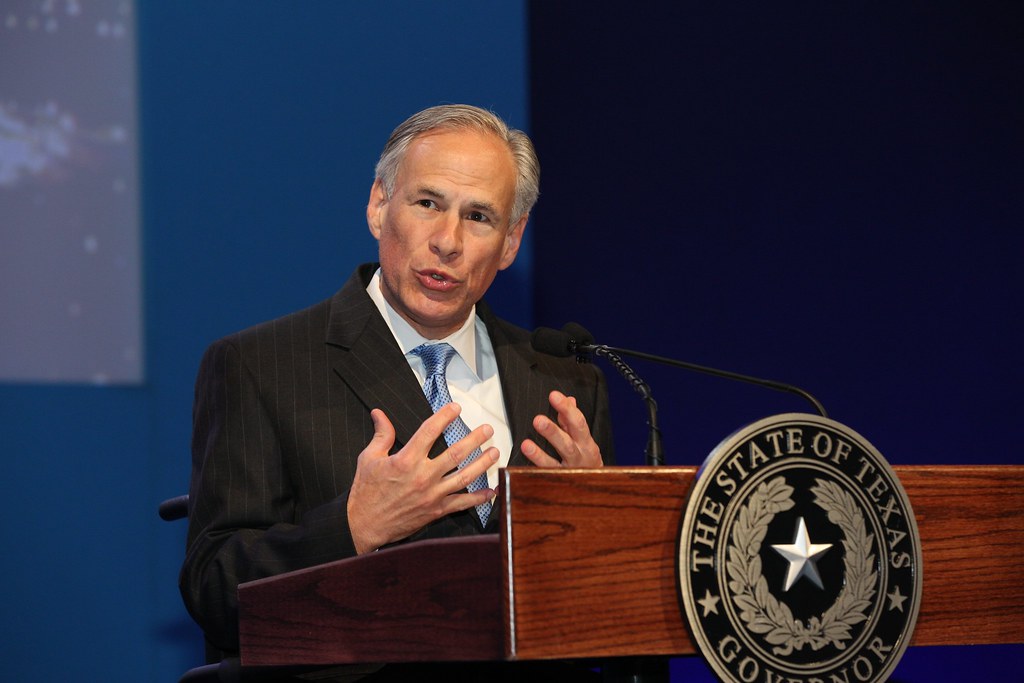
Now Texas Governor Greg Abbott is making them pay for it.
And what Abbott said about the companies that built these facilities will leave Silicon Valley executives scrambling for answers.
Abbott Pulls the Plug on New Data Center Approvals
Texas Governor Greg Abbott ordered the Public Utility Commission of Texas and the Electric Reliability Council of Texas to halt new grid-connection approvals for data centers until regulators complete what his office described as a “comprehensive verification and audit” of pending projects.
That came on the heels of a June directive in which Abbott told state regulators to make data centers pay the full cost of the electrical infrastructure they require and called for phasing out the tax incentives the state had been handing out to attract these facilities.
The shift is remarkable given where Abbott stood just months ago.
Last November, Abbott stood alongside Google to announce a $40 billion investment into three data center campuses across the state. “Texas is the epicenter of AI development,” Abbott declared at the time. He called it “Google’s largest investment in any state in the country.”
That was then.
Appearing on ABC’s This Week with host Jonathan Karl, Abbott did not mince words about what went wrong. “They basically dug their own grave for the problem that’s been caused for them, and that’s why they got the backlash they deserve,” he said.
Abbott told Karl that two things drove the fury from communities across Texas: “One thing is the rapidity that these data centers are coming online, that people didn’t see coming. The other is the way that the data centers, they didn’t do their job to get the support of people in local communities.”
“Gaining the support of people in local communities is essential,” Abbott added.
When Karl pressed him on whether Texas had moved too fast, Abbott deflected the blame squarely onto the industry. “It wasn’t Texas that was moving fast, it was these data centers,” he said. “They pop up in places that nobody ever heard of before, until they started the construction.”
Abbott told Fox News Sunday that fewer than 10% of data center companies had even responded to a state request for information needed to project future power demand. That compliance gap, he made clear, only reinforced his decision to act.
The NRSC Sounds the Alarm
Republicans are sounding the alarm about AI data centers.
The National Republican Senatorial Committee sent a private memo to leading AI companies telling them the industry’s image problem has become a live political threat. The NRSC warned that voter anger over data centers was putting a critical Ohio Senate seat at risk.
Republican Senator Jon Husted of Ohio, who was appointed to his seat after JD Vance became Vice President, is locked in a competitive race against former Democratic Senator Sherrod Brown. According to the NRSC memo, Brown has made data centers his “de facto opponent,” spending heavily on ads calling Husted “the face of data centers in Ohio.”
A Fox News poll showed Brown leading Husted by eight points at the time the memo circulated.
“If voters’ perceptions of data centers are not fixed quickly, the campaign against them will expand far beyond Ohio,” the NRSC warned. “If he loses and data centers get the blame, politicians across the country will take notice — and they will not go near the next one.”
The committee called it “a sleeper issue for the entire election cycle.”
What Working Americans Already Know
The numbers tell the story that the tech industry would rather not discuss.
An Annenberg Public Policy Center survey conducted from June through July 2026 found that 61% of Americans now oppose construction of a new data center in their area, up from 49% in the survey conducted in February and March of the same year. That 12-point jump is, according to the Annenberg Public Policy Center, the largest shift on any AI question their surveys have measured.
And the opposition cuts straight across party lines. According to the same survey, 69% of Democrats, 54% of Republicans, and 53% of independents oppose new data centers in their area.
Residents in towns from Abilene to Sulphur Springs packed local planning meetings, filed petitions, staged protests, and pursued legal challenges against projects they say strain power grids, drain water supplies, and generate constant noise. These are not coastal progressives. These are the same rural and suburban Texans who vote Republican in every cycle.
Big Tech companies built their empires on the assumption that red-state communities would take the jobs, the noise, the power strain, and the water drain without complaint. They were wrong.
And the companies doing this are the same ones that spent years throttling, shadowbanning, and deplatforming conservative voices on COVID policy, on the 2020 election, and on January 6. The same corporations that censored working Americans are now showing up in their backyards demanding to drain their aquifers and drive up their electricity bills while the profits flow back to coastal headquarters.
Anthropic CEO Dario Amodei has warned that AI could wipe out half of all entry-level white-collar jobs and push unemployment to 10-20% within the next one to five years. The data centers being built in Texas and across red-state America are the physical infrastructure for the AI systems that will carry out that displacement. Communities are being asked to absorb the costs — higher electricity bills, strained grids, depleted water supplies — while the same technology accelerates the automation of the jobs their children were counting on.
Data centers bring enormous electricity demand, water use, and industrial-scale construction into local communities. They also deliver far fewer permanent jobs than the manufacturing and warehousing deals that traditionally earn tax incentives.
New York Governor Kathy Hochul ordered a one-year moratorium on hyperscale data centers. Democratic Pennsylvania Governor Josh Shapiro, who last year celebrated a $20 billion Amazon data center investment, imposed new restrictions of his own. The political backlash has gone fully bipartisan, which is a signal that the industry’s problems run deeper than messaging.
Abbott’s regulatory turn may put him at odds with President Trump on this specific question, but the governor is responding to something real. Texas voters in deep-red rural communities are furious, and no amount of economic development talking points has moved that needle.
The NRSC’s memo to AI companies essentially admitted that campaigns and party committees cannot fix the image of an entire industry on their own. That is a remarkable thing for the Senate Republican campaign arm to put in writing.
Big Tech spent years treating red America as a resource to be extracted — cheap land, favorable regulations, low-cost energy — while giving nothing back and actively working to silence the political views of the very people living next door to these facilities. The backlash was not a surprise. It was overdue.
Abbott put it plainly: they dug their own grave.
Sources: Axios, ABC News This Week transcript (August 23, 2026), Punchbowl News interview with President Trump, National Republican Senatorial Committee memo obtained by Axios, Annenberg Public Policy Center survey (June-July 2026), Washington Times, CNBC, Governor of Texas official press release (November 14, 2025)