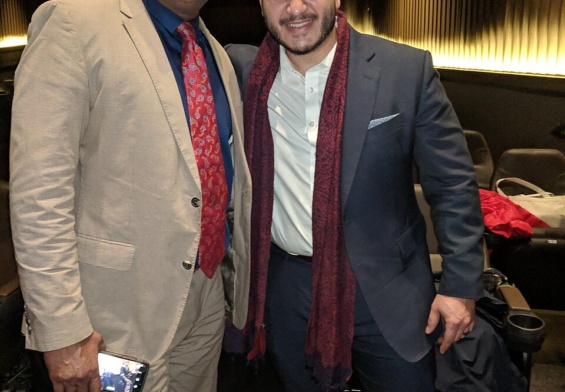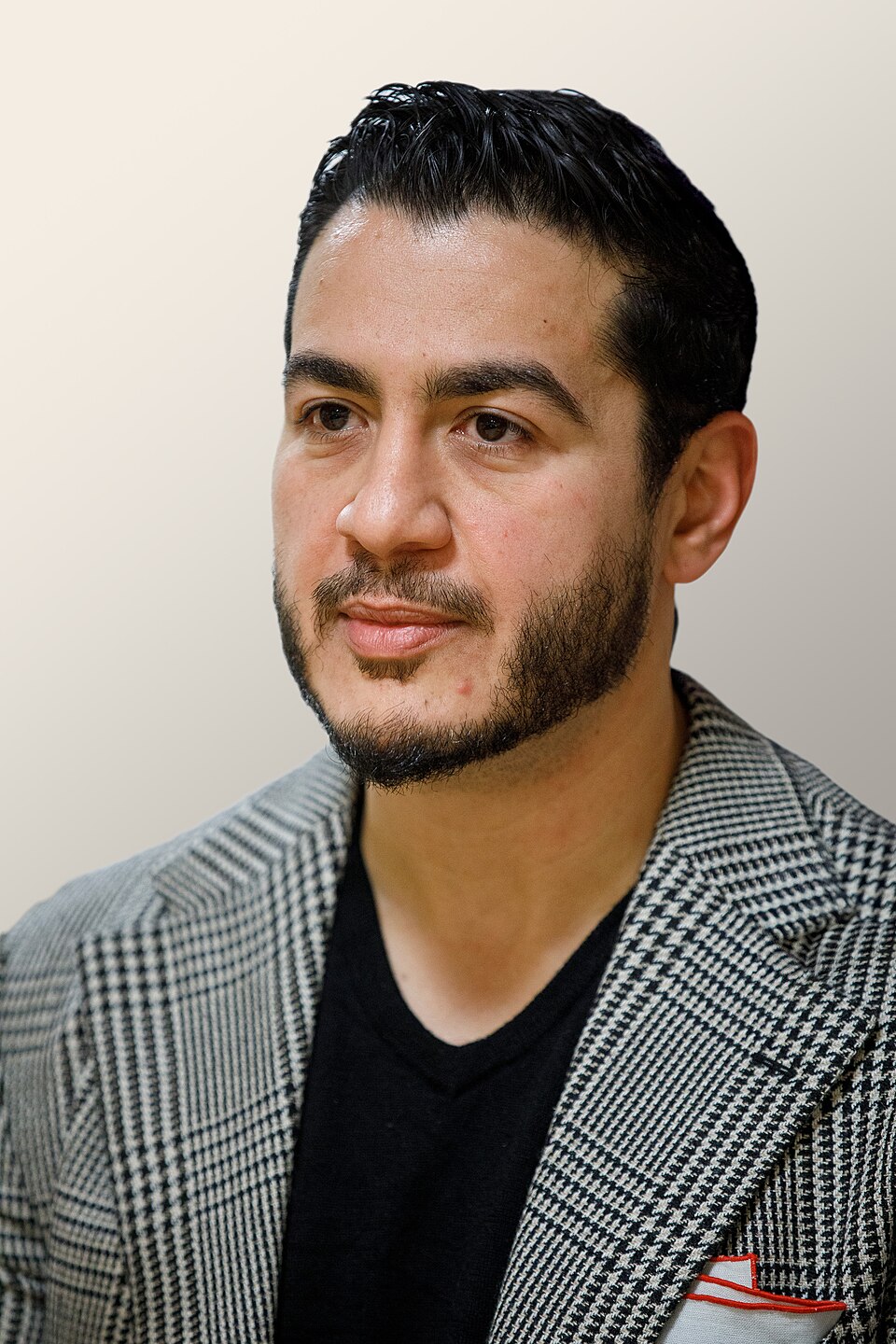
Michigan Democrats just handed their Senate nomination to one of the most left-wing candidates in the country.
Party insiders were hoping for a commanding win that would signal unity heading into November.
What they got instead has the whole operation quietly panicking about what comes next.
A Win That Looked More Like a Warning Shot
The demographic breakdown of the vote in the Michigan Senate Democrat primary included some glaring warning signs for the party as it sought to rally voters behind progressive Abdul El-Sayed to win the critical battleground seat in November. El-Sayed’s primary victory over moderate Representative Haley Stevens (D-MI) was “too close for comfort for many Democrats,” who had hoped the victor would emerge with a more commanding lead.
El-Sayed, a former state public health official, won by less than a percentage point when the race was called for him, making clear he must win over more moderate Democrats to beat former Representative Mike Rogers (R-MI) in November.
The Associated Press and other major outlets called the narrow race for El-Sayed more than 12 hours after the polls closed. That’s not a triumphant night. That’s a cliffhanger nobody on the Left wanted.
A Washington Post analysis of voting data found that El-Sayed won with support from young voters, leading Stevens by 24 points in counties with at least 30 percent young adults.
Counties where at least 40 percent of the population had a college degree backed El-Sayed by 10 points, whereas Stevens led counties where 20 percent or less of the population was college educated.
So El-Sayed’s coalition is college towns and under-30 voters. And Michigan is not a college town. It’s a state with auto plants, manufacturing corridors, and a working-class backbone that doesn’t particularly care what professors in Ann Arbor think about Medicare for All.
El-Sayed lost all of metro Detroit and underperformed in traditional African American strongholds.
In counties where Black people made up at least 15 percent of the population, Stevens led El-Sayed by 8 points. Black voters in Detroit have historically been pivotal for Democrats to win statewide, pointing to a potential vulnerability for the party ahead of the general election.
That’s a problem Democrats can’t just paper over with a unity statement.
Rogers Smells Blood, and the Numbers Back Him Up
The nonpartisan election handicapper Cook Political Report rates the open Michigan Senate race as a “toss-up,” and Republicans are looking to flip the seat held by retiring Senator Gary Peters (D-MI).
A recent Michigan Education survey showed Rogers beating El-Sayed by 10 points in a hypothetical match-up, with 11 percent of respondents undecided.
A separate pollster noted Rogers holds a nearly 28-point lead over El-Sayed among independents. That’s not a gap. That’s a canyon.
At one point, Stevens’ campaign even sent out a satirical “endorsement” by Rogers for El-Sayed, citing comments first reported by CNN where Rogers said he’d be in “good shape” if El-Sayed won the primary.
Rogers said in a statement after the race was called, “The choice this November is simple: common sense or complete insanity. Abdul doesn’t represent a vision for the future. He’s leading a movement grounded in ideological fanaticism. His agenda would make our communities less safe and our state less affordable.”
Rogers has locked down an endorsement from President Trump, who called the former House Republican an “America First Patriot.”
And Rogers knows the terrain. He is a formidable candidate who only narrowly lost a 2024 US Senate bid to Democrat Elissa Slotkin. He came within a whisker of winning that race in a cycle that was far less favorable to Republicans than this one shaping up to be.
What El-Sayed Actually Wants to Do to Michigan
Voters deserve to know what they’re getting if El-Sayed somehow pulls this off in November.
The single-payer healthcare proposal known as Medicare for All is a central pillar of El-Sayed’s campaign. El-Sayed, a former public health official, wrote a 2021 book called “Medicare for All: A Citizen’s Guide” about the single-payer proposal, which is government-funded health coverage guaranteed for every American.
Government-run healthcare has a track record everywhere it’s been tried. Rationing. Wait lists. Bureaucrats deciding who gets care and when. Countries like Canada and the United Kingdom have spent decades dealing with the consequences of handing healthcare over to central planners, and the results aren’t pretty. El-Sayed wants to import that system here.
“This campaign will take on the powerful with three simple ideas,” El-Sayed said in a TV ad. “Money out of politics, money in your pocket, and Medicare for All.”
And who was starring alongside him in that ad? The ad featured longtime Medicare for All advocate and early El-Sayed supporter Senator Bernie Sanders (I-VT).
But it wasn’t just Sanders. El-Sayed also ran an ad featuring Alexandria Ocasio-Cortez in the Michigan Senate race. The far-left New York congresswoman who has made a career out of pushing socialist policy proposals was front and center for El-Sayed’s closing argument to Michigan voters.
The communications director for Rogers’ campaign put it plainly: “We all know that if it walks like a duck, and quacks like a duck, it’s a duck. This election is about crazy versus common sense. Mike Rogers will hold the line against the Left’s socialist takeover and ensure common sense prevails this November.”
Hard to argue with that framing when your candidate’s two most prominent surrogates are Bernie Sanders and AOC.
El-Sayed worked overtime to distance himself from the socialist label, even as he campaigned alongside self-described democratic socialists and headlined fundraisers for their organizations. El-Sayed sat down with former White House press secretary Jen Psaki on MSNBC and faced a straightforward question: If you’re endorsed by Senator Bernie Sanders and running ads with Representative Alexandria Ocasio-Cortez, why aren’t you a democratic socialist?
His answer: “I’m not an ideologue. I’m a lot more interested in empirical results. So, when it comes to Medicare for All, I think that’s the best single way to provide folks healthcare in this country.”
That’s a non-answer dressed up in a lab coat. The empirical results of government-run healthcare systems are rationing, shortages, and reduced patient choice. That’s not speculation. That’s the documented record in every country that’s gone down that road.
The Math Michigan Democrats Don’t Want to Talk About
The Democrat Party in Michigan now has a nominee who lost Black voters in Detroit, lost working-class counties, and runs 28 points behind among independents against a Republican who came within 19,000 votes of winning a Senate seat in 2024 when the political environment was far less favorable to the GOP.
El-Sayed will have to win over Black voters, a major demographic in the state, as well as working-class and independent voters.
But that’s exactly the coalition he failed to build even within his own party’s primary. He won the race by less than one point, powered almost entirely by college towns and young voters. The broader Michigan electorate is a very different audience.
The moderate faction of the party had become increasingly anxious about El-Sayed securing the Democratic nomination, worrying his progressive politics may hinder his chances in the general election against Rogers.
Those worries weren’t unfounded. They were confirmed by the primary results themselves.
Michigan is a state President Trump carried in 2024. The race to replace retiring Senator Peters is expected to be highly competitive in the battleground state, where Trump defeated former Vice President Kamala Harris in 2024. Democrats needed their strongest possible candidate to have a fighting chance at holding this seat. They chose someone who couldn’t even unite his own party’s primary voters.
And the nominee they picked wants to hand healthcare decisions to the federal government, is backed by the Sanders-AOC wing of the party, and ran up his margins in exactly the kinds of places that don’t win statewide elections in Michigan.
Republicans now head into November with a candidate who has Trump’s backing, a demonstrated ability to compete statewide, and a Democrat opponent whose own party’s voters spent primary night wondering if they’d made a catastrophic mistake.
The general election hasn’t started yet. But the warning signs for El-Sayed are already piling up.
Sources: The Hill, Breitbart, Washington Post (county vote analysis), NBC News, Bridge Michigan, Emerson College Polling/WLNS/WOODTV, Glengariff Group poll, Michigan Education survey, Fox News Digital, Common Dreams, Bloomberg, CNN, Al Jazeera